How Gridlock Silently Cripples Cities—and What Can Be Done
“`html
What Exactly Is Gridlock—and Why Does It Feel Worse Than Ever?
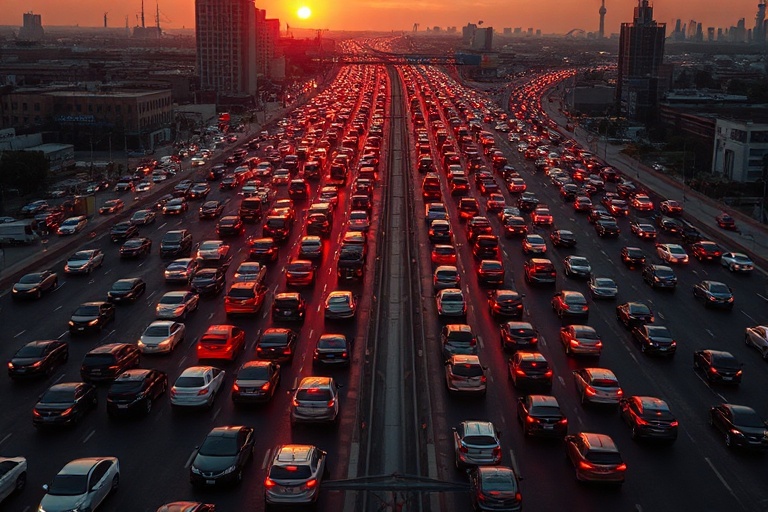
Gridlock isn’t just a traffic jam. It’s the moment when a city’s arteries clog entirely, when movement halts not just for minutes, but for hours. It’s the visible collapse of a system designed for flow, where every lane becomes a parking lot and every signal a cruel joke. The term originates from the 1800s, when London’s streets became so congested that police had to direct traffic like ships in a harbor. Today, the scale is global. Cities from Los Angeles to Jakarta, from Moscow to Mexico City, now experience gridlock not as a rare event, but as a daily reality.
What makes modern gridlock different is its persistence. In the past, congestion was seasonal—holiday shopping, major events, or rush hour. Now, it’s a year-round condition. Studies show that in the U.S. alone, drivers spend an average of 54 hours per year stuck in traffic. That’s over two full days of idling, engine running, life on pause. The costs are staggering: wasted fuel, lost productivity, and a measurable drag on economic growth. But the true cost is harder to quantify—the erosion of quality of life, the frustration that seeps into daily interactions, and the growing sense that cities are failing their residents.
The Anatomy of a Gridlocked City
Gridlock isn’t random. It follows patterns, and those patterns reveal deeper structural issues. Most major cities share three key contributors:
- Population Density vs. Infrastructure: Cities grow faster than their roads, subways, and bridges. A highway designed for 200,000 cars struggles when 300,000 show up. The result? Every minor incident—a fender bender, a stalled vehicle, a poorly timed light—triggers a cascade.
- Public Transit Gaps: When buses are unreliable, subway lines are overcrowded, and bike lanes are nonexistent, commuters have no choice but to drive. This creates a vicious cycle: more cars lead to more congestion, which discourages investment in alternatives.
- Urban Sprawl: Cities designed for cars—like Houston or Atlanta—encourage long commutes. Workers living 30 miles from downtown clog highways built for half that number. The spread of suburbs without adequate transit options turns gridlock from a downtown problem into a regional crisis.
How Gridlock Became the Default Setting for Cities
The rise of gridlock is not accidental. It’s the result of decades of policy choices, technological shifts, and cultural changes that prioritized car dependency over all else. In the mid-20th century, urban planners believed that wider roads and more highways would solve congestion. They were wrong. Induced demand—the phenomenon where new lanes fill up almost immediately—proved that you can’t build your way out of gridlock. Yet cities keep trying. Houston’s Katy Freeway, widened to 26 lanes, now carries more traffic than ever. The same story plays out from Sydney to São Paulo.
Technology was supposed to help. Apps like Waze and Google Maps promised to route drivers around jams. Instead, they often make things worse by spreading traffic across entire networks, creating gridlock in areas that were previously manageable. Meanwhile, the gig economy—with delivery trucks, ride-shares, and food couriers—has flooded streets with vehicles that don’t pay for the space they occupy. Parking minimums, a relic of mid-century zoning laws, force developers to include more spots than needed, incentivizing car ownership and use.
The Human Toll: More Than Just Delayed Commutes
Gridlock isn’t just an inconvenience. It’s a public health crisis. Long commutes correlate with higher stress levels, sleep deprivation, and even heart disease. A 2022 study found that drivers stuck in traffic experience cortisol spikes similar to those of combat soldiers. Children growing up in gridlocked cities miss school events, extracurricular activities, and family time. Elderly residents avoid medical appointments because the trip is too unpredictable. The economic cost is equally brutal. The Texas A&M Transportation Institute estimates that U.S. congestion costs the economy $120 billion annually in lost time and fuel.
Gridlock also deepens inequality. Low-income workers, who often can’t afford to live near job centers, spend a disproportionate share of their income and time commuting. In Los Angeles, the average Black resident spends 30% more time in traffic than the average white resident. In Mumbai, auto-rickshaw drivers—some of the city’s poorest workers—are trapped in jams for up to six hours a day, unable to earn a living wage. Gridlock doesn’t just slow down traffic; it slows down lives.
Breaking the Gridlock: What Works—and What Doesn’t
Despite the doom and gloom, some cities are making progress. The key is not more highways, but better alternatives. London’s congestion charge, introduced in 2003, cut traffic in the city center by 15% and raised funds for public transit. Bogotá’s TransMilenio bus rapid transit system moved 2 million people daily while reducing car use. Even car-dependent cities are experimenting: Austin, Texas, is piloting congestion pricing on its busiest highways, and Milan’s “Area C” scheme has cut emissions by 30%.
But success requires more than one-off policies. It demands a holistic approach:
- Invest in Alternatives: Expanding subway lines, improving bus networks, and building protected bike lanes aren’t luxuries—they’re necessities. Cities like Copenhagen and Tokyo prove that robust public transit can coexist with high car ownership.
- Price the Roads: Congestion pricing isn’t about punishing drivers; it’s about making them pay the true cost of their trips. Cities that implement it see immediate reductions in traffic and improvements in air quality.
- Rezone for Density: Single-family zoning in job-rich areas forces sprawl. Allowing mixed-use development—apartments above shops, offices near transit—shortens commutes and reduces car dependency.
- Rethink Delivery: The rise of e-commerce has turned streets into warehouses. Cities need to regulate delivery times, create micro-fulfillment centers, and prioritize cargo bikes and electric vans.
- Prioritize Pedestrians: Walkable cities are less gridlocked by definition. Investing in wider sidewalks, shorter crossings, and car-free zones doesn’t just help pedestrians—it reduces the number of cars on the road.
The Political Challenge: Why Gridlock Persists
If the solutions are clear, why do so many cities remain stuck? The answer lies in politics. Car owners vote. Transit users—especially those who rely on buses—often don’t, or are less organized. Highway expansions, despite their failures, are easy to promise and hard to oppose. Meanwhile, the benefits of congestion pricing or transit expansion take years to materialize, while the costs are immediate. Elected officials face a dilemma: act now and face backlash, or kick the can down the road and let the next generation deal with the mess.
There’s also the issue of inertia. Cities are complex organisms, and changing their layout is like turning an oil tanker. New York’s subway system, for example, was built over a century ago. Upgrading it requires billions, decades, and coordination across multiple agencies. In the meantime, gridlock worsens. The result is a cycle of frustration: residents demand action, politicians promise relief, and the problem grows.
Can the Gridlock Ever End?
The truth is, gridlock may never disappear entirely. But it can be managed. The cities that succeed will be those that treat cars not as the default, but as one tool among many. They will prioritize people over vehicles, speed over space, and accessibility over speed. This doesn’t mean banning cars—but it does mean making them pay their way, limiting their dominance, and offering real alternatives.
The COVID-19 pandemic offered a glimpse of what’s possible. When commutes vanished overnight, cities like Bogotá and Paris turned streets over to pedestrians and cyclists. Air quality improved. People rediscovered their neighborhoods. The lesson? Gridlock isn’t inevitable. It’s a choice—and one that cities can unmake.
For now, though, the gridlock continues. Rush hour stretches longer. Delivery trucks idle. Parents miss bedtime stories. The system is broken, but not beyond repair. The question is whether cities have the will to fix it.
For more on urban challenges and solutions, explore our News section. To understand how tech intersects with city life, check out our Technology coverage.