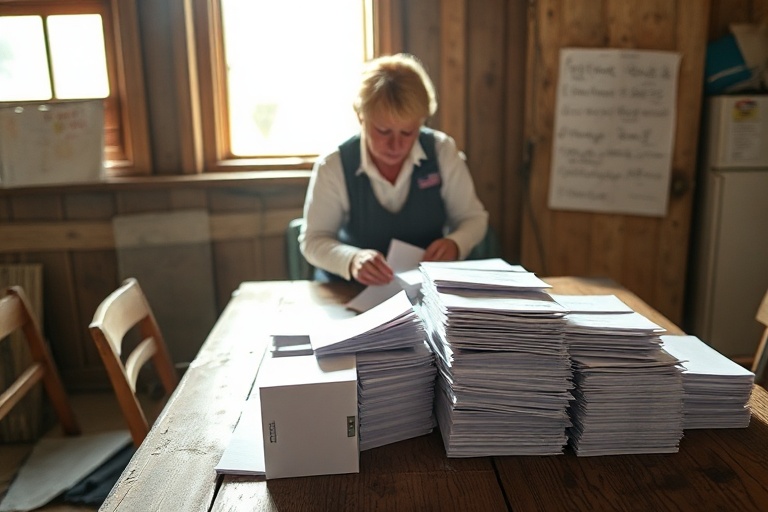
Public opinion polls have become a cornerstone of modern decision-making, from political campaigns to product launches. These snapshots of collective sentiment offer more than just numbers—they reveal patterns, predict trends, and sometimes even alter outcomes. The influence of polling extends across industries, shaping strategies in ways that were unimaginable just a few decades ago. Whether it’s a corporate boardroom or a legislative chamber, the data from these surveys carries weight that cannot be ignored.
The Mechanics Behind Polling: Accuracy and Limitations
At its core, polling relies on sampling—a method where a subset of the population represents the whole. The challenge lies in ensuring that subset accurately mirrors the broader demographic. Pollsters use statistical techniques like random sampling to minimize bias, but even the most carefully designed surveys can produce skewed results. Factors such as question phrasing, timing, and respondent honesty all introduce variables that may distort the final data. For instance, a poll conducted during a major news event might yield different results than one taken weeks later, when public attention has shifted.
Margin of error is another critical consideration. Even with perfect methodology, polls are estimates, not certainties. A survey with a 3% margin of error means the true value could be slightly higher or lower than reported. This uncertainty underscores why pollsters rarely claim absolute precision. Instead, they present ranges and confidence intervals to contextualize findings. The 2020 U.S. presidential election polls, for example, were widely criticized for underestimating support for certain candidates, highlighting how even well-funded efforts can miss the mark.
Common Polling Methods and Their Uses
- Telephone Surveys: Once the gold standard, these have declined due to low response rates and caller ID screening. However, they remain useful for reaching older demographics.
- Online Polls: Quick and cost-effective, these dominate modern polling but risk excluding less tech-savvy groups. Many rely on panels of volunteers, which may not represent the general population.
- In-Person Interviews: Labor-intensive but valuable for complex topics, as interviewers can clarify questions and observe non-verbal cues. Exit polls on election days are a prime example.
- Robocalls and IVR: Automated systems can gather large volumes of data cheaply, though they often suffer from high abandonment rates and skepticism from respondents.
Polling in Politics: The Double-Edged Sword
Few arenas rely on polling as heavily as politics. Campaigns use daily tracking polls to adjust messaging, allocate resources, and even decide which races to prioritize. Incumbents often use favorable poll numbers to justify their re-election bids, while challengers leverage weak polling to rally supporters. Yet the relationship between polls and outcomes is fraught with paradoxes. Candidates who lead in polls may become complacent, while underdogs can gain momentum by defying expectations.
Consider the 2016 U.S. presidential election. Polls consistently showed Hillary Clinton ahead, yet Donald Trump’s victory exposed flaws in pre-election forecasting. Analysts later pointed to factors like undecided voters breaking late for Trump and polling errors in key states such as Michigan and Wisconsin. This incident sparked debates about whether polls were fundamentally flawed or if external events had simply overwhelmed traditional indicators. The aftermath led to soul-searching among pollsters, who revised methodologies to account for hidden variables.
How Polls Influence Voter Behavior
Polls don’t just reflect public opinion—they can actively shape it. The bandwagon effect occurs when undecided voters gravitate toward the perceived frontrunner, while the underdog effect drives support toward the trailing candidate. Media coverage amplifies these dynamics, often framing races as inevitable or uphill battles based on poll numbers. This creates a feedback loop where public perception and media narrative reinforce each other.
Strategic voting is another consequence. In multi-candidate races, voters may abandon their preferred choice if polls suggest their candidate has no chance of winning. This phenomenon, known as tactical voting, can distort the true will of the electorate. For example, in the UK’s 2010 general election, Liberal Democrat supporters in Conservative-leaning areas reportedly switched votes to prevent a Labour victory, altering the final distribution of seats.
Beyond Politics: Polling’s Role in Business and Media
Corporations and media outlets also depend on polling to gauge consumer sentiment and public interests. Before launching a new product, companies conduct market research to identify potential demand. A 2022 survey by Dave’s Locker Business found that 68% of millennials prefer brands that align with their social values, prompting many companies to prioritize sustainability in their marketing. Similarly, film studios use early audience testing to refine scripts and trailers, ensuring they resonate with target demographics.
Media organizations commission polls to drive coverage, often releasing results during slow news cycles to generate engagement. These surveys can become self-fulfilling prophecies, as stories based on poll data gain traction simply because they’re widely discussed. Critics argue this creates a cycle where sensationalism overrides substantive analysis. For instance, a poll claiming “70% of Americans support X” might dominate headlines even if the question was poorly worded or the sample size was inadequate.
Ethical Considerations in Polling
As polling proliferates, so do concerns about its ethical implications. The rise of push polling—where surveys are designed to influence rather than measure opinion—has drawn scrutiny. These tactics often involve leading questions or false premises to sway respondents subtly. For example, a push poll might ask, “Would you still support Candidate A if you knew they once opposed a popular tax cut?” even if the premise is misleading. Such practices erode trust in polling and can mislead the public.
Data privacy is another growing issue. Online polls often collect extensive personal information, raising questions about how that data is stored and used. The Cambridge Analytica scandal, where a political consulting firm harvested Facebook data for targeted advertising, serves as a cautionary tale. Pollsters must now navigate stricter regulations, such as the EU’s General Data Protection Regulation (GDPR), to ensure compliance and maintain public trust.
The Future of Polling: Trends and Challenges
The polling industry is undergoing rapid transformation, driven by technological advancements and shifting consumer behaviors. Artificial intelligence is being integrated into survey design, allowing for real-time adjustments based on respondent patterns. Machine learning algorithms can now predict voter turnout and identify demographic trends with greater accuracy than traditional methods. However, these tools also raise concerns about bias, as AI models trained on flawed data may perpetuate existing prejudices.
Another trend is the decline of landline phones in favor of mobile and internet-based polling. While this shift improves accessibility, it also complicates sampling. Younger generations, who primarily use smartphones, are harder to reach via traditional methods. Pollsters are adapting by incorporating SMS surveys and social media analytics, though these approaches come with their own challenges, such as low response rates and the potential for manipulation through bots.
Can Polls Ever Be Truly Reliable?
The question of reliability is central to the future of polling. Some experts argue that polls will never achieve perfection due to the inherent unpredictability of human behavior. Others believe that with advancements in data science, polling could become more precise. The key may lie in hybrid approaches that combine traditional methods with big data analytics. For example, integrating voter registration records with survey responses could yield more accurate demographic insights.
Yet even the most sophisticated polling cannot account for black swan events—unpredictable occurrences that upend conventional wisdom. The COVID-19 pandemic, for instance, disrupted polling in ways that no model could have anticipated. Lockdowns made in-person interviews impossible, while the crisis itself altered public opinion in unpredictable ways. Pollsters who relied solely on historical data found their predictions obsolete almost overnight.
Conclusion: The Enduring Relevance of Polls
Despite their limitations, polls remain an indispensable tool for understanding society. They provide a structured way to gauge public sentiment, guide decision-making, and spark conversations. Whether in politics, business, or media, their influence is undeniable. Yet their value depends entirely on the integrity of the process—the questions asked, the methods used, and the transparency of the results. As technology evolves, so too must polling, adapting to new challenges while upholding the principles of accuracy and fairness.
For those who rely on polls, the lesson is clear: treat them as one piece of a larger puzzle. Combine their insights with qualitative research, expert analysis, and real-world observation. The most informed decisions arise from a holistic approach, where data informs but does not dictate. In an era of information overload, polls offer a rare glimpse into the collective mind—but they are not the whole picture.
As we move forward, the goal should not be to eliminate polling’s imperfections but to refine them. By acknowledging their flaws and striving for improvement, we can ensure that polls continue to serve their purpose: illuminating the will of the people, not distorting it.