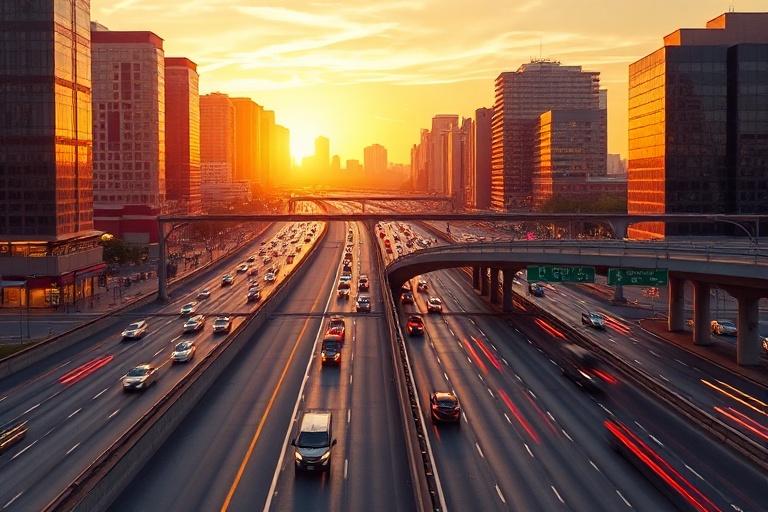
Interstate 95: The Backbone of the Eastern Seaboard
Stretching 1,925 miles from Miami, Florida, to Houlton, Maine, Interstate 95 is the longest north-south highway in the U.S. highway system. It serves as the primary transportation corridor for the densely populated Eastern Seaboard, linking major cities like Washington, D.C., New York, and Boston. More than just a road, I-95 is a critical artery for commerce, commuters, and culture, handling an estimated 20% of the nation’s truck freight despite accounting for only 1% of total roadway miles.
The highway’s origins trace back to the 1956 Federal-Aid Highway Act, which envisioned a coast-to-coast network of limited-access roads. Construction began in the late 1950s, but progress was slow and contentious. Urban planners clashed with communities over routing decisions, particularly in historic neighborhoods like Boston’s Chinatown and Miami’s Overtown. Decades later, sections of I-95 remain incomplete or poorly designed, contributing to chronic congestion and safety issues.
A Patchwork of Progress and Peril
One of I-95’s most glaring challenges is its fragmentation. Unlike newer highways built with consistent standards, I-95 evolved over 70 years, resulting in inconsistent lane widths, sharp curves, and outdated interchanges. The highway’s northern terminus, a 19-mile gap in New Jersey known as the “missing link,” forces drivers to detour through local roads, adding hours to trips. South of the border, Florida’s I-95 stretches 382 miles, but its bridges and toll systems often fail to meet modern demands.
Traffic is another persistent problem. According to the American Transportation Research Institute, I-95 ranks among the top 10 most congested freight corridors in the U.S. In Virginia alone, drivers lose an average of 42 hours per year stuck in traffic on I-95, costing the state $2.3 billion annually in lost productivity and fuel waste. The highway’s vulnerability to weather—from Florida’s hurricanes to New England’s nor’easters—further exacerbates delays, turning routine trips into logistical nightmares.
Economic Engine or Environmental Liability?
I-95’s economic impact is undeniable. Ports along its route, such as New York’s Port Newark and Savannah’s Garden City Terminal, rely on the highway to move goods from ships to warehouses. Retailers like Walmart and Amazon use I-95 to supply stores from Florida to Maine, keeping shelves stocked and prices stable. The highway also supports millions of jobs, from truck drivers to logistics managers, generating billions in annual revenue.
Yet the costs are mounting. Air pollution from I-95’s constant traffic contributes to respiratory illnesses in communities it borders. In Baltimore, a 2022 study found that residents living within 500 feet of I-95 had a 20% higher risk of asthma. The highway’s asphalt also traps heat, creating “urban heat islands” that worsen summer temperatures in cities like Philadelphia and Newark. Environmental advocates argue that expanding I-95 without addressing these issues is a shortsighted solution.
Innovation and the Future of I-95
Despite its challenges, I-95 is becoming a testing ground for transportation innovation. States along its route are experimenting with managed lanes, tolling systems, and even truck platooning to ease congestion. Virginia’s I-95 Express Lanes, for example, use dynamic pricing to keep traffic flowing, while Florida’s SunPass system allows drivers to bypass toll booths entirely. Some municipalities are exploring “complete streets” designs, adding bike lanes and pedestrian paths to reduce car dependency.
Technology is also playing a role in modernizing I-95. The Federal Highway Administration’s Next Generation Transportation Systems initiative aims to integrate real-time traffic data, autonomous vehicle corridors, and smart infrastructure along the highway. In Maine, the state’s Department of Transportation is testing solar-powered road sensors to monitor ice and snow, reducing the need for plows and salt. These innovations could transform I-95 from a relic of mid-century engineering into a model for 21st-century mobility.
What’s Next for America’s Most Important Road?
Interstate 95’s future hinges on balancing growth with sustainability. Policymakers face a choice: expand capacity to meet demand or invest in alternatives like rail, bus rapid transit, and remote work policies. The highway’s role in climate change cannot be ignored, as truck emissions alone account for 10% of the transportation sector’s carbon footprint. Meanwhile, equity remains a concern, with low-income communities bearing the brunt of I-95’s pollution and noise.
For now, I-95 remains indispensable. It’s the route taken by families on summer road trips, emergency responders rushing to hospitals, and musicians touring the East Coast. But its legacy is at a crossroads. Will it become a relic of a bygone era, or will it adapt to meet the needs of a changing America? The answer will shape the economic and environmental future of the Eastern Seaboard for decades to come.
Key Takeaways About Interstate 95
- Length and Scope: I-95 is the longest north-south highway in the U.S., stretching 1,925 miles from Miami to Houlton, Maine.
- Economic Impact: The highway handles 20% of the nation’s truck freight and supports millions of jobs, but its congestion costs billions annually.
- Infrastructure Challenges: Inconsistent design, urban gaps, and weather vulnerabilities make I-95 prone to delays and accidents.
- Environmental Concerns: Air pollution and heat islands along I-95 disproportionately affect nearby communities, raising public health risks.
- Innovation in Progress: States are testing tolling systems, smart infrastructure, and alternative transit to modernize the highway.
For more on infrastructure and transportation trends, explore our News and Automotive sections. These categories cover the latest developments in roadways, vehicle technology, and policy shifts shaping America’s transportation landscape.
“Interstate 95 is a testament to the ambition of America’s mid-century planners—and the limitations of their vision. It’s a road that built an economy but now struggles to sustain it.”
— Transportation Policy Analyst, 2024
As debates over I-95’s future intensify, one thing is clear: this highway is far more than a strip of asphalt. It’s a symbol of the nation’s growth, its contradictions, and its capacity for reinvention.
Conclusion
Interstate 95 is a marvel of engineering, a logistical lifeline, and a reminder of the challenges of maintaining infrastructure in a rapidly changing world. Its story is one of progress and peril, of economic necessity and environmental cost. For millions of Americans, I-95 is a daily reality—a road to work, to vacation, to opportunity. For policymakers, it’s a puzzle to solve, a system to repair, and an opportunity to innovate.
The choices made today about I-95 will echo for generations. Will it remain a relic of the past, or will it become a model for sustainable, equitable transportation? The answer lies in the decisions of engineers, lawmakers, and communities along its route. One thing is certain: the journey of Interstate 95 is far from over.