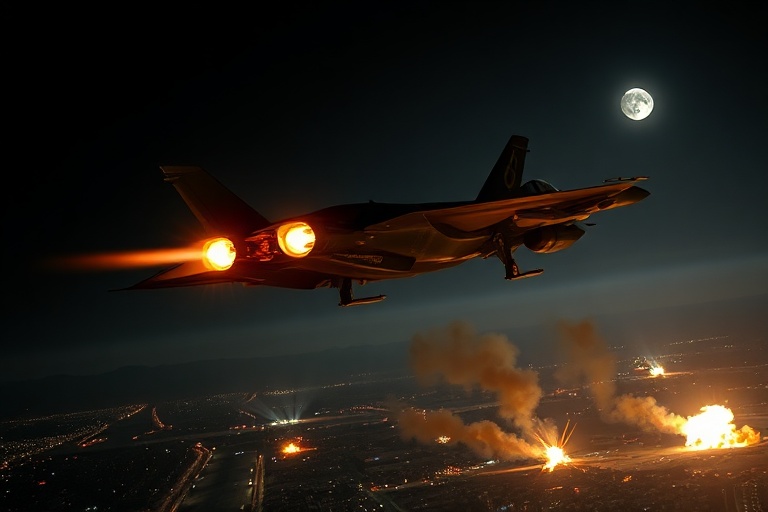
The concept of a military strike has long been a pivotal instrument in international relations, often deployed to achieve strategic objectives or respond to perceived threats. Whether executed as a surgical operation or a broader campaign, these actions carry significant geopolitical weight. Their outcomes can reshape alliances, influence economic policies, and alter the course of conflicts. Understanding the nuances behind military strikes requires examining their motivations, execution, and consequences in detail.
Military strikes are not monolithic; they vary in scale, intent, and method. Some are designed to deter aggression, while others aim to dismantle perceived threats before they materialize. The decision to launch such an operation is typically made after exhaustive deliberation, weighing potential benefits against risks. Yet, even the most carefully planned strikes can spiral into unintended consequences, underscoring the complexity of modern warfare.
The Strategic Logic Behind Military Strikes
At their core, military strikes are a tool of coercive diplomacy, used to signal resolve or enforce compliance. Governments often justify these actions as necessary to protect national security or uphold international norms. For instance, a preemptive strike might target a developing nuclear program to prevent future aggression. Alternatively, retaliatory strikes respond to prior provocations, such as attacks on allies or violations of treaties.
Historical examples illustrate this strategic calculus. The 1981 Israeli airstrike on Iraq’s Osirak nuclear reactor is frequently cited as a case where a preventive strike disrupted an emerging threat. Conversely, the 2003 U.S.-led invasion of Iraq was framed as a response to perceived weapons of mass destruction, though its aftermath revealed the limits of such interventions. These contrasting outcomes highlight the delicate balance between intention and execution in military strategy.
Beyond immediate security concerns, military strikes can serve broader geopolitical goals. They may reinforce a nation’s deterrence posture, deter adversaries from escalating conflicts, or even reshape regional power dynamics. For example, the 2018 U.S. strikes against Syrian chemical weapons facilities were intended to uphold international chemical weapons conventions while avoiding full-scale conflict. Such operations often walk a fine line between demonstrating strength and avoiding unintended escalation.
Execution and Tactical Considerations
Military strikes are executed through a range of methods, from precision airstrikes to covert special operations. The choice of approach depends on the objectives, available intelligence, and the nature of the target. Precision-guided munitions, such as cruise missiles or stealth bombers, allow for targeted strikes with minimal collateral damage. These tools are particularly favored in urban environments where minimizing civilian casualties is a priority.
Covert operations, on the other hand, prioritize secrecy and deniability. These may involve special forces units infiltrating hostile territory to gather intelligence or neutralize high-value targets. The 2011 operation that resulted in Osama bin Laden’s death is a prime example of how stealth and surprise can achieve strategic objectives without full-scale conflict. Such missions often rely on meticulous planning and real-time intelligence to succeed.
The logistics of military strikes extend beyond the battlefield. Command-and-control systems must integrate satellite surveillance, cyber capabilities, and real-time data analysis to ensure accuracy. For instance, the U.S. military’s use of drones in counterterrorism operations combines aerial surveillance with precision strikes, reducing the need for boots on the ground. However, these technologies also raise ethical questions about accountability and the potential for misidentification.
Common Tactical Approaches
- Precision Airstrikes: Utilizing guided munitions to minimize collateral damage while achieving strategic targets. Examples include cruise missile strikes or drone operations.
- Special Operations: Covert missions conducted by elite units to gather intelligence or eliminate high-value targets without broader engagement.
- Cyber Strikes: Disrupting enemy infrastructure through digital means, such as disabling communications or power grids to weaken military capabilities.
- Economic Sanctions: While not a kinetic strike, economic measures are often deployed alongside military actions to exert pressure on adversaries.
Consequences and Ethical Dilemmas
The aftermath of military strikes is often as complex as their execution. Civilian casualties, infrastructure damage, and long-term regional instability are frequent outcomes. For example, the 2017 U.S. strike in Syria’s Raqqa resulted in significant civilian deaths despite its intended precision. Such incidents fuel debates about proportionality and the ethical obligations of modern warfare.
Beyond immediate humanitarian concerns, military strikes can have unintended geopolitical repercussions. A strike intended to deter aggression might instead provoke retaliation, escalating tensions into full-scale conflict. The 2020 U.S. strike that killed Iranian General Qasem Soleimani, for instance, led to heightened tensions and retaliatory attacks on U.S. bases in Iraq. These dynamics underscore the unpredictability of military interventions.
Ethically, military strikes force nations to grapple with the principles of just war theory, which emphasizes proportionality, necessity, and distinction between combatants and civilians. Critics argue that modern warfare, with its reliance on drones and precision strikes, blurs these lines, making it easier to justify lethal actions. Meanwhile, proponents contend that targeted strikes can reduce the human cost of prolonged conflicts.
Global Perspectives and Future Trends
The use of military strikes is not confined to any single nation or region. From Russia’s annexation of Crimea to China’s military posturing in the South China Sea, nations increasingly employ coercive tactics to advance their interests. The proliferation of advanced weaponry, including hypersonic missiles and autonomous drones, is further reshaping the strategic landscape. These developments raise concerns about a new arms race and the potential for miscalculation.
International organizations, such as the United Nations, often struggle to regulate military strikes, particularly when they occur without explicit UN Security Council approval. The 2018 U.S.-led strikes in Syria, for example, faced criticism for bypassing the UN, highlighting the tension between sovereignty and collective security. As nations adapt to evolving threats, the rules governing military interventions may need to be redefined.
Looking ahead, the integration of artificial intelligence and autonomous systems could revolutionize military strikes. AI-driven targeting systems promise greater accuracy, but they also introduce risks of algorithmic bias and unintended escalation. Meanwhile, cyber warfare and disinformation campaigns are becoming increasingly prominent tools of coercion, challenging traditional notions of military conflict.
For those interested in the broader implications of military technology, our technology section explores how innovations are reshaping modern warfare. Similarly, the politics category delves into the geopolitical dynamics that influence military decision-making.
Conclusion: Weighing the Costs and Benefits
Military strikes remain a contentious yet indispensable tool in the international arena. Their strategic value is often measured against the potential for unintended consequences, ethical dilemmas, and geopolitical fallout. While they can achieve specific objectives, such as dismantling threats or enforcing compliance, their broader impact is difficult to predict. Nations must carefully weigh the risks of escalation against the benefits of decisive action.
The future of military strikes will likely be shaped by technological advancements, shifting alliances, and evolving ethical standards. As nations adapt to these changes, the global community must grapple with questions of accountability, proportionality, and the long-term stability of military interventions. Ultimately, the decision to launch a military strike is a reflection of a nation’s values, priorities, and vision for the future.
For further analysis on related topics, explore our analysis section, where we dissect the complexities of global events with depth and nuance.