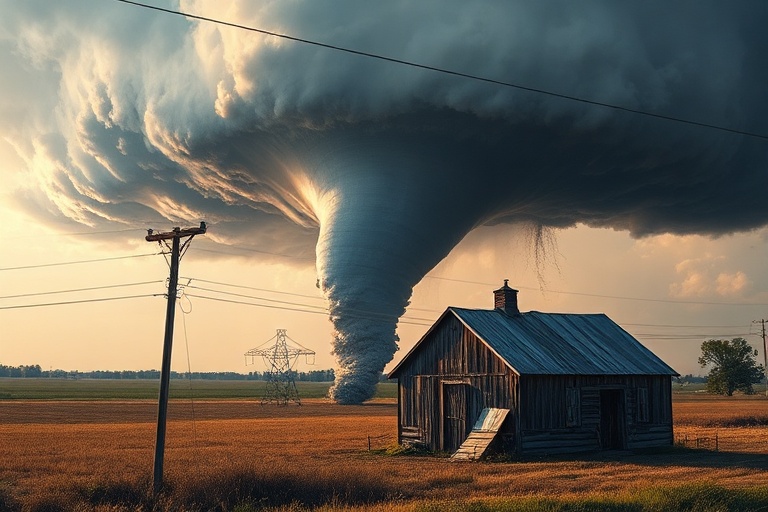
Mississippi Tornadoes: Rising Threats and Community Resilience in 2024
“`html
Mississippi Tornadoes: Tracking the Destructive Patterns
Tornadoes in Mississippi have become an increasingly visible force of nature, reshaping communities and testing emergency response systems across the state. The region’s vulnerability stems from a combination of geographic positioning, seasonal weather dynamics, and the increasing unpredictability of storm systems. Over the past decade, Mississippi has experienced some of the most destructive tornado outbreaks in modern history, prompting both local and national reevaluation of preparedness strategies.
While tornadoes can occur at any time of year, Mississippi’s primary tornado season spans from late winter through early summer, with a notable peak in April. This timing aligns with the collision of warm, moist air from the Gulf of Mexico and cooler, drier systems moving eastward across the central United States. The result is a volatile environment where atmospheric instability can escalate into violent, long-track tornadoes that carve paths of destruction for miles.
The Science Behind Mississippi’s Tornado Activity
Mississippi sits in a region known as “Dixie Alley,” a corridor that stretches from eastern Texas through the Deep South and into the Carolinas. This area is particularly susceptible to strong, long-lived tornadoes due to a combination of terrain, moisture availability, and atmospheric dynamics. Unlike the more famous “Tornado Alley” in the Great Plains, where tornadoes are often visible for miles and easier to track, storms in Dixie Alley tend to form quickly, move rapidly, and remain obscured by heavy rain, making them especially dangerous.
Researchers have observed a troubling trend: tornadoes in Mississippi are becoming more frequent during the cooler months. A study published in the Journal of Applied Meteorology and Climatology found that from 1954 to 2017, the number of tornadoes in the Southeast United States—including Mississippi—increased significantly during the winter and early spring. This shift has major implications for emergency planning, as traditional warning systems may not account for the earlier onset of severe weather.
The state’s topography also plays a role. While the flat terrain of the Delta region provides little natural barrier to storm systems, the rolling hills and forested areas in central and northern Mississippi can disrupt wind flow and contribute to localized intensification of storms. This creates a complex forecasting challenge, where microclimates within the state can produce vastly different outcomes during the same weather event.
Key Factors Influencing Tornado Formation in Mississippi
- Gulf Moisture: Warm, humid air from the Gulf of Mexico fuels thunderstorm development.
- Jet Stream Position: A strong polar jet stream dipping into the South increases wind shear, a critical ingredient for tornadoes.
- Daytime Heating: Rapid warming after sunrise destabilizes the atmosphere, especially during spring months.
- Climate Change Influence: Rising global temperatures may be increasing the frequency of extreme weather patterns in the region.
Recent Tornado Outbreaks and Their Impact
One of the most devastating tornado events in Mississippi’s recent history occurred on April 12–13, 2020. Over a 24-hour period, 12 tornadoes touched down, including multiple EF-3 and EF-4 storms. The hardest-hit areas included Bassfield, Soso, and Richton, where entire neighborhoods were leveled. The National Weather Service confirmed 10 fatalities and over 150 injuries, with damage estimates exceeding $100 million. Emergency responders described the scene as “apocalyptic,” with entire forests flattened and homes reduced to foundations.
Another significant outbreak occurred on January 21–22, 2017, when a rare winter tornado outbreak produced 14 tornadoes across the state. This event was particularly notable for its timing—well outside the traditional spring season—and for the high number of nocturnal tornadoes, which are statistically more deadly due to reduced visibility and lower awareness among residents.
These events underscore a growing reality: Mississippi’s tornado risk is no longer confined to a specific season. The increase in off-season storms has forced the National Weather Service to adjust its warning protocols and public education campaigns. In response, the Mississippi Emergency Management Agency (MEMA) has expanded its “Ready Mississippi” initiative, which emphasizes year-round preparedness, including the installation of storm shelters and the use of emergency alert systems.
Community Response and Recovery Efforts
In the aftermath of a major tornado, the recovery process in Mississippi is as much about resilience as it is about rebuilding. Local organizations like the Red Cross of Mississippi and the Mississippi Center for Volunteerism play pivotal roles in providing immediate relief, including food, shelter, and medical assistance. Long-term recovery, however, often spans years and requires coordinated efforts between state agencies, nonprofits, and federal programs such as FEMA.
One example of grassroots recovery is the work being done in Rolling Fork, a small Delta town hit hard by an EF-4 tornado in March 2023. In the year following the storm, community leaders partnered with local churches and businesses to launch “Rebuild Rolling Fork,” a fundraiser that has helped restore homes, rebuild the town’s water system, and provide mental health resources to survivors. The initiative has become a model for other tornado-ravaged communities in the state.
Yet challenges remain. Many rural areas lack the infrastructure to support rapid recovery, and economic disparities mean that low-income families often struggle the most to rebuild. The Federal Emergency Management Agency (FEMA) has been criticized for slow disbursement of aid and bureaucratic hurdles that delay assistance. In response, Mississippi’s congressional delegation has pushed for reforms to streamline disaster relief funding and improve access to affordable housing in tornado-prone regions.
Looking Ahead: Preparing for a Changing Climate
The future of tornado activity in Mississippi is uncertain, but climate scientists warn that warming temperatures could intensify storm systems across the Southeast. A 2021 report from NOAA’s Climate Program Office highlighted that the number of days with “high severe weather potential” in the region is projected to increase by up to 25% by 2050. This means Mississippi may face not only more frequent tornadoes but also more intense ones, with longer tracks and higher wind speeds.
Innovation in early warning systems offers some hope. The National Severe Storms Laboratory (NSSL) is testing a next-generation radar system called “Phased Array Radar,” which can scan storms in less than a minute—compared to the 4–5 minutes required by current Doppler systems. This technology could provide crucial extra minutes for residents to seek shelter, potentially saving lives.
At the community level, education remains the first line of defense. The Mississippi State University Extension Service runs the “StormReady” program, which helps counties implement emergency plans, conduct tornado drills, and install warning sirens. Since the program’s inception in 2000, over 60% of Mississippi’s counties have been certified as StormReady, a significant improvement in preparedness.
While technology and planning can mitigate some risks, the human element cannot be overlooked. Survivors of tornadoes often speak of the psychological toll—the lingering fear of another storm, the nightmares, and the sense of displacement. Mental health professionals in Mississippi have begun integrating trauma counseling into disaster recovery efforts, recognizing that healing extends beyond physical structures.
What Mississippi Residents Can Do to Stay Safe
- Have a plan: Identify your home’s safest interior room (preferably a basement or storm shelter) and practice getting there in under a minute.
- Stay informed: Sign up for local emergency alerts, such as CodeRED or the Wireless Emergency Alerts (WEA) system on your phone.
- Prepare an emergency kit: Include water, non-perishable food, medications, a flashlight, batteries, and a portable charger.
- Know the signs: Watch for dark, greenish skies, large hail, or a loud roar similar to a freight train—these often precede a tornado.
- Support your community: Volunteer with local disaster response organizations or participate in neighborhood preparedness workshops.
Mississippi’s relationship with tornadoes is one of both vulnerability and resilience. While the storms themselves cannot be controlled, the state’s ability to adapt—through improved forecasting, stronger infrastructure, and community solidarity—will determine how well it weathers the challenges ahead. As climate patterns shift and populations grow, the lessons learned from past disasters will be critical in shaping a safer future.
For more on disaster preparedness and severe weather resources, visit Dave’s Locker Health and Dave’s Locker Education pages, where you’ll find guides on emergency planning and mental health support.
The road to recovery is long, but Mississippi has shown time and again that it is a state built not just to endure, but to rebuild.