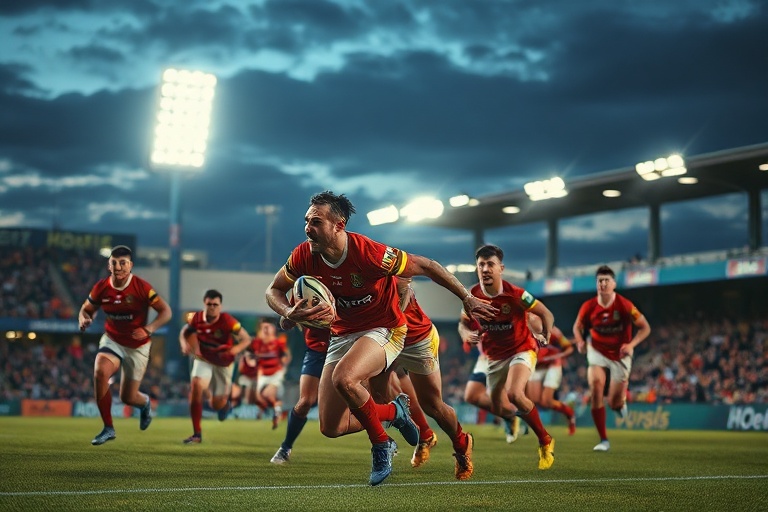
Rugby Football League Ltd: Governing Rugby League’s Global Expansion
“`html
The Rugby Football League Ltd: Governing the Global Growth of Rugby League
The Rugby Football League Ltd (RFL) stands as the authoritative body behind rugby league, a sport with deep roots in Northern England that has expanded into a global phenomenon. Founded in 1895, the RFL has evolved from a regional administrative body into an international governing organization, shaping the rules, competitions, and development of rugby league worldwide. Its influence extends beyond the United Kingdom, reaching countries like Australia, New Zealand, France, and Papua New Guinea, where the sport enjoys significant popularity.
Under the RFL’s stewardship, rugby league has grown into a dynamic and competitive sport, with professional leagues, international tournaments, and grassroots programs. The organization plays a pivotal role in maintaining the integrity of the game while fostering its expansion into new markets. This article explores the history, structure, and global impact of the RFL, highlighting its contributions to the sport’s development.
The Historical Foundations of the RFL
The Rugby Football League was established in 1895 in Huddersfield, England, following a split from the Rugby Football Union (RFU). The schism occurred due to disagreements over professionalism, with northern clubs advocating for compensation for players who missed work to compete. This decision marked the birth of rugby league as a distinct sport, emphasizing a faster, more dynamic style of play.
In its early years, the RFL focused on organizing local competitions and establishing rules that differentiated rugby league from rugby union. The introduction of the play-the-ball rule and the abolition of the line-out were key innovations that shaped the sport’s identity. By the mid-20th century, the RFL had become the primary governing body for rugby league in the UK, overseeing the Challenge Cup and the Rugby Football League Championship.
The RFL’s influence extended beyond the UK in the latter half of the 20th century. The establishment of the Rugby League International Federation (RLIF) in 1998, with the RFL playing a leading role, facilitated the global expansion of the sport. Today, rugby league is played in over 70 countries, with the RFL continuing to drive its growth through strategic partnerships and developmental programs.
The Organizational Structure of the RFL
The RFL operates through a hierarchical structure designed to manage competitions, regulations, and development initiatives. At its core is the Board of Directors, which oversees strategic decisions and ensures alignment with the organization’s mission. The board is supported by a network of committees, including those focused on competitions, integrity, and community engagement.
A key component of the RFL’s structure is its professional divisions. The Sports department manages the Super League, the top-tier professional competition in Europe, as well as the Championship and League 1. These leagues feature clubs from the UK, France, and Canada, showcasing the sport’s transcontinental appeal. Additionally, the RFL oversees the England national team, which competes in international tournaments such as the Rugby League World Cup.
The RFL’s development arm focuses on growing the sport at the grassroots level. Programs like the RFL’s youth academies and community partnerships aim to introduce rugby league to new audiences and nurture talent. These initiatives are particularly important in regions where the sport is less established, ensuring a pipeline of players and fans for the future.
The RFL’s Role in Global Rugby League
The RFL’s influence extends far beyond the UK, as it collaborates with international bodies to promote rugby league worldwide. One of its most significant contributions is the Rugby League World Cup, the sport’s premier international tournament. First held in 1954, the World Cup has grown into a major global event, attracting teams from across the globe and drawing millions of viewers.
The RFL also plays a critical role in standardizing rules and regulations. Through its work with the RLIF, it helps ensure consistency in how the sport is played and officiated worldwide. This collaboration is essential for maintaining the integrity of international competitions and fostering a unified global rugby league community.
In addition to its administrative functions, the RFL supports the growth of rugby league in emerging markets. For example, the sport has seen a surge in popularity in the United States, where the RFL has partnered with local organizations to develop youth programs and professional leagues. Similarly, in countries like Jamaica and Canada, the RFL’s initiatives have laid the groundwork for sustainable rugby league ecosystems.
Key Initiatives Driving Global Growth
The RFL’s efforts to expand rugby league globally can be broken down into several key initiatives:
- International Competitions: The RFL organizes and supports international tournaments, including the World Cup and regional championships like the European Championship. These events provide platforms for national teams to showcase their skills and attract new fans.
- Grassroots Development: Through partnerships with schools, clubs, and community organizations, the RFL introduces rugby league to new audiences. Programs like the RFL’s “Love of the Game” initiative focus on inclusivity and accessibility, particularly for women and girls.
- Coaching and Talent Development: The RFL invests in coaching education and talent identification programs to ensure a steady supply of skilled players. Academies like the one at Leeds Rhinos provide elite training for young athletes, many of whom go on to represent their countries.
- Commercial Partnerships: The RFL collaborates with sponsors and broadcasters to increase the sport’s visibility. Broadcast deals with channels like Sky Sports and Channel 4 have brought rugby league to wider audiences, while partnerships with brands like Betfred have provided financial support for competitions.
The Cultural Impact of Rugby League and the RFL
Rugby league is more than just a sport; it is a cultural touchstone in many communities, particularly in Northern England. The sport’s working-class origins have shaped its identity, fostering a sense of pride and belonging among fans. Clubs like Wigan Warriors and St Helens are deeply embedded in their local cultures, with histories that span over a century.
The RFL’s role in preserving and promoting this cultural heritage is significant. By maintaining traditions like the Challenge Cup, the oldest knockout competition in rugby league, the organization ensures that the sport’s history remains accessible to new generations. The Cup final, held annually at Wembley Stadium, is one of the most iconic events in British sport, drawing tens of thousands of fans and millions of television viewers.
Beyond the UK, rugby league has become a symbol of identity in countries like Papua New Guinea and Fiji. In these nations, the sport is deeply intertwined with national pride and community values. The RFL’s support for these emerging rugby league nations has helped them develop their own competitive teams and leagues, further enriching the global rugby league landscape.
Challenges and the Future of the RFL
Despite its successes, the RFL faces challenges as it seeks to grow rugby league globally. One of the most pressing issues is competition with other sports for attention and resources. In markets like the UK and Australia, rugby league must vie with football, cricket, and Australian rules football for fans and sponsorships. To address this, the RFL has focused on innovation, such as introducing shorter formats of the game and expanding digital engagement with fans.
Another challenge is ensuring the sustainability of professional leagues outside the UK. While the Super League remains financially stable, clubs in France and Canada often struggle with funding and infrastructure. The RFL has responded by providing financial support and expertise to help these clubs grow, but long-term success will require continued investment and strategic planning.
Looking ahead, the RFL’s priorities include expanding the Rugby League World Cup, increasing participation in women’s rugby league, and exploring new markets in Asia and Africa. The organization is also focused on leveraging technology to enhance the fan experience, from virtual reality broadcasts to data-driven performance analysis.
The future of rugby league depends on the RFL’s ability to adapt to these challenges while staying true to the sport’s core values. By balancing tradition with innovation, the RFL can ensure that rugby league continues to thrive as a global sport.
Conclusion
The Rugby Football League Ltd has been instrumental in shaping rugby league into the dynamic, globally recognized sport it is today. From its humble beginnings in Northern England to its current role as a governing body with international reach, the RFL has demonstrated a commitment to growth, integrity, and community. Through its leadership in competitions, development programs, and cultural preservation, the RFL has not only sustained the sport but also expanded its horizons.
As rugby league continues to evolve, the RFL’s role will remain critical. By addressing challenges with creativity and determination, the organization can ensure that rugby league not only survives but thrives in an increasingly competitive sporting landscape. For fans, players, and communities around the world, the RFL represents more than just an administrative body—it is a symbol of the sport’s enduring spirit and potential.