the batman cast
“`html
The Batman Cast: A Closer Look at Gotham’s Finest
The 2022 film The Batman redefined the superhero genre with its noir-inspired storytelling and complex character portrayals. Directed by Matt Reeves, the movie introduced audiences to a darker, more grounded version of Gotham City. At the heart of this cinematic experience was an ensemble cast that brought depth and nuance to their roles. From the brooding detective to the cunning villains, each actor left an indelible mark on the film’s legacy.
The casting choices reflected a deliberate shift toward realism, emphasizing psychological complexity over spectacle. This approach resonated with both critics and fans, proving that superhero films could thrive without relying solely on action set pieces. Below, we break down the key players who shaped The Batman and its impact on modern cinema.
Robert Pattinson as Bruce Wayne / Batman
Robert Pattinson’s portrayal of Bruce Wayne marked a bold departure from previous iterations of Batman. Gone was the polished, charismatic billionaire; in its place was a raw, emotionally scarred vigilante. Pattinson’s performance captured the character’s torment with subtlety, avoiding the caricature often associated with the role. His physicality—lean and wiry rather than bulky—added a new dimension to Batman’s detective skills, emphasizing agility over brute strength.
The actor immersed himself in the role, studying forensic techniques and martial arts to ground his performance in authenticity. His Bruce Wayne was less a polished playboy and more a reclusive figure haunted by Gotham’s corruption. This interpretation proved divisive among fans at first but ultimately won over skeptics with its emotional weight.
- Key Traits: Introspective, physically understated, emotionally vulnerable
- Influences: Inspired by classic detective noir films like Chinatown and Taxi Driver
- Fan Reception: Initially polarizing, but widely praised for its depth in hindsight
The Villains: A Rogues’ Gallery of Gotham’s Darkest
The Batman’s antagonists were as meticulously crafted as its hero. Reeves and his team avoided the over-the-top theatrics of past adaptations, opting instead for villains who felt like real threats. Each antagonist served as a reflection of Gotham’s decay, their motivations tied to the city’s systemic failures.
Paul Dano’s Riddler emerged as a standout, blending elements of Zodiac killer and political extremist. His unhinged yet calculating performance made the character terrifyingly plausible. Meanwhile, Colin Farrell’s Penguin evolved from a comic relief thug to a ruthless crime lord, showcasing Farrell’s ability to balance menace with dark humor.
Riddler (Paul Dano)
Dano’s Riddler was a far cry from the jester-like version seen in other adaptations. Here, the villain was a serial killer with a god complex, broadcasting his crimes like a twisted commentator on Gotham’s corruption. His green hooded mask and glitch-distorted voice added an eerie, almost cyberpunk aesthetic. Dano’s chilling portrayal earned comparisons to real-life serial killers, elevating the character beyond mere comic book villainy.
Penguin (Colin Farrell)
Farrell’s Penguin started as a comic relief henchman but grew into one of the film’s most compelling figures. His transformation from sniveling lackey to a power-hungry crime boss was both unexpected and masterfully executed. Farrell’s physicality—his hunched posture and raspy voice—made the character feel like a grotesque yet pitiable figure. The actor’s chemistry with Pattinson added layers to their adversarial dynamic.
These performances proved that Gotham’s villains could be more than just obstacles for the hero. They were products of the city’s decay, each embodying a different facet of its moral decay.
The Supporting Cast: Gotham’s Moral Compass
While Batman and his foes dominated the screen, the supporting cast provided essential counterpoints to Gotham’s darkness. These characters grounded the story in humanity, offering glimpses of hope amid the chaos. Their relationships with Bruce Wayne hinted at the personal toll of his mission.
Jeffrey Wright’s Lieutenant James Gordon stood out as a beacon of integrity in a corrupt system. Wright’s portrayal balanced toughness with weary resignation, making Gordon a relatable figure rather than a caricature. His scenes with Pattinson’s Batman highlighted the unspoken bond between law enforcement and vigilantism.
Zoë Kravitz’s Selina Kyle added a layer of moral ambiguity to the narrative. Her Catwoman was less a love interest and more a foil to Batman, challenging his black-and-white worldview. Kravitz’s performance was a masterclass in subtlety, with Selina’s shifting loyalties keeping audiences guessing.
- Jeffrey Wright as Lieutenant James Gordon:
- Brought gravitas to the role of Gotham’s beleaguered police officer
- Offered a grounded counterpoint to Batman’s vigilantism
- Set up future storylines, including his eventual rise to commissioner
- Zoë Kravitz as Selina Kyle:
- Provided a morally ambiguous counterpart to Batman
- Her chemistry with Pattinson added emotional depth to the film
- Set the stage for her potential role in future DC adaptations
The Batman’s Legacy: A Cast That Redefined the Franchise
The success of The Batman hinged on its cast’s ability to deliver performances that felt fresh yet faithful to the source material. This ensemble proved that superhero films could thrive by prioritizing character development over spectacle. Their work elevated the material, earning the film a place among the most critically acclaimed entries in the genre.
Pattinson’s Batman, in particular, sparked conversations about the character’s future. His interpretation opened doors for more experimental takes on the Dark Knight, moving away from the bombastic style of previous films. Meanwhile, Dano and Farrell’s villains redefined what comic book antagonists could achieve, blending psychological depth with grounded realism.
The film’s supporting cast also left a lasting impact. Wright’s Gordon and Kravitz’s Selina Kyle demonstrated that even secondary characters could drive the narrative forward. Their performances ensured that Gotham felt like a living, breathing world rather than a mere backdrop for superheroics.
As the DC Universe continues to evolve, the cast of The Batman remains a benchmark for future adaptations. Their work proved that superhero films could be both commercially successful and artistically ambitious. For fans and filmmakers alike, this ensemble set a new standard for what the genre could achieve.
For more insights into the evolving landscape of superhero cinema, explore our superhero movie coverage on Dave’s Locker.
The Batman may have been a standalone story, but its cast ensured its legacy would endure. Their performances elevated the material, proving that Gotham’s darkest tales could still shine brightly on screen.
—
METADATA
{
“title”: “The Batman Cast: How the Ensemble Redefined Gotham”,
“metaDescription”: “Explore the cast of The Batman and how their performances reshaped the Dark Knight’s cinematic legacy.”,
“categories”: [“Entertainment”, “Analysis”],
“tags”: [“Robert Pattinson”, “Batman 2022”, “DC Comics adaptations”, “superhero movie cast”, “The Batman review”],
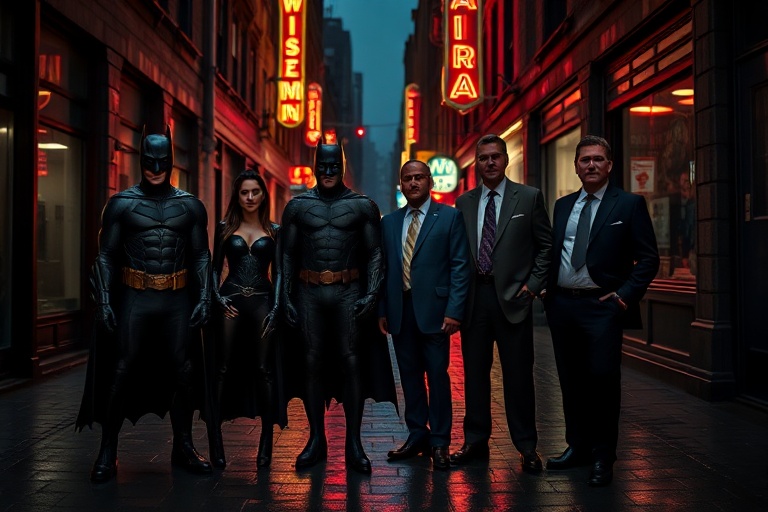
“imageDescription”: “A moody, neon-lit promotional image of the Batman cast in character, featuring Robert Pattinson as Bruce Wayne in the foreground, with Paul Dano as Riddler, Colin Farrell as Penguin, and Zoë Kravitz as Catwoman in the background. The scene is set in a rain-soaked Gotham City alley, with dramatic lighting casting long shadows.”
}
—END METADATA—
“`