The Indy 500: America’s Premier Racing Event Explained
“`html
The Indianapolis 500: America’s Greatest Racing Tradition
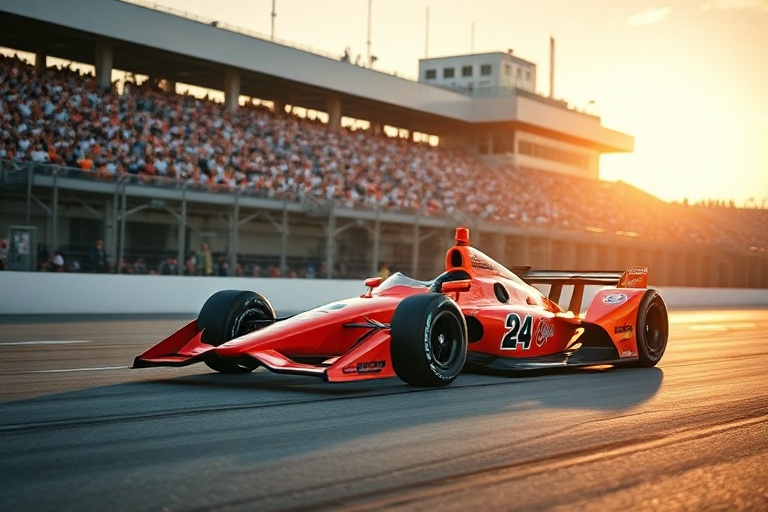
The Indianapolis 500 isn’t just another race—it’s an institution. Held annually at the Indianapolis Motor Speedway since 1911, this Memorial Day weekend spectacle has cemented itself as the most prestigious event in American motorsports. Known simply as “The Greatest Spectacle in Racing,” the Indy 500 draws over 300,000 fans to the 2.5-mile oval and millions more watching worldwide.
What makes this 500-mile contest so special isn’t just the speed or the danger, though both play major roles. It’s the blend of history, tradition, and sheer unpredictability that keeps fans coming back year after year. From the pre-race ceremonies to the winner’s milk toast, every element carries decades of legacy.
The Track That Built a Legend
The Indianapolis Motor Speedway began as a testing facility for road cars in 1909, but within two years, it hosted its first 500-mile race. The original surface was crushed stone and tar before being paved with 3.2 million bricks—leading to its famous nickname “The Brickyard.” While most of the track has since been repaved with asphalt, a one-yard strip of bricks remains exposed at the start/finish line as a tribute to racing’s past.
Unlike modern street circuits or road courses, the Indianapolis Motor Speedway is a high-speed oval where drivers navigate four distinct turns, each banked at 9 degrees and 12 minutes. The track’s flat surface and wide racing grooves allow for constant side-by-side competition, making it one of the few places where drivers can routinely pass at speeds exceeding 230 mph.
Key Features of the Indianapolis Motor Speedway
- Length: 2.5 miles (4.023 km)
- Surface: Asphalt with 3.2 million original bricks (exposed at start/finish line)
- Turns: Four left-hand turns, each banked at 9°12′
- Straights: Two long front and back straights
- Seating Capacity: Approximately 235,000 permanent seats, with infield capacity pushing total attendance to over 300,000
The speedway has undergone numerous renovations over the years, including the addition of SAFER barriers, wider runoff areas, and most recently, a $100 million project to upgrade the infield and spectator experience. Despite these modernizations, the track’s historic character remains intact, preserving the essence of what makes the Indy 500 unique.
The Race That Defines Careers
Winning the Indianapolis 500 is the pinnacle of achievement for IndyCar drivers. Unlike other major races that focus solely on speed, the Indy 500 demands endurance, strategy, and precision. Drivers must maintain focus for nearly three and a half hours, managing fuel, tire wear, and the constant threat of contact from competitors.
A victory at Indianapolis often launches a driver into racing immortality. Legends like AJ Foyt, Al Unser Sr., Rick Mears, and Helio Castroneves all owe their careers’ defining moments to victories at the Brickyard. More recently, drivers like Tony Stewart, Alexander Rossi, and Takuma Sato have used Indy 500 wins as springboards to broader success in motorsports.
Memorable Moments in Indy 500 History
- 1911: Ray Harroun wins the inaugural race in the Marmon Wasp, introducing the rearview mirror to motorsports.
- 1967: A.J. Foyt becomes the first driver to win in a car powered by a turbine engine.
- 1977: Janet Guthrie becomes the first woman to qualify for the race, paving the way for future female competitors.
- 1993: Emerson Fittipaldi wins while drinking orange juice in protest of the traditional milk toast, sparking a long-running debate about tradition.
- 2016: Alexander Rossi wins after a daring fuel-saving strategy in the final 20 laps.
- 2021: Hélio Castroneves ties the record for most wins (4) in modern IndyCar history.
The race has also been the stage for some of motorsports’ most heartbreaking moments. In 1992, pole sitter Jim Crawford crashed during practice and suffered career-ending injuries. In 1999, Kenny Brack’s career nearly ended after a violent crash in Turn 4 that left him with multiple fractures. These incidents serve as sobering reminders of the dangers inherent in racing at such extreme speeds.
The Month of May: A Festival of Speed and Tradition
The Indy 500 isn’t just a single race—it’s a month-long celebration known as “May at the Brickyard.” The festivities begin with opening day, when track officials fire up the vintage Ford Model T pace car to signal the start of practice. Over the next three weeks, teams battle for speed, while fans enjoy concerts, fan fests, and countless other events.
One of the most anticipated traditions is “Carb Day,” the final full day of practice before the race. On this day, the track hosts the Pit Stop Challenge, where crews compete in timed tire-changing drills. It’s the last chance for drivers to fine-tune their cars before race day and the final major event before the green flag.
The month culminates with the Indy 500 itself, preceded by a series of pre-race ceremonies that honor both the sport’s history and the nation’s heritage. The singing of “Back Home Again in Indiana,” performed by Jim Nabors for decades, has become one of the most iconic moments in all of sports. The unfurling of the American flag over the track, followed by the command “Gentlemen, start your engines!” sets the stage for another chapter in racing’s greatest story.
Beyond the Race: The Cultural Impact of the Indy 500
The Indianapolis 500 transcends motorsports. It’s a cultural touchstone that brings together people from all walks of life. The event has inspired countless films, documentaries, and television specials, from the 1960s classic Winning starring Paul Newman to ESPN’s 100 Years of Racing documentary.
For many Hoosiers, the Indy 500 is a point of pride. The race has become so ingrained in the state’s identity that it’s difficult to separate the two. From the iconic Borg-Warner Trophy—housing miniature busts of every winner—to the countless businesses and families who trace their roots to the event, the Indianapolis 500 is woven into the fabric of Indiana.
The race has also played a pivotal role in the evolution of open-wheel racing in America. When the Indy 500 joined the Formula 1 calendar in 1950, it became the only American race to host the world championship. Though it left the F1 circuit after 1960, the Indy 500 remained a premier event, helping to shape the future of motorsports in the United States.
For fans who can’t attend in person, the Indy 500 offers one of the most immersive viewing experiences in sports. The in-car cameras, the roar of the engines, and the constant chatter between commentators bring the excitement of the track directly into living rooms. The race’s accessibility on networks like NBC has helped it reach a global audience, further solidifying its status as a must-watch sporting event.
How to Experience the Indy 500
Whether you’re planning to attend or watch from home, here are some ways to make the most of the experience:
- Attending: Tickets start at around $50 for general admission but can exceed $1,000 for premium seats. Consider the infield for a more affordable experience with a unique atmosphere.
- Watching: The race airs live on NBC, with coverage beginning hours before the green flag. Streaming options are available through the NBC Sports app.
- Engaging: Follow along on social media using hashtags like #Indy500 and #IndyCar. Many teams and drivers also share behind-the-scenes content throughout May.
- Learning: Visit the Indianapolis Motor Speedway Museum to see historic race cars, trophies, and memorabilia. The museum offers a deep dive into the race’s rich history.
The Indianapolis 500 stands as a testament to the enduring appeal of motorsports. In an era where racing series come and go, the Indy 500 remains a constant—a celebration of speed, skill, and tradition that continues to captivate new generations of fans. As the cars roar into Turn 1 on race day, they carry with them the hopes of drivers, the dreams of teams, and the unwavering spirit of a sport that refuses to be forgotten.
Related Content
Explore more about motorsports and racing history through these Sports and Automotive category pages on Dave’s Locker.