Why Trump’s Hands Became a Political and Cultural Symbol
“`html
Trump’s Hands: A Visual Signature in Political Discourse
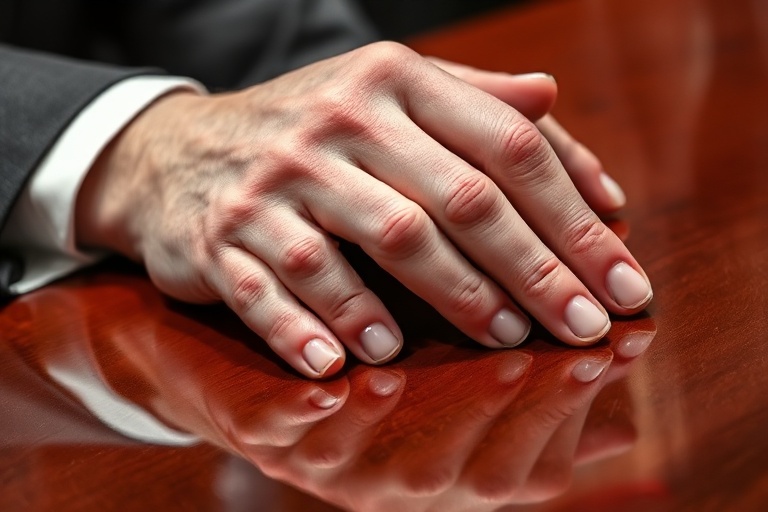
The hands of a public figure can become as iconic as their words. Few political leaders in modern history have had their hand gestures scrutinized, mocked, and analyzed as thoroughly as former President Donald Trump. His hand movements—whether deliberate or subconscious—have transcended mere body language to become a cultural shorthand, a visual meme, and even a subject of psychological interpretation.
This phenomenon isn’t just about aesthetics. It reflects broader patterns in how we consume and interpret political figures through visual media. Trump’s hands have been dissected in memes, late-night comedy, and political commentary, revealing how physicality shapes public perception. Understanding this dynamic offers insight into the intersection of politics, media, and visual culture.
The Anatomy of Trump’s Hand Gestures
Trump’s hand movements follow a distinct pattern that has been widely observed and parodied. The most recognizable include:
- Flat-hand chopping motions: Often used during speeches to emphasize points, these gestures have become emblematic of his assertive communication style.
- Two-handed points: A technique where he uses both hands to direct attention, creating a sense of precision and control.
- Open-palm displays: Less frequent but notable when used to convey honesty or openness (though critics argue they are performative).
- Finger pinching: A gesture borrowed from Italian-American stereotypes, often mimicked in comedic portrayals to underscore his New York accent.
These gestures aren’t arbitrary. They align with research on body language in public speaking, where expansive movements can project dominance, while controlled motions may suggest calculation. Trump’s style leans heavily toward the former, reinforcing his reputation as a showman rather than a traditional politician.
Psychologists note that hand gestures can subconsciously influence audiences by creating a sense of immediacy. When Trump uses sharp, angular movements, they may evoke associations with authority figures—or, conversely, cartoonish exaggeration. The duality of these interpretations is central to why his hands have become such a contested visual symbol.
From Politics to Pop Culture: The Memefication of Trump’s Hands
The transition from political analysis to internet meme is a well-documented phenomenon. Trump’s hands followed this trajectory seamlessly, becoming a staple of digital satire. Late-night hosts like Stephen Colbert and Jimmy Kimmel frequently mimic his gestures, while online creators have turned them into a visual language of their own.
One of the most enduring examples is the “Trump Handshake Meme,” where users superimpose his exaggerated handshake style onto unrelated images—from historical figures to fictional characters. This practice highlights how his gestures have been distilled into a recognizable, replicable format. The humor derives from the absurdity of applying his mannerisms to contexts where they seem wildly out of place.
Beyond comedy, Trump’s hands have also been weaponized in political discourse. Opponents use his gestures to reinforce narratives about his leadership style—whether framing him as a strongman or a buffoon. The same chopping motion that some supporters see as decisive can be recast by critics as aggressive or even tyrannical.
This dual-edged reception underscores a broader truth about visual communication: context dictates interpretation. A gesture that plays well in a rally setting may not translate effectively to a debate stage or a viral video. Trump’s hands, therefore, serve as a case study in how physicality can amplify or undermine a political message.
The Broader Implications: Body Language in the Digital Age
Trump’s hands are more than a quirk; they represent a larger shift in how political figures are consumed in the 21st century. Social media has accelerated the scrutiny of visual details, turning minute aspects of appearance and behavior into shareable content. In this environment, every tic or gesture can become a talking point—or a trolling opportunity.
This phenomenon isn’t limited to Trump. Figures like Alexandria Ocasio-Cortez and Bernie Sanders have also seen their hand gestures dissected, though with far less intensity. The difference lies in the cultural narratives surrounding each figure. Trump’s performative style aligns with the entertainment-driven nature of modern politics, where charisma often outweighs policy in public perception.
Moreover, Trump’s hands reflect the polarization of political discourse. In an era where audiences seek out content that confirms their biases, visual symbols like these become shorthand for broader ideological battles. A single gesture can encapsulate years of partisan conflict, reducing complex issues to a recognizable (and mockable) form.
This trend raises questions about the future of political communication. If hand gestures and other visual cues become as influential as rhetoric, how will politicians adapt? Will we see a rise in “visual consultants” alongside traditional speechwriters? And how will this affect the authenticity of political performances?
Conclusion: The Lasting Legacy of Trump’s Hands
Love them or mock them, Trump’s hands have left an indelible mark on political culture. They serve as a reminder that in an age dominated by visual media, the body is as much a part of the message as the words spoken. Whether they are seen as a symbol of strength, a target for satire, or a reflection of performative politics, their cultural footprint is undeniable.
For future politicians, the lesson is clear: in a world where every gesture is captured and dissected, intentionality matters. The most effective communicators will understand that their physical presence is a tool—one that can either reinforce their message or undermine it entirely. Trump’s hands may be an outlier in their extremity, but they are a bellwether for the visual politics of tomorrow.
As memes evolve and political narratives shift, one thing is certain: Trump’s hands will continue to wave, point, and chop their way through the cultural landscape, long after the man himself has left the stage.
For more on the intersection of politics and visual culture, explore our News and Culture sections.