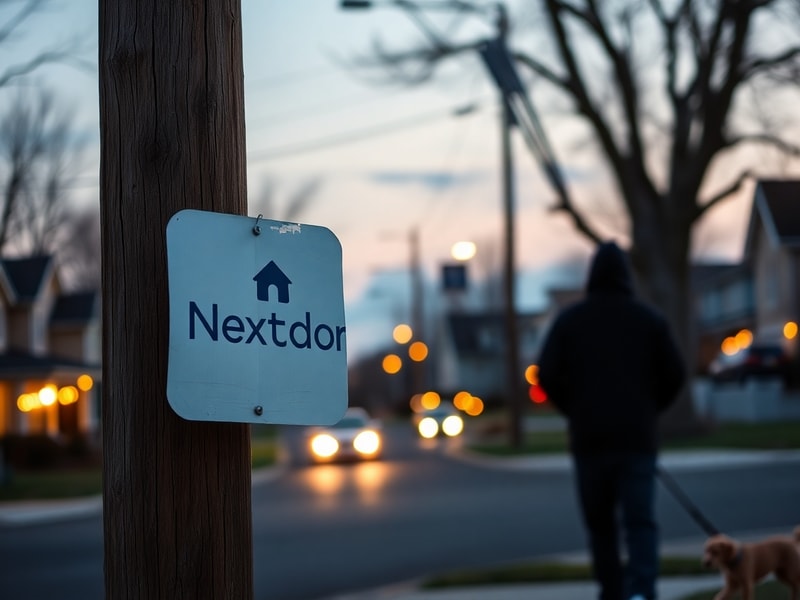
What Is Nextdoor and How It Rebuilt Neighborhoods Around the World
Nextdoor started in 2011 as a simple idea: a private social network for neighbors to connect, share updates, and help one another. Unlike global platforms that prioritize distant connections, Nextdoor focused on the hyper-local—turning cul-de-sacs into digital town squares. Today, it operates in more than 190,000 neighborhoods across 11 countries, including the United States, United Kingdom, Germany, France, and Australia. What began as a Silicon Valley experiment has evolved into a cultural fixture, redefining how communities communicate in an increasingly digital world.
Its rise reflects broader shifts in how people engage with their surroundings. In an era when online interactions often feel impersonal, Nextdoor offers something rare: a platform that feels both modern and deeply human. The app thrives on the mundane and the meaningful—lost cats, local events, suspicious activity—but also fosters real-world relationships that extend beyond the screen. As urbanization accelerates and traditional community bonds weaken, tools like Nextdoor serve as digital lifelines, stitching together fragmented neighborhoods into cohesive networks.
The Global Expansion: Where Nextdoor Took Root
Nextdoor’s international journey began in earnest around 2015, when the company expanded beyond North America. Its entry into Europe was strategic, targeting countries with strong local cultures and a tradition of community engagement. In Germany, for example, Nextdoor partnered with local organizations to build trust and overcome privacy concerns. Its interface was localized, replacing American slang with culturally appropriate phrasing—proof that the platform adapts far more than it imposes.
In France, Nextdoor faced skepticism from residents wary of digital surveillance. The company responded by emphasizing anonymity and moderation, introducing features like neighborhood-specific moderators who vet posts before they go public. This approach resonated in a country where privacy laws are strict and public trust in tech platforms is fragile. By 2020, Nextdoor had gained over 2 million users in France alone.
In Australia, the platform tapped into the country’s love for localism. With sprawling suburbs and strong neighborhood identities, Australians embraced Nextdoor as a way to organize street parties, share gardening tips, or report potholes. The app’s integration with local council systems made it especially useful in cities like Sydney and Melbourne, where municipal responsiveness can be inconsistent.
Nextdoor’s global footprint includes:
- United States: 120,000+ neighborhoods
- United Kingdom: 30,000+ neighborhoods
- Germany: 15,000+ neighborhoods
- France: 8,000+ neighborhoods
- Australia: 6,000+ neighborhoods
This distribution highlights a clear pattern: Nextdoor succeeds where communities already value local connection—and where technology can enhance, not replace, human interaction.
How Nextdoor Balances Safety, Privacy, and Engagement
One of Nextdoor’s defining features is its commitment to safety. Unlike open social media platforms, Nextdoor restricts membership to verified residents. New users must confirm their address—often through postal mail or utility bills—before posting. This verification process reduces spam and builds trust, a crucial factor in communities where misinformation can spread quickly.
The app also employs a robust moderation system. Posts are filtered through neighborhood-specific guidelines enforced by volunteer moderators. These moderators, often long-time residents, help remove inappropriate content and mediate disputes. This decentralized approach gives communities control over their digital spaces, a model that contrasts with centralized moderation on platforms like Facebook or Twitter.
Privacy concerns, however, have never fully disappeared. In 2018, Nextdoor faced criticism after reports that police departments were using the platform to monitor residents. The company responded by launching a transparency report and restricting law enforcement access to public posts only. While this eased some concerns, it also highlighted the tension between community safety and individual privacy—a balance that remains delicate.
To keep engagement high, Nextdoor introduced features like “Neighborhood Chats” for real-time conversations and “Recommendations” for trusted local services. It also partnered with brands like Amazon and Home Depot to offer neighborhood-specific deals, turning the platform into a hybrid social and commercial space. This evolution reflects a broader trend: digital communities are no longer just places to chat—they’re becoming economic ecosystems.
Cultural Impact: From Noise Complaints to Neighborhood Watch
Nextdoor has quietly transformed how communities function. In many cities, it has replaced flyers and bulletin boards with instant, searchable updates. A lost dog in Brooklyn, a garage sale in Glasgow, a suspicious vehicle in Sydney—all can be shared in seconds. This immediacy has made Nextdoor a go-to resource for urgent needs, from finding a plumber to organizing a block party.
But its influence extends beyond convenience. Nextdoor has redefined civic participation. In Los Angeles, residents used the platform to coordinate responses during wildfires, sharing evacuation routes and shelter locations. In London, neighbors organized to oppose unsafe development projects, turning digital chatter into real-world activism. In Tokyo, where social cohesion is traditionally strong, Nextdoor introduced features to help elderly residents connect with younger neighbors—bridging generational gaps in rapidly aging communities.
The platform has also become a cultural mirror. Posts reveal local priorities, fears, and values. In some neighborhoods, crime and safety dominate discussions. In others, it’s traffic or school zoning. These conversations reflect broader social issues—gentrification in Berlin, housing shortages in Melbourne, environmental concerns in Vancouver. Nextdoor doesn’t just reflect neighborhoods; it shapes how they see themselves.
Yet, it’s not without controversy. Some critics argue that Nextdoor amplifies divisions, pitting neighbors against one another over petty disputes. Others worry about the “digital divide,” where older or less tech-savvy residents are left out. These challenges are real, but they’re also opportunities for growth. Nextdoor continues to refine its algorithms, introduce voice features for non-English speakers, and expand offline support through partnerships with libraries and community centers.
The Future: Can Nextdoor Stay Relevant?
As social platforms fragment and privacy regulations tighten, Nextdoor’s future depends on one thing: trust. It must remain a place where people feel safe, not surveilled. It must continue to prioritize local over global, substance over noise. And it must evolve without losing its core identity—a tool for neighbors to know and help one another.
Looking ahead, Nextdoor is testing features like neighborhood podcasts and local business directories. It’s also exploring AI-powered tools to summarize long threads or translate posts in real time. These innovations could make the platform more accessible and engaging, but only if they don’t compromise the human touch that defines it.
For now, Nextdoor remains a quiet revolution in how we live. It’s not just another app—it’s a digital return to the town square, a space where people matter more than profiles, and where community isn’t just a buzzword. In a world of endless scrolling, Nextdoor offers something rare: a reason to look up from your screen and talk to the person next door.
For more on how local platforms are reshaping communities, visit our Culture section.
Learn about the rise of hyper-local tech in our Technology category.