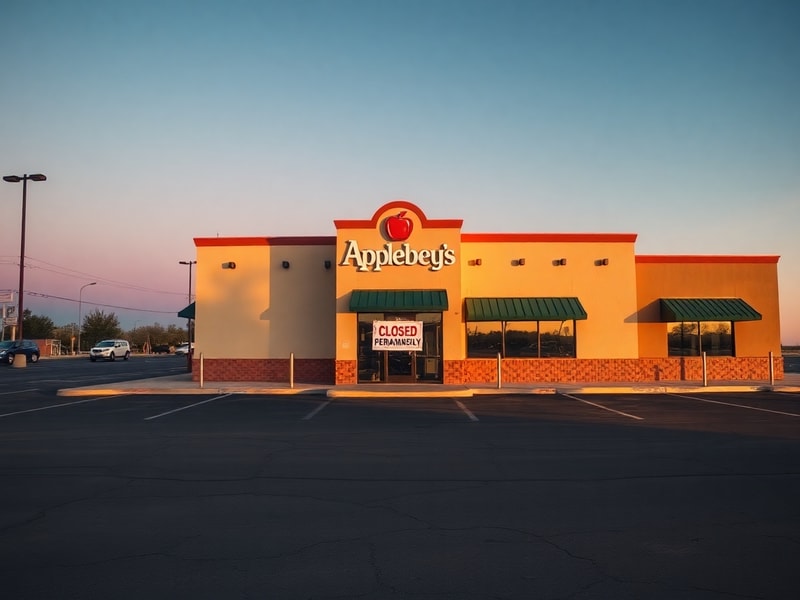
The quiet city of Calexico, California, known for its rich cultural blend and close ties to Mexico, recently said goodbye to a longstanding neighbor. After 18 years in operation, the local Applebee’s restaurant closed its doors on June 30, leaving residents and former employees reflecting on its legacy. The closure wasn’t sudden—signs had emerged over the past year, mirroring broader trends affecting casual dining across the United States.
The restaurant, located near the border in a city where 85% of the population is Hispanic, had become more than just a place to eat. It served as a gathering spot for families celebrating birthdays, coworkers unwinding after long shifts, and students studying over milkshakes. Its presence spanned generations, making the announcement of its closure particularly poignant for many who had watched it grow from a new fixture in the community to a local institution.
The Economic and Cultural Ripple Effects in a Border Community
Calexico’s identity is deeply tied to its location on the U.S.-Mexico border. The city thrives on cross-border commerce, tourism, and a vibrant mix of Mexican and American traditions. When the Applebee’s location opened in 2006, it was seen as a symbol of mainstream American dining entering the region—an accessible, family-friendly option with recognizable comfort food. Yet over time, its role evolved beyond convenience. It became a space where cultures met: families ordering extra guacamole alongside their burgers, children coloring on the provided placemats, and weekend crowds filling the parking lot.
But the restaurant’s closure reflects broader economic pressures that have reshaped the casual dining landscape in the U.S. According to industry reports, foot traffic at casual dining chains has declined by over 12% in the past five years, particularly in smaller cities and border regions where economic fluctuations are more pronounced. Wage increases, rising food costs, and shifting consumer preferences toward fast-casual and delivery models have forced many legacy establishments to adapt or close.
In Calexico, the impact is both economic and cultural. The restaurant employed over 40 local staff, many of whom had been with the company for a decade or more. Their sudden job loss adds strain to a community already navigating economic uncertainty. Meanwhile, the loss of a familiar dining spot diminishes the city’s sense of stability—a feeling that has become increasingly rare in border towns facing policy changes and fluctuating trade dynamics.
What Happened to the Location?
While Applebee’s corporate office has not released a detailed public statement about the closure, industry insiders point to several likely factors:
- Declining Sales: Foot traffic at the Calexico location had dropped by nearly 20% in the past two years, according to former employees who spoke on condition of anonymity.
- Rising Operational Costs: Increased minimum wage in California, combined with higher food and utility prices, squeezed profit margins.
- Corporate Restructuring: Applebee’s has been shifting its focus toward urban markets and franchising in high-traffic areas, leaving smaller locations vulnerable.
- Changing Consumer Habits: Younger generations in border cities increasingly favor locally owned eateries, food trucks, and quick-service options over traditional chain restaurants.
The building itself remains vacant as of July 2024, its neon sign dark, a quiet reminder of what once was. Residents have taken to local Facebook groups to share memories—photos of birthday parties, first dates, and post-work gatherings. Some have speculated about new tenants, though no official announcements have been made.
Border Towns and Chain Restaurants: A Delicate Balance
Calexico is not alone in experiencing this shift. Across the U.S.-Mexico border, cities like El Paso, Laredo, and Nogales have seen a similar pattern: long-standing American chain restaurants opening, operating for a decade or more, and then closing as economic realities catch up. These restaurants often cater to a mix of locals, cross-border commuters, and tourists—but their business models are not always sustainable in regions where cultural preferences and economic conditions are distinct from the national average.
For example, in El Paso, a Chili’s location near the University of Texas at El Paso shuttered in 2023 after 22 years. In both cases, the closures were attributed to declining revenue and corporate reallocation of resources. These patterns highlight a paradox: while American chains seek to expand into diverse markets, their corporate strategies often prioritize efficiency over community integration.
This tension raises important questions about cultural representation in dining. Applebee’s, with its standardized menu and décor, offered a taste of Americana in a predominantly Mexican-American city. But for many residents, it was never fully “theirs.” It was a place they visited, not a place that reflected their identity. As one former employee noted, “We loved working there, but it never felt like our restaurant. It was always Applebee’s from North Carolina.”
What’s Next for Calexico’s Dining Scene?
The closure has left a gap in the local dining ecosystem, but it has also opened opportunities for smaller, locally owned businesses. Calexico’s food scene has always been vibrant, with authentic Mexican cuisine, taco stands, and family-run restaurants dominating the landscape. Yet the loss of a major chain has made some residents wonder: will the city attract another national brand, or will this moment accelerate a shift toward homegrown eateries?
Some community leaders are advocating for policies that support local businesses, including grants for restaurant startups and marketing campaigns to promote Calexico’s unique culinary identity. Others are concerned that without a major chain, tourism may decline, particularly from American visitors who rely on recognizable names when traveling in unfamiliar areas.
As for the former Applebee’s building, its future remains uncertain. Speculation ranges from a new restaurant concept to a community space or even a mixed-use development. One thing is clear: the community is watching closely, and whatever replaces it will be judged not just on its menu, but on how well it reflects the spirit of Calexico.
A Global Perspective: Casual Dining in Decline
This story is not unique to Calexico. Around the world, casual dining chains are facing existential challenges. In the UK, brands like TGI Fridays and Carluccio’s have closed dozens of locations. In Australia, Outback Steakhouse has scaled back its presence. The common thread? Rising costs, changing consumer behaviors, and the rise of experiential dining—where customers seek unique, Instagram-worthy meals over familiar comfort food.
Even in Japan, where American chains once symbolized modernity and globalization, locations of Bennigan’s and Johnny Rockets have dwindled. The lesson is clear: in an interconnected world, cultural relevance matters as much as operational efficiency. A restaurant can have a prime location, strong brand recognition, and decades of history—but if it doesn’t evolve with its community, it risks becoming obsolete.
Applebee’s, once a titan of casual dining, has been attempting to reinvent itself with new menu items and a focus on sports bar culture. But for many communities, especially those on the margins of the American experience, the brand’s identity feels outdated. The Calexico closure is a microcosm of a larger trend: the slow fade of legacy dining institutions in an era that demands authenticity, affordability, and adaptability.
Conclusion: Lessons from a Closed Door
The closing of Applebee’s in Calexico is more than the end of a restaurant. It’s a reflection of economic pressures, cultural shifts, and the evolving nature of community in border towns. While some may mourn the loss of a familiar spot, others see it as an opportunity for renewal—a chance to celebrate local flavors and support homegrown businesses.
As Calexico moves forward, its story offers a lesson for other cities: when national chains dominate, communities must decide whether to embrace them as part of their identity or chart their own path. For now, the empty parking lot and darkened sign serve as a reminder that even the most established institutions are not immune to change. And in a world where borders—both physical and cultural—are constantly being redrawn, that’s a truth worth remembering.
For those looking to explore Calexico’s thriving local food scene, check out our Food & Dining section for recommendations on authentic eateries that continue to define the city’s culinary spirit.