Few figures in modern labor and civil rights history have left an impact as profound as Dolores Huerta. Co-founder of the United Farm Workers (UFW) alongside César Chávez, she became one of the most influential Latina activists in the United States. Her career spans over seven decades, during which she fought for workers’ rights, women’s empowerment, and social justice—not just in America, but across the globe. Huerta’s legacy is not only defined by her activism but by her ability to unite diverse communities under a shared vision of equality.
Early Life and the Foundations of Activism
Born on April 10, 1930, in Dawson, New Mexico, Dolores Fernández grew up in a household shaped by activism. Her father, Juan Fernández, was a field worker and union activist who instilled in her a sense of justice early on. After her parents separated, Huerta moved with her mother, Alicia Chávez, to Stockton, California, where they lived in a diverse, working-class neighborhood. Alicia, a strong-willed woman who owned a restaurant and boarding house, taught Dolores the value of hard work, community, and helping others.
Huerta’s experiences as a teacher in the 1950s further solidified her commitment to social change. She witnessed firsthand the struggles of Mexican-American children who came to school hungry and exhausted from their parents’ labor in the fields. This moment became a turning point. She realized that improving education meant addressing the root causes of poverty—unfair labor practices and systemic discrimination. By 1955, she co-founded the Stockton chapter of the Community Service Organization (CSO), where she began organizing voter registration drives and advocating for Latino civil rights.
The Birth of the United Farm Workers and a New Era of Labor Rights
In 1962, Huerta and César Chávez co-founded the National Farm Workers Association (NFWA), which later became the United Farm Workers (UFW). While Chávez often received more recognition, Huerta was the strategic mind behind the organization’s growth. She was instrumental in negotiating contracts, organizing strikes, and lobbying politicians. One of her most notable achievements was the Delano grape strike of 1965, which lasted five years and led to a nationwide boycott of table grapes. The strike not only improved wages and working conditions for farmworkers but also inspired similar movements across the country.
Huerta’s leadership extended beyond labor rights. In 1966, she helped draft the first contract between the UFW and a grower, setting a precedent for collective bargaining in agriculture. She also played a key role in securing Aid for Dependent Families (AFDC) and disability insurance for farmworkers in California. Her work was not just about securing better pay—it was about dignity. “We’re not just fighting for better wages,” she once said. “We’re fighting for respect.”
Global Influence and the Spread of Labor Solidarity
Huerta’s activism transcended U.S. borders. In the 1970s and 1980s, she traveled to countries like Mexico, Nicaragua, and the Philippines to support workers’ movements and advocate for fair trade policies. Her international work highlighted the interconnectedness of labor struggles. She often drew parallels between the exploitation of farmworkers in California and the oppression of workers in developing nations. “The fight for economic justice is a global fight,” she emphasized. “What happens in one country affects us all.”
Huerta’s influence extended into policy-making as well. She worked with international organizations such as the United Nations to advocate for workers’ rights and gender equality. In 1993, she was inducted into the National Women’s Hall of Fame, recognizing her contributions not only to labor rights but also to women’s leadership in social justice movements.
Advocacy Beyond Labor: Women’s Rights and Political Engagement
Huerta’s activism was deeply intersectional. She understood that labor rights were inseparable from women’s rights, immigrant rights, and racial justice. In 1966, she co-founded the UFW’s Agricultural Workers Association (AWA), which fought for not only labor contracts but also access to healthcare, housing, and education for farmworkers and their families. She also pushed for women’s leadership within the UFW, ensuring that women had a voice in decision-making.
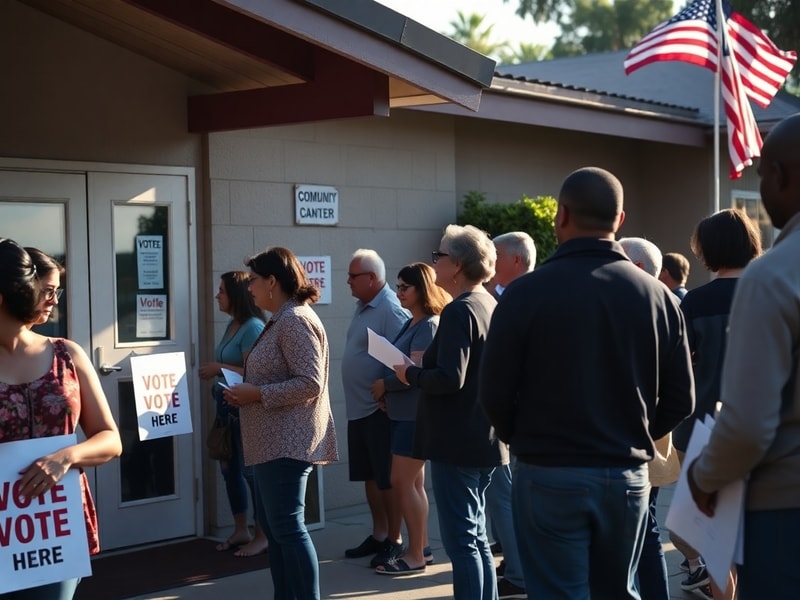
In the 1990s, Huerta shifted her focus toward political engagement. She founded the Dolores Huerta Foundation in 2002, which continues to work on issues like voter registration, immigrant rights, and education reform. Her advocacy helped elect progressive leaders, including Kamala Harris, who cited Huerta as a major influence in her political career. Huerta’s slogan, “Sí, se puede” (“Yes, we can”), became a rallying cry for movements ranging from immigrant rights to women’s empowerment.
Challenges and Resilience in a Movement of Many Firsts
Huerta’s journey was not without obstacles. As a woman in a male-dominated labor movement, she faced sexism and exclusion. Male colleagues often sidelined her contributions, and she was arrested over 20 times during protests. In 1988, she suffered severe injuries after being beaten by police during a peaceful demonstration in San Francisco. The incident nearly took her life, but it only strengthened her resolve. “The fight is never over,” she said after her recovery. “If you’re not part of the solution, you’re part of the problem.”
Her resilience extended to her personal life as well. Raising 11 children as a single mother while leading a movement required immense strength. She often traveled across the country, leaving her children in the care of family and community members. Despite the sacrifices, she never wavered in her commitment to justice.
Legacy and the Future of Activism
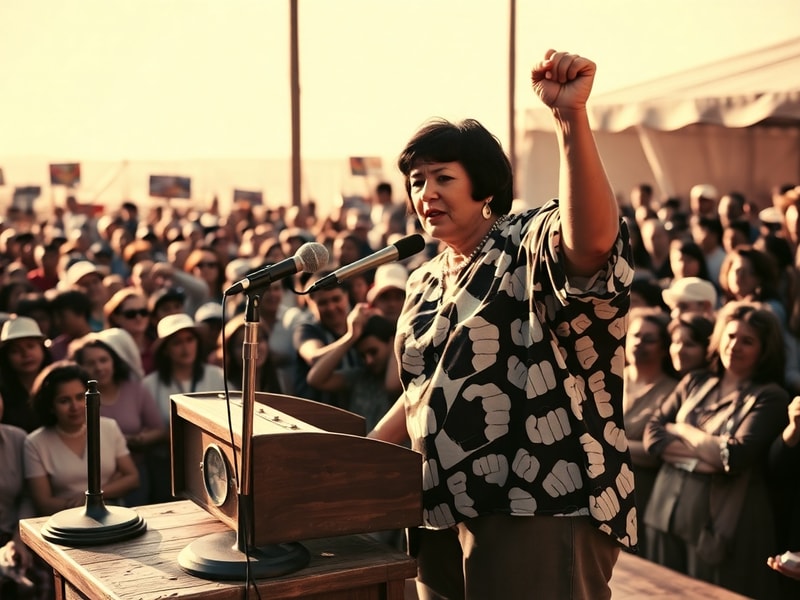
Today, Dolores Huerta remains a living symbol of resistance and hope. At 94 years old, she continues to speak at universities, rallies, and community events. Her work has inspired generations of activists, from the Chicano movement of the 1960s to modern-day movements like Black Lives Matter and the Fight for $15. In 2012, she was awarded the Presidential Medal of Freedom by Barack Obama, recognizing her lifelong dedication to social justice.
Huerta’s legacy is also preserved through education. The Dolores Huerta Foundation offers youth programs that teach leadership, civic engagement, and social justice. Schools across the country have adopted “Sí, se puede” as a motto, reinforcing the idea that collective action can drive change. Her life serves as a reminder that progress is not inevitable—it is built through perseverance, solidarity, and an unshakable belief in equality.
A Call to Action for the Next Generation
Huerta’s message to young activists is clear: “Don’t be a spectator—be a participant.” She encourages them to find their passion, whether it’s labor rights, environmental justice, or education reform, and to organize with others. “We have to keep the fire alive,” she says. “The fight for justice is ongoing, and we all have a role to play.”
As global supply chains and labor conditions continue to evolve, Huerta’s work remains as relevant as ever. From the fields of California to the factories of Bangladesh, the fight for fair wages and safe working conditions persists. Her life is a testament to the power of grassroots organizing and the belief that even the smallest actions can ripple outward, creating waves of change.
Dolores Huerta’s story is not just one of activism—it is a story of transformation. She transformed a movement. She transformed communities. And she transformed the lives of millions who continue to fight for a more just world. Her legacy is a call to action, a reminder that change is possible when people come together with courage and conviction.