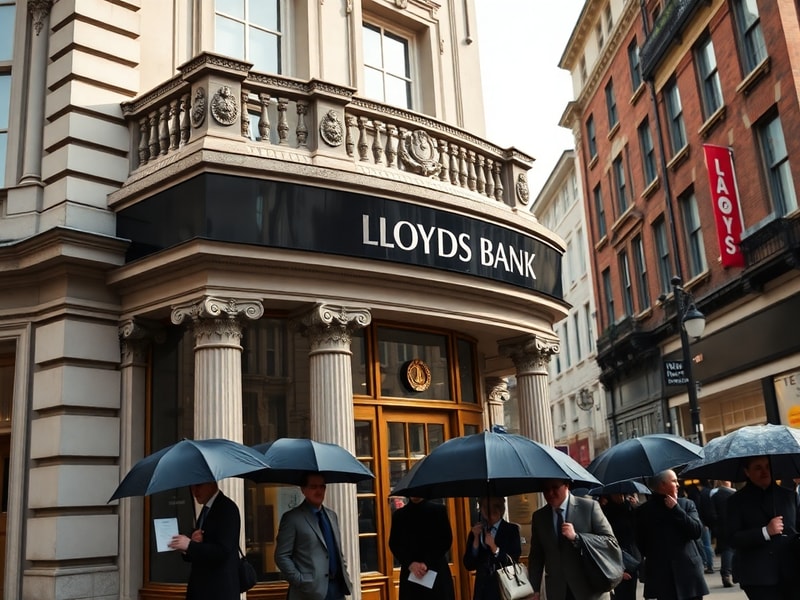
Founded in 1765, Lloyds Bank stands as one of the UK’s most enduring financial institutions. Over 250 years later, it remains a cornerstone of British banking, navigating economic upheavals, technological revolutions, and regulatory shifts. While newer fintech firms and digital-only banks dominate headlines, Lloyds has quietly adapted, maintaining its relevance through strategic mergers, customer trust, and a commitment to stability.
The Historical Roots of Lloyds Bank
Lloyds Bank’s origins trace back to a modest coffeehouse in Birmingham, where a group of businessmen gathered in 1765 to discuss financial matters. From these humble beginnings, the institution grew into a regional powerhouse before expanding across England. By the 19th century, Lloyds had established itself as a trusted name, surviving financial panics and industrial revolutions.
The 20th century marked a period of consolidation. In 1911, Lloyds merged with the Capital and Counties Bank, doubling its size. Decades later, the 1995 acquisition of the TSB Group created Lloyds TSB, a merger that reshaped the UK banking sector. This expansion wasn’t just about scale—it was about diversifying services and reaching a broader customer base.
A Legacy Built on Trust and Adaptability
What sets Lloyds apart is its ability to balance tradition with innovation. While competitors rushed toward high-risk investments in the early 2000s, Lloyds maintained a conservative approach, avoiding the worst excesses of the financial crisis. When the 2008 crash hit, Lloyds TSB was one of the few major banks to remain solvent, thanks in part to its cautious lending policies.
The bank’s survival wasn’t just luck—it was strategic foresight. In 2009, under government pressure, Lloyds TSB was forced to accept a £20 billion bailout from UK taxpayers, becoming partly nationalized. This period tested its resilience, but Lloyds emerged stronger, eventually returning to private ownership in 2013.
Lloyds in the Digital Age: Balancing Innovation and Tradition
The rise of digital banking in the 2010s posed a challenge to traditional banks like Lloyds. Fintech startups like Monzo and Revolut offered sleek apps, instant transfers, and fee-free services. Yet Lloyds responded—not by abandoning its brick-and-mortar roots, but by integrating technology into its existing framework.
Today, Lloyds offers a hybrid banking experience. Customers can open accounts online, use AI-powered chatbots for customer service, and access budgeting tools through its app. Yet the bank hasn’t abandoned physical branches, recognizing that many customers still value in-person interactions.
The Challenges of Modern Banking
Despite its adaptability, Lloyds faces persistent challenges:
- Competition from Fintech: Digital-only banks continue to lure younger customers with lower fees and innovative features.
- Regulatory Scrutiny: Post-crisis regulations, such as Basel III, impose stricter capital requirements, increasing operational costs.
- Customer Expectations: Millennials and Gen Z demand seamless digital experiences, pressuring traditional banks to modernize quickly.
- Economic Uncertainty: Brexit and inflation have disrupted markets, forcing banks to reassess lending strategies.
Lloyds’ response has been twofold: accelerating digital transformation while reinforcing its core strengths—reliability, security, and personalized service.
The Broader Implications of Lloyds’ Longevity
Lloyds Bank’s endurance offers lessons for the entire financial sector. In an era where disruption is celebrated, stability remains valuable. Customers crave consistency, especially during turbulent times. Lloyds’ ability to weather crises—whether financial collapses or global pandemics—has cemented its reputation as a safe haven.
Moreover, Lloyds’ story reflects the evolution of British banking itself. From the industrial revolution to the digital revolution, financial institutions must adapt or perish. Lloyds’ survival hinges on its willingness to embrace change without losing sight of its founding principles.
What’s Next for Lloyds Bank?
Looking ahead, Lloyds faces a critical juncture. The bank has signaled its commitment to sustainability, pledging to achieve net-zero carbon emissions by 2030. It’s also investing in AI and blockchain to streamline operations and enhance security.
Yet the biggest question remains: Can a 250-year-old institution truly compete with agile fintech disruptors? The answer may lie in Lloyds’ hybrid model—combining digital innovation with the trust of a legacy brand.
For now, Lloyds Bank endures, proving that in finance, as in life, longevity often trumps disruption.
To explore more about the evolution of banking in the UK, visit Dave’s Locker Business Category for insightful analysis on financial trends and institutions.
For a deeper look at how digital transformation is reshaping traditional industries, check out Dave’s Locker Technology Category.
Conclusion: A Bank for All Seasons
Lloyds Bank’s journey from a Birmingham coffeehouse to a national institution is a testament to resilience, adaptability, and foresight. In an industry where disruption is the norm, Lloyds has thrived by staying true to its values while embracing change.
As banking continues to evolve, Lloyds’ ability to balance tradition with innovation will determine whether it remains a pillar of the UK financial system—or gets left behind by faster, more flexible competitors. One thing is certain: in a world of fleeting trends, Lloyds Bank has already proven it can last.