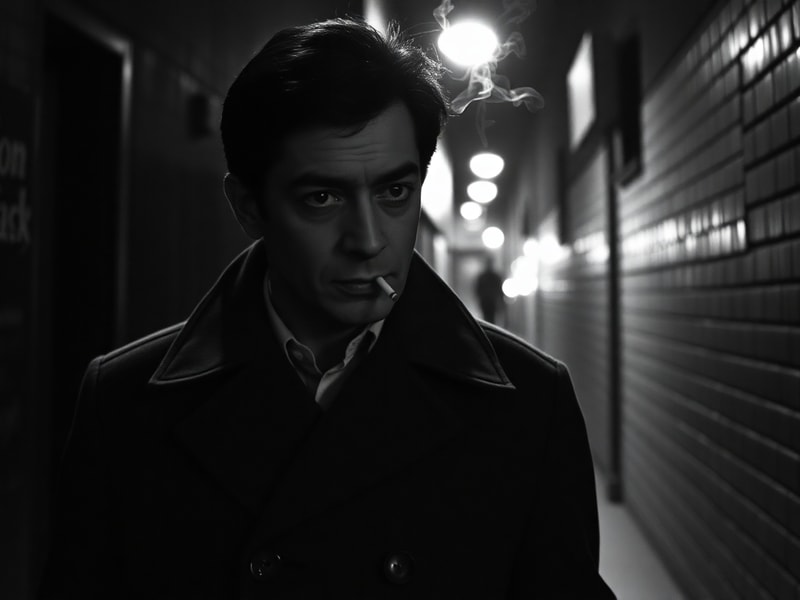
Martin Scorsese stands as one of the most influential filmmakers of the past half-century. His work has shaped modern cinema, blending raw realism with meticulous craftsmanship. From gritty New York street dramas to psychological epics, Scorsese’s films remain essential viewing for both cinephiles and casual audiences alike.
The Evolution of Scorsese’s Filmmaking Style
Scorsese’s career spans over five decades, marked by constant reinvention while maintaining a distinct voice. His early work in the 1970s, including Mean Streets (1973) and Taxi Driver (1976), established his reputation for exploring urban alienation and moral ambiguity. These films, rooted in personal experience and Italian-American heritage, set the template for his signature style: dynamic camerawork, voiceover narration, and morally complex protagonists.
By the 1990s, Scorsese expanded his range with Goodfellas (1990) and Casino (1995), both chronicling the rise and fall of organized crime figures. These films showcased his ability to balance meticulous period detail with explosive violence, creating a visceral experience that feels both cinematic and uncomfortably real.
His later works, such as The Departed (2006) and The Irishman (2019), demonstrate his mastery of genre while pushing technological boundaries. The use of de-aging effects in The Irishman sparked discussions about the ethics of digital manipulation in filmmaking—a topic that remains relevant as technology advances.
Key Elements of Scorsese’s Cinematic Approach
- Voiceover Narration: A tool to immerse audiences in the protagonist’s psyche, used in films like Taxi Driver and Raging Bull.
- Dynamic Camerawork: Tracking shots and Dutch angles create tension and immediacy, as seen in Goodfellas’ Copacabana sequence.
- Moral Ambiguity: Protagonists are rarely heroes; they’re flawed, often destructive figures navigating impossible choices.
- Period Authenticity: Meticulous attention to detail in costumes, music, and settings grounds his films in historical reality.
Why Scorsese’s Films Resonate Across Generations
One reason Scorsese’s films endure is their universality. Though many of his stories unfold in specific cultural contexts—Italian-American neighborhoods, 1970s New York, Las Vegas—his themes transcend borders. Ambition, betrayal, guilt, and redemption are timeless struggles that connect with audiences worldwide.
Another factor is his collaboration with actors. Scorsese has a rare ability to coax raw, unfiltered performances from his cast. Robert De Niro’s transformation into Travis Bickle in Taxi Driver remains one of cinema’s most chilling portrayals. Similarly, Leonardo DiCaprio’s dedication to embodying Frank Sheeran in The Irishman—including months of physical training and dialect coaching—exemplifies Scorsese’s hands-on direction.
His films also serve as cultural artifacts. Goodfellas didn’t just entertain; it shaped public perception of the Mafia, blending myth with reality. Meanwhile, The Wolf of Wall Street (2013) offered a scathing critique of greed and excess, mirroring the financial crises of the 21st century. In this way, Scorsese’s work reflects and critiques the societies that produce his stories.
The Broader Impact of Scorsese’s Career
Beyond his directorial achievements, Scorsese has been a tireless advocate for film preservation and education. Through the Film Foundation, which he co-founded in 1990, he has worked to restore and protect endangered films. This effort highlights his belief that cinema is not just entertainment but a vital part of cultural heritage.
Scorsese’s influence extends to contemporary filmmakers. Directors like Paul Thomas Anderson, Christopher Nolan, and Ari Aster have cited him as a major inspiration. His willingness to experiment—whether with long takes in Goodfellas or digital effects in The Irishman—encourages new generations to push creative boundaries.
Yet, Scorsese’s career hasn’t been without controversy. His 2019 comments dismissing Marvel films as “not cinema” sparked a debate about the definition of art versus entertainment. While some criticized his remarks as elitist, others argued they underscored his commitment to films as a medium of depth and complexity. The debate itself revealed how deeply Scorsese’s work challenges audiences to think critically about what they watch.
What’s Next for Scorsese?
Now in his late 70s, Scorsese shows no signs of slowing down. His upcoming projects include a documentary on Bob Dylan and a potential adaptation of Frank McCourt’s memoir Angela’s Ashes. These ventures suggest he remains drawn to stories that explore identity, struggle, and redemption—hallmarks of his filmography.
Scorsese’s legacy is secure, but his influence continues to ripple through the industry. His films are studied in film schools, his techniques emulated by aspiring directors, and his passion for cinema infectious. In an era of algorithm-driven content, Scorsese’s work reminds us of the power of storytelling—of films that challenge, provoke, and linger long after the credits roll.
For those unfamiliar with his work, diving into Scorsese’s filmography is a journey worth taking. Start with Taxi Driver, move to Raging Bull, and then explore The Departed. Each film offers a masterclass in craft, storytelling, and the art of cinema itself.
Scorsese once said, “Cinema is a matter of what’s in the frame and what’s out.” His films prove that what’s in the frame—the characters, the choices, the moral dilemmas—can resonate far beyond the screen.
Explore more about classic and contemporary filmmaking at Dave’s Locker Entertainment category.
For deeper analysis on film trends, visit Dave’s Locker Analysis section.