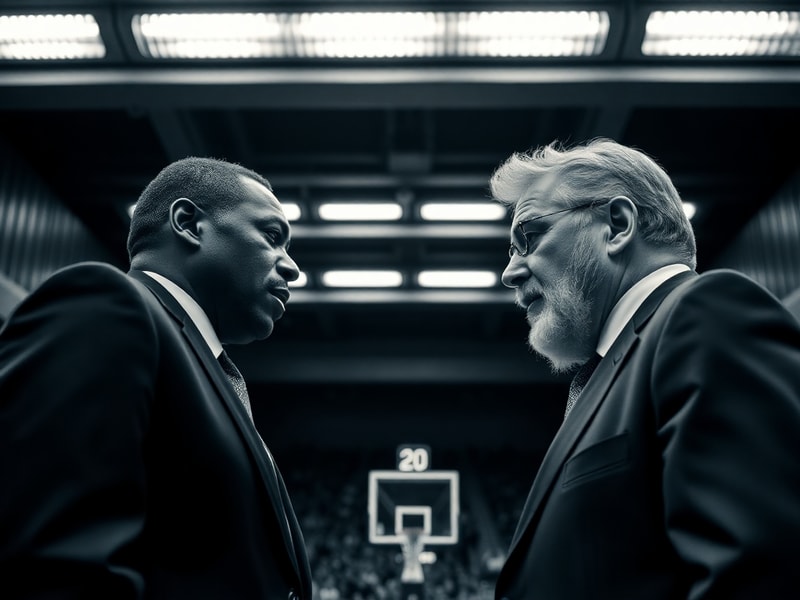
The relationship between Charles Oakley and James Dolan is one of the most contentious sagas in modern NBA history. What began as a routine encounter in 2017 at Madison Square Garden escalated into a public feud that exposed deeper tensions between players, ownership, and the league’s corporate structure. Nearly seven years later, the conflict remains a defining narrative in discussions about player rights, accountability, and the power dynamics within professional sports.
Oakley, a former New York Knicks forward and respected NBA veteran, found himself at the center of a controversy that transcended a single incident. His clash with Dolan, the executive chairman and CEO of Madison Square Garden Sports Corp, revealed systemic issues about how front offices handle player grievances, how security personnel respond to altercations, and how ownership wields influence over team operations and public perception. The fallout from their confrontation has had lasting consequences—not only for the Knicks, but for the broader NBA community.
The Incident That Sparked a Decade-Long Battle
On February 8, 2017, Charles Oakley was attending a Knicks game at Madison Square Garden when security personnel approached him in the lower bowl. According to reports, Oakley was removed from his seat by arena staff and escorted out of the building. The Knicks later issued a statement alleging Oakley had been “verbally abusive” and “disruptive,” though no formal charges were filed. Oakley denied the allegations, calling the incident an overreaction and accusing the organization of targeting him due to his vocal criticism of team management.
Video footage showed Oakley being held by security, his arms pinned behind his back. The images went viral, igniting immediate backlash. Oakley filed a lawsuit against MSG and Dolan, seeking $20 million in damages for defamation and emotional distress. The case was later dismissed in 2020, but the legal battle only amplified the public’s attention to the underlying conflict.
Timeline of a Turbulent Relationship
The Oakley-Dolan feud didn’t emerge overnight. It was the culmination of years of friction between Oakley, a franchise cornerstone during his playing days, and Dolan, who purchased the Knicks in 1997. While Oakley remained a beloved figure in New York, his public criticism of the team’s direction under Dolan’s leadership grew increasingly pointed.
Key moments in their deteriorating relationship include:
- 2012: Oakley publicly criticized the Knicks’ draft strategy and coaching decisions, calling the team “a mess.”
- 2014: He questioned Dolan’s commitment to winning, suggesting the owner cared more about real estate than basketball.
- 2016: Oakley renewed his criticism after the Knicks missed the playoffs, calling for accountability from Dolan.
- 2017: The Madison Square Garden confrontation occurred, leading to the lawsuit.
- 2020: Oakley’s defamation case was dismissed, but he continued to speak out in interviews and on social media.
Why This Feud Matters Beyond the Knicks
The Oakley-Dolan conflict is more than a personal grudge—it reflects broader tensions within the NBA and professional sports at large. At its core, the dispute raises questions about power, respect, and the treatment of former players who once defined a franchise.
Oakley’s experience highlights a common dilemma for retired athletes: once they leave the court, their influence often diminishes, but their loyalty to the team remains. When players speak out against ownership, they risk being sidelined, both literally and figuratively. Oakley’s removal from the Garden in 2017 symbolized how quickly a franchise can turn on its own legacy figures.
Dolan’s handling of the situation also exposed the unchecked authority of team owners in the NBA. Unlike in other major sports leagues, NBA owners operate with significant autonomy. There’s no collective bargaining agreement that governs how they treat former players or respond to public criticism. This lack of oversight can lead to situations where personal vendettas overshadow organizational responsibility.
The League’s Response—and the Silence That Followed
The NBA has historically been cautious when addressing ownership-player conflicts. In Oakley’s case, the league remained largely silent. Commissioner Adam Silver acknowledged the situation was “unfortunate,” but no formal investigation or disciplinary action was taken against Dolan or MSG. The league’s reluctance to intervene reinforced the perception that ownership holds ultimate power, even in matters of public perception and player relations.
This dynamic became even more pronounced during the COVID-19 pandemic, when teams like the Knicks faced criticism for prioritizing financial interests over player safety. Oakley’s continued outspokenness during that period underscored his role as a dissenting voice within a system that often suppresses criticism of ownership.
Where the Feud Stands Today—and What It Means for the Future
As of 2024, Charles Oakley remains a vocal critic of James Dolan and the Knicks’ front office. Though he has not returned to Madison Square Garden since the 2017 incident, he continues to advocate for greater accountability in sports leadership through public speaking and media appearances.
For the Knicks, the fallout from the feud has had mixed consequences. The team has struggled to regain its former glory under Dolan’s ownership, enduring multiple coaching changes, front-office overhauls, and playoff droughts. While the organization has made progress in rebuilding the roster, the specter of instability lingers—a reminder of the cultural and operational fractures exposed by the Oakley incident.
The broader NBA, meanwhile, has seen a rise in player activism and calls for greater transparency. Players like LeBron James and Kyrie Irving have leveraged their platforms to demand social justice and organizational accountability. In this context, Oakley’s fight with Dolan can be seen as a precursor to the modern athlete’s struggle against institutional power.
The Lessons for Sports Leadership
The Oakley-Dolan feud offers several critical lessons for sports organizations moving forward:
- Respect for Legacy Players: Franchises should honor their history by treating former players with dignity, especially those who contributed significantly to the team’s success.
- Accountability for Ownership: Owners must recognize that their actions are scrutinized not only by fans but by current and former players who helped build the brand.
- Clear Communication Channels: Establishing formal processes for addressing player concerns can prevent escalation into public disputes.
- League-Wide Standards: The NBA could benefit from guidelines that protect former players from retaliation for expressing legitimate concerns about team operations.
These principles are not just about avoiding bad publicity—they’re about preserving the integrity of the game. When a franchise alienates its most devoted supporters, both past and present, it risks eroding the very foundation of its identity.
A Conclusion Rooted in Accountability
The Charles Oakley-James Dolan saga is more than a footnote in Knicks history. It is a case study in how power imbalances, unchecked authority, and a lack of accountability can poison an organization from within. While the legal battle has concluded, the cultural and operational lessons remain unresolved.
For the Knicks, moving forward will require more than roster changes—it will demand a commitment to transparency, respect, and a recognition that the team’s legacy is not owned by the front office, but shared with the players who made it great. For the NBA, the feud serves as a reminder that leadership is not just about wins and losses, but about how an organization treats those who helped define its past.
As the league continues to evolve, the Oakley-Dolan conflict stands as a cautionary tale. It challenges us to ask: In a sport driven by competition and legacy, what happens when the competition turns inward—and the legacy is treated with indifference?
The answer may well determine whether the Knicks—and the NBA—can truly rebuild, not just on the court, but in the hearts of the fans and players who believe in the game’s ideals.
For more analysis on NBA ownership dynamics and player-owner conflicts, visit our Sports and Analysis sections on Dave’s Locker.