How Trump’s Iran Policy Reshaped Global Diplomacy and Regional Stability
“`html
Trump’s Iran Policy: A Shifting Landscape of Tensions and Diplomacy
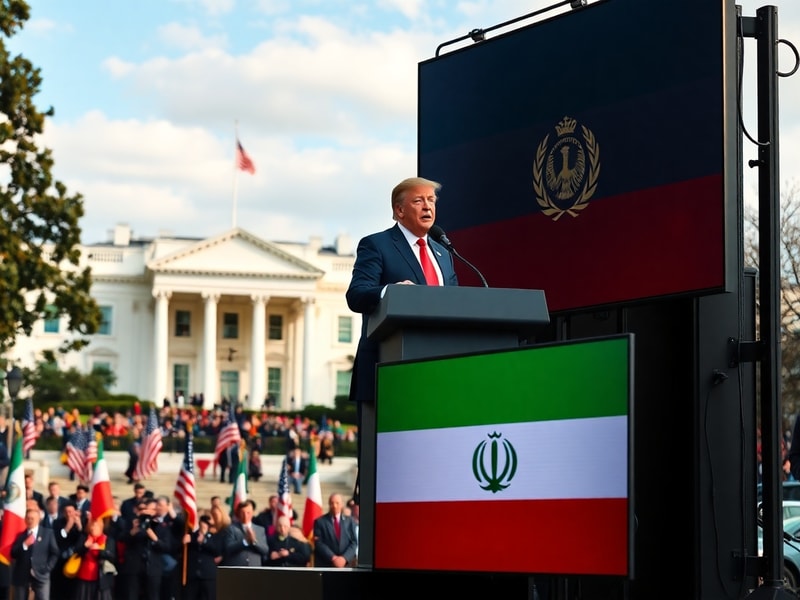
The relationship between the United States and Iran has been one of the most volatile geopolitical dynamics of the past two decades. Under the administration of former President Donald Trump, this relationship reached new heights of confrontation, marked by the withdrawal from the Iran nuclear deal, economic sanctions, and military posturing. These moves reshaped global diplomacy, influenced regional power struggles, and left a lasting impact on international relations.
Trump’s approach to Iran was defined by a clear departure from the policies of his predecessor, Barack Obama. The 2015 Joint Comprehensive Plan of Action (JCPOA), widely known as the Iran nuclear deal, was a cornerstone of Obama’s foreign policy. It aimed to curb Iran’s nuclear ambitions in exchange for sanctions relief. However, Trump campaigned on a promise to dismantle the agreement, calling it “the worst deal ever negotiated.” His administration’s withdrawal from the JCPOA in May 2018 set the stage for a period of escalating tensions.
The Collapse of the Nuclear Deal and Its Global Ripple Effects
The Trump administration’s decision to exit the JCPOA was not made in isolation. It reflected a broader shift in U.S. foreign policy toward a more confrontational stance with Iran. The withdrawal was followed by the reimposition of stringent economic sanctions, which targeted Iran’s oil exports, banking sector, and military activities. These sanctions were designed to exert maximum pressure on the Iranian regime, with the stated goal of forcing it to renegotiate the nuclear deal or face economic collapse.
The impact of these sanctions extended far beyond Iran’s borders. European allies, who had remained committed to the JCPOA, found themselves caught in a difficult position. Companies such as TotalEnergies and Airbus faced penalties from U.S. authorities for continuing to do business in Iran, despite their governments’ objections. This created a rift within NATO, as the U.S. and its European partners clashed over the best way to manage Iran’s nuclear ambitions.
In response, Iran adopted a strategy of “strategic patience,” gradually reducing its compliance with the JCPOA while avoiding outright violations that could provoke a military response. This approach allowed Iran to maintain diplomatic leverage while signaling to the international community that the collapse of the deal was not solely its doing.
Military Escalations and the Shadow of Conflict
Trump’s Iran policy was not confined to economic measures. The administration also pursued a more aggressive military posture, which culminated in high-stakes confrontations in the Persian Gulf. One of the most dramatic incidents occurred in January 2020, when a U.S. drone strike killed Iranian General Qasem Soleimani, a powerful figure in Iran’s Islamic Revolutionary Guard Corps (IRGC). Soleimani’s death was a direct challenge to Iran’s regional influence and sent shockwaves through the Middle East.
The assassination of Soleimani was met with widespread condemnation in Iran and among its allies, including Hezbollah in Lebanon and the Houthi rebels in Yemen. Protests erupted in Tehran, and the Iranian government vowed retaliation. Days later, Iran launched ballistic missiles at U.S. military bases in Iraq, injuring dozens of American service members. While the immediate crisis was diffused, the episode underscored the fragility of the region and the risks of miscalculation.
These military actions were not isolated events. Throughout Trump’s presidency, the U.S. and Iran engaged in a series of proxy conflicts and covert operations. The Strait of Hormuz, a critical chokepoint for global oil shipments, became a flashpoint. Iran seized foreign oil tankers, while the U.S. conducted naval exercises to assert its presence. The broader implications of these tensions extended to global energy markets, with oil prices fluctuating in response to each new development.
The Humanitarian Toll and Regional Instability
Beyond the geopolitical maneuvering, Trump’s Iran policy had a profound humanitarian impact. The reimposed sanctions exacerbated economic hardship in Iran, leading to shortages of medicine and food. Hospitals struggled to obtain critical supplies, and inflation soared. The World Bank reported that Iran’s economy contracted by nearly 6% in 2019, with further declines in the following years. Ordinary Iranians bore the brunt of these policies, despite the regime’s resilience.
The sanctions also contributed to instability in neighboring countries. In Iraq, where Iran wielded significant influence through political and military proxies, the economic strain exacerbated existing tensions. Protests erupted in 2019 and 2020, with demonstrators venting their frustration over corruption, unemployment, and foreign interference. These protests were met with brutal crackdowns, further destabilizing the region.
In Syria, Iran’s support for President Bashar al-Assad prolonged a devastating civil war that had already lasted nearly a decade. The IRGC’s involvement in the conflict strained Iran’s resources and deepened its entanglement in regional conflicts. Meanwhile, in Lebanon, Hezbollah’s alliance with Iran became a focal point of political and sectarian divisions, complicating efforts to form a stable government.
Legacy and Lessons for the Future
As Trump’s presidency came to an end, the future of U.S.-Iran relations remained uncertain. His successor, Joe Biden, pledged to re-enter the JCPOA if Iran returned to full compliance. However, the path to diplomacy was fraught with challenges. Iran’s hardline factions, emboldened by Trump’s maximum pressure campaign, were reluctant to make concessions without guarantees of sanctions relief. Meanwhile, regional allies such as Israel and Saudi Arabia viewed any rapprochement with skepticism.
The Trump administration’s Iran policy serves as a case study in the complexities of coercive diplomacy. While the sanctions and military actions succeeded in weakening Iran’s economy and regional influence, they also fueled anti-American sentiment and pushed Iran closer to Russia and China. The policy’s effectiveness remains a subject of debate among policymakers and analysts.
For the global community, Trump’s approach to Iran highlighted the need for a balanced strategy that combines pressure with diplomacy. The JCPOA, despite its flaws, provided a framework for engagement that prevented Iran from developing nuclear weapons. Its collapse demonstrated the risks of abandoning multilateral agreements in favor of unilateral action.
The lessons from this period extend beyond U.S.-Iran relations. They underscore the importance of considering the humanitarian consequences of economic sanctions and the potential for unintended escalations in military conflicts. As the world grapples with new geopolitical challenges, the legacy of Trump’s Iran policy offers valuable insights into the costs and consequences of confrontation.
For further reading on related topics, explore our coverage of global news and international politics.
Conclusion
Donald Trump’s Iran policy was a defining feature of his presidency, reshaping the dynamics of Middle Eastern geopolitics and testing the limits of coercive diplomacy. From the withdrawal of the JCPOA to the targeted killing of Qasem Soleimani, the administration’s actions sent ripples across the globe. While the policy succeeded in pressuring Iran’s economy and regional influence, it also fueled instability and humanitarian crises.
The long-term impact of these decisions remains to be seen. However, one thing is clear: the U.S.-Iran relationship will continue to shape global security for years to come. As new administrations navigate this complex landscape, the lessons from Trump’s tenure offer a cautionary tale about the unintended consequences of unchecked confrontation.