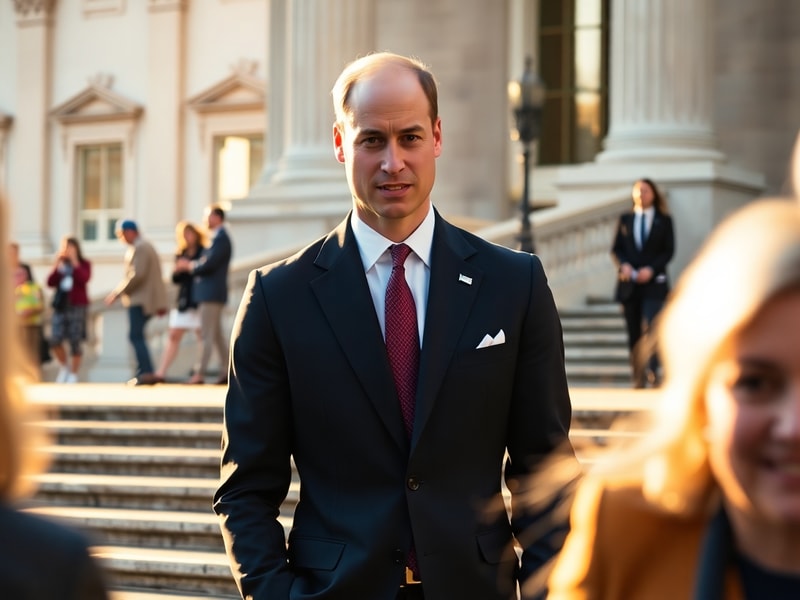
William, Prince of Wales: The Modern Heir Shaping the Monarchy’s Future
“`html
William, Prince of Wales: The Steward of a Changing Monarchy
Since ascending to the role of Prince of Wales in 2022, William, the eldest son of King Charles III, has navigated uncharted waters for the British royal family. His position—once a ceremonial title—now carries unprecedented weight as the monarchy adapts to shifting public expectations and generational change. Unlike his predecessors, William inherits a role deeply entwined with modern media scrutiny, financial transparency demands, and the evolving role of the royal institution in British society.
The Weight of History and the Burden of Modern Expectations
Born in 1982, William was the first heir to the throne to attend a state school and later study at the University of St Andrews, where he met his future wife, Catherine Middleton. His upbringing blended tradition with a more accessible, relatable image—one that contrasted sharply with the more reserved demeanor of his father, Charles III. Yet this very accessibility has created a paradox: the public expects both regal dignity and the kind of relatability that comes with sharing family moments on social media.
The Prince of Wales has had to balance these expectations while preparing for a role that may last decades. The monarchy, once an unassailable institution, now faces calls for reform, financial accountability, and greater transparency. William’s leadership style will likely define how the Crown navigates these challenges, particularly as republican sentiments grow in some Commonwealth realms.
A New Approach to Public Engagement
William’s public engagements reflect a deliberate strategy to modernize the monarchy’s image. Unlike his father, who often courted controversy with his outspoken views, William has adopted a more measured approach—one that emphasizes duty, service, and family values. His involvement in mental health initiatives, support for veterans, and focus on environmental causes align with the concerns of younger generations. This shift is not merely symbolic; it reflects a calculated effort to ensure the monarchy remains relevant in an era where public trust in institutions is fragile.
His decision to limit the use of royal palaces for private events—such as hosting his son Prince George’s birthday party at Windsor Castle rather than Buckingham Palace—signals a desire to present the royal family as more approachable. Yet this approach also risks diluting the mystique that has historically surrounded the monarchy, a tension William must carefully manage.
The Financial and Institutional Challenges Ahead
The monarchy’s finances have come under increased scrutiny, particularly after the transition to Charles III’s reign. The Sovereign Grant, which funds official duties, has faced criticism for its opacity and the royal family’s private spending. As Prince of Wales, William oversees the Duchy of Cornwall, a £1 billion estate that funds his official duties and supports his family. His management of this portfolio will be closely watched, especially as calls for financial reform grow louder.
One of the most pressing issues is the monarchy’s role in an independent United Kingdom. Scotland’s growing independence movement and debates over the Crown’s presence in Wales and Northern Ireland have forced William to engage more directly with regional identities. His ability to connect with diverse audiences across the UK will be critical in maintaining the monarchy’s cohesion.
The Duchy of Cornwall: A Model for Modern Royal Finances?
Under William’s leadership, the Duchy of Cornwall has seen a shift toward sustainable investment. The estate, which includes rural estates, residential and commercial properties, and a share portfolio, has increased its focus on environmental, social, and governance (ESG) principles. This approach not only aligns with public expectations but also ensures the Duchy’s long-term viability.
However, the financial pressures on the monarchy extend beyond the Duchy. The cost of royal engagements, security, and maintaining multiple residences (including Anmer Hall, Highgrove, and Clarence House) requires careful management. William’s ability to navigate these financial realities without alienating the public will test his leadership.
The Future of the Monarchy: William’s Role in Shaping It
As the eldest son of King Charles III, William is uniquely positioned to redefine the monarchy for the 21st century. His marriage to Catherine, the Princess of Wales, has already shifted public perceptions of the royal family. Their collaborative approach to parenting—sharing school runs and sporting activities—has humanized the institution in ways previous generations could not.
Yet the challenges ahead are formidable. The monarchy’s survival depends on its ability to adapt without losing its core identity. William’s leadership will be judged not just on his ability to perform ceremonial duties but on his capacity to lead the institution through a period of profound change. This includes managing the expectations of a new generation of royals, such as his brother Prince Harry and his sister-in-law Meghan, Duchess of Sussex, whose own paths have diverged from traditional royal life.
Key Points: What Defines William’s Role as Prince of Wales
- Modernizing the Monarchy: William’s approach emphasizes accessibility, mental health advocacy, and environmental stewardship to align with public expectations.
- Financial Transparency: His management of the Duchy of Cornwall reflects a shift toward sustainable, ESG-compliant investments.
- Regional Engagement: As heir to the throne, he must navigate Scotland’s independence movement and Welsh identity with sensitivity.
- Family Dynamics: His collaborative parenting style and partnership with Catherine have reshaped public perceptions of the royal family.
- Institutional Reform: The monarchy’s future hinges on William’s ability to balance tradition with the demands of a modern, transparent institution.
Broader Implications: The Monarchy in a Changing Britain
The role of the Prince of Wales has always been transitional, but William’s tenure arrives at a pivotal moment. The British monarchy is no longer an unquestioned pillar of national identity; instead, it is one institution among many competing for public trust. Brexit, the death of Queen Elizabeth II, and the global rise of republicanism have all reshaped the monarchy’s place in British life.
William’s leadership will determine whether the monarchy can evolve into a more flexible, inclusive institution—or whether it will become increasingly marginalized. His decisions on issues such as financial transparency, regional representation, and public engagement will set the tone for the next generation of royals. For better or worse, his tenure as Prince of Wales will be a defining chapter in the monarchy’s long history.
As the UK grapples with questions of identity, legacy, and modernity, William’s ability to bridge the gap between tradition and progress will be his greatest challenge—and his most important legacy.
For more on the evolving role of the British monarchy, explore our Culture and News sections.
Conclusion: A Prince for a New Era
William, Prince of Wales, stands at the intersection of history and modernity. His role is no longer confined to ceremonial duties; it now demands leadership in a rapidly changing world. From financial stewardship to public engagement, his decisions will shape the monarchy’s future for decades to come. Whether he can successfully navigate these challenges remains to be seen, but one thing is clear: the stakes have never been higher.
As the monarchy continues to adapt, William’s ability to balance tradition with innovation will define not just his legacy, but the institution itself. In an era where institutions are constantly scrutinized, his leadership will be a test of whether the Crown can remain relevant—or whether it will fade into the pages of history.