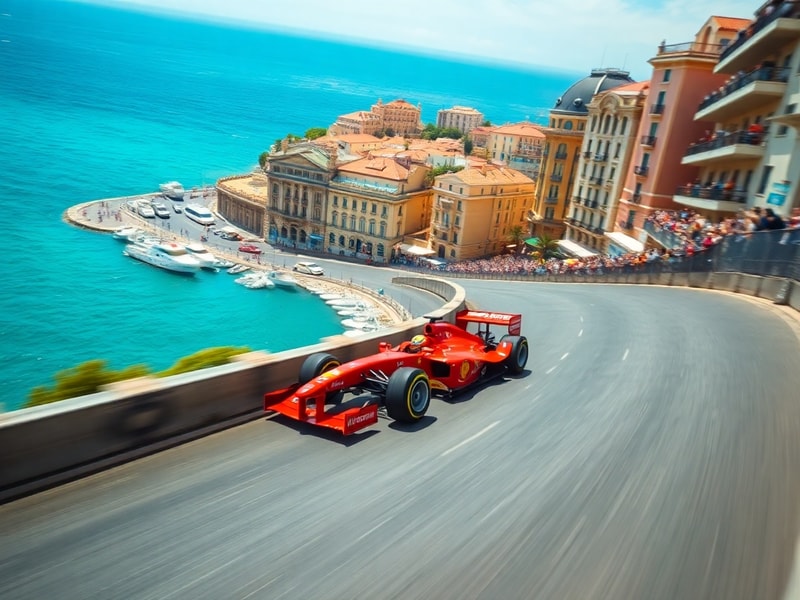
The Monaco Grand Prix isn’t just a race—it’s a spectacle, a tradition, and one of the most prestigious events in motorsport. Held annually on the narrow streets of Monte Carlo, this race demands precision, nerve, and speed in equal measure. Unlike any other circuit on the Formula 1 calendar, Monaco combines luxury, glamour, and high-stakes competition into a single weekend.
Drivers who conquer Monaco earn more than just points; they secure legendary status. Ayrton Senna, Alain Prost, and Michael Schumacher all have Monaco victories etched into their legacies. The race’s unique challenges—tight hairpins, blind crests, and unforgiving barriers—make it a true test of skill. Every year, fans and teams alike know one thing for certain: Monaco will separate the good from the great.
The History of Monaco Grand Prix: A Tradition Since 1929
The Monaco Grand Prix traces its origins to 1929, when Antony Noghès, under the patronage of Prince Louis II, organized the first race. The inaugural event took place on a 32-kilometer public road course, a far cry from today’s 3.337-kilometer layout. Despite its humble beginnings, the race quickly gained prestige, attracting Europe’s finest drivers.
By 1950, Monaco became part of the inaugural Formula 1 World Championship. Juan Manuel Fangio claimed the first F1 victory at the principality, setting the tone for decades of drama. The 1960s and 1970s saw legendary duels between Graham Hill and Jackie Stewart, while the 1980s and 1990s introduced Senna’s dominance and Prost’s cunning. Each era added new chapters to Monaco’s storied history.
The race’s exclusivity and glamour also evolved. In the 1950s, Hollywood stars like Grace Kelly graced the grandstands. Today, the event attracts billionaires, CEOs, and global influencers. Yet, beneath the opulence, the race remains a brutal test of driving ability. Monaco’s narrow streets don’t forgive mistakes—one error can end a race instantly.
Key Moments in Monaco Grand Prix History
- 1955: Stirling Moss wins in a Mercedes, marking the first of his three Monaco victories.
- 1984: Alain Prost outsmarts Ayrton Senna in a rain-soaked race, proving tactical brilliance.
- 1996: Olivier Panis shocks the field with a rain-affected race, securing his only F1 win.
- 2016: Lewis Hamilton dominates, but a late safety car reshuffles the field, handing victory to Daniel Ricciardo.
These moments highlight why Monaco isn’t just a race—it’s a theater where history is made.
The Circuit: A Street Track Like No Other
The Circuit de Monaco winds through Monte Carlo’s heart, turning what would otherwise be public roads into a racetrack. With an average speed of just 150 km/h, it’s one of the slowest F1 circuits. Yet, its narrowness and elevation changes demand relentless focus. The tunnel section, where drivers transition from darkness to blinding sunlight, remains one of F1’s most disorienting challenges.
Key corners define Monaco’s character. The La Rascasse hairpin, taken at just 50 km/h, is where races are often won or lost. The tight right-left chicane before the tunnel tests braking precision. Even the seemingly tame Casino Square requires pinpoint accuracy, as drivers navigate blind crests and kerbs that punish the slightest mistake.
Overtaking is nearly impossible at Monaco. Qualifying becomes the decisive factor, with pole position often translating to victory. The race’s attrition rate is high—mechanical failures, crashes, and collisions frequently thin the field. In 2022, just 11 of 20 cars finished, underscoring the circuit’s unforgiving nature.
Why Monaco Stands Apart in F1
- Unmatched Prestige: Winning Monaco is a career-defining achievement, often overshadowing other victories.
- Street Track Challenges: Public roads create a unique, unpredictable environment unlike permanent circuits.
- Glamour and Grit: The juxtaposition of yachts and speed, champagne and crashes, defines Monaco’s allure.
- Legacy of Champions: Legends like Senna, Schumacher, and Verstappen have left their mark on this hallowed ground.
Monaco isn’t just another stop on the F1 calendar—it’s the soul of the sport.
Monaco Grand Prix: More Than Just a Race
Beyond the on-track action, the Monaco Grand Prix is a cultural phenomenon. The event spans four days, blending practice sessions, qualifying, and the main race with high-society galas, yacht parties, and celebrity sightings. The paddock becomes a playground for the rich and famous, with attendees rubbing shoulders with F1’s elite.
The race also holds significant economic weight for Monaco. The principality’s tourism industry thrives during Grand Prix weekend, with hotels booked years in advance. Local businesses, from high-end boutiques to restaurants, benefit from the influx of visitors. The event injects hundreds of millions into Monaco’s economy, making it as much a financial triumph as a sporting one.
Yet, Monaco’s glamour hasn’t shielded it from criticism. Environmentalists have long scrutinized the race’s carbon footprint, given the circuit’s temporary nature and the need for extensive road closures. F1’s push toward sustainability has led to debates about Monaco’s future. Could the race adapt, or will it remain a relic of motorsport’s wasteful past?
Another point of contention is accessibility. With tickets starting at hundreds of euros and yacht hospitality packages costing tens of thousands, Monaco remains an exclusive affair. Some argue that F1’s growing fanbase deserves a more inclusive experience, even if it risks diluting the event’s prestige.
The Business of Monaco Grand Prix
- Sponsorships: Brands like Rolex, Oracle, and Pirelli invest heavily in Monaco, associating with prestige and performance.
- Media Rights: The race generates massive global viewership, making it a prime revenue stream for F1.
- Local Impact: Monaco’s economy relies on the Grand Prix, with hotels, restaurants, and luxury goods sales peaking during the event.
- Sustainability Efforts: F1’s net-zero pledge has prompted discussions about reducing Monaco’s environmental impact.
Looking Ahead: The Future of Monaco Grand Prix
The Monaco Grand Prix faces an uncertain future. As F1 expands into new markets—Miami, Las Vegas, and potentially China—the principality must adapt to remain relevant. The race’s anachronistic charm is both its greatest strength and weakness. While purists cling to its traditions, modern audiences demand innovation.
One potential evolution is a shorter race. In 2022, F1 introduced a sprint format in Monaco, reducing the main event to 64 laps from 78. This change aimed to balance spectacle with sustainability. Another possibility is hybridizing the circuit—blending Monaco’s iconic sections with permanent track elements. Such a move could reduce road closures and lower the environmental impact.
Despite these challenges, Monaco’s allure endures. No other race captures the imagination like the Monaco Grand Prix. It’s where dreams are made and careers are defined. As long as there are drivers willing to push the limits on its treacherous streets, Monaco will remain the crown jewel of Formula 1.
For fans, the Monaco Grand Prix is a pilgrimage—a chance to witness history in the making. For drivers, it’s the ultimate test. And for Formula 1, it’s a reminder that sometimes, the past is worth preserving.
For more on the evolution of Formula 1 circuits, visit our Sports section. To explore how technology is changing motorsport, check out our Technology category.