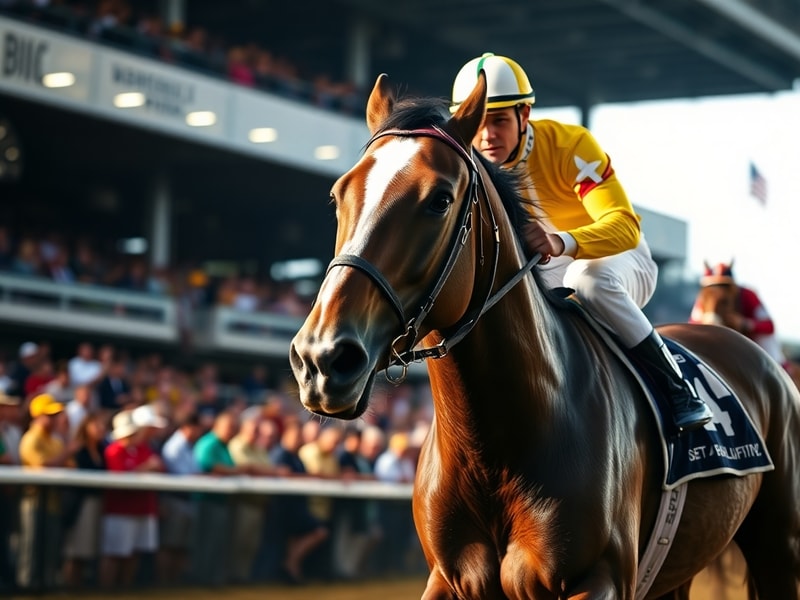
The Rise of a Racing Legend
Bob Baffert’s name is synonymous with American horse racing, a sport where precision meets raw power. Born in 1953 in Nogales, Arizona, Baffert grew up around horses, but his journey to the top was far from predetermined. He began as a modest trainer working with Quarter Horses before shifting to Thoroughbreds in the 1990s. His early career was marked by steady progress, but it was his 1997 Kentucky Derby victory with Silver Charm that announced his arrival on the national stage. From there, Baffert’s reputation as a trainer capable of nurturing champions became unstoppable.
Baffert’s approach to training is both calculated and adaptable. He has mastered the art of preparing horses for the most grueling races in the world, including the Triple Crown events. His success is not just a matter of luck; it’s the result of meticulous attention to detail, a deep understanding of equine physiology, and an ability to connect with each horse individually. This methodology has earned him the respect of peers and the admiration of fans worldwide.
A Record Breaker with Controversy
Bob Baffert is the only trainer to win the Kentucky Derby four times in a single decade, a feat that solidified his place in racing history. His horses have claimed multiple Triple Crown victories, including American Pharoah’s historic 2015 sweep and Justify’s undefeated run in 2018. These accomplishments are not just milestones for American racing; they are moments that captivate global audiences, drawing millions of viewers who might not otherwise engage with the sport.
Yet Baffert’s career has been far from controversy-free. His horses have tested positive for banned substances multiple times, leading to suspensions and fines. Critics argue that his success is tainted by these incidents, while supporters claim that the rules are inconsistently enforced and that Baffert is often unfairly targeted. The debate over doping in horse racing is complex, intertwined with questions of animal welfare, competition integrity, and the pressures of modern sports. Baffert himself has often defended his methods, insisting that his horses are treated with care and that any violations are minor and unintentional.
In 2021, Medina Spirit’s Kentucky Derby victory was overshadowed by a post-race drug test that revealed traces of betamethasone, a corticosteroid. The controversy led to Baffert’s suspension from Churchill Downs and a lengthy legal battle. The incident sparked discussions about the ethics of racehorse training and the role of trainers in ensuring fair competition. Despite the setbacks, Baffert’s resilience has only strengthened his resolve to continue his work, proving that controversy is an unavoidable part of his legacy.
The Global Impact of an American Trainer
Bob Baffert’s influence extends far beyond the borders of the United States. His horses have competed—and triumphed—in some of the world’s most prestigious races, including the Dubai World Cup and the Saudi Cup. These international events highlight the global nature of horse racing, a sport that transcends cultural and geographical boundaries. Baffert’s success in these arenas has made him a household name among racing enthusiasts from Europe to the Middle East.
In Japan, for example, Baffert’s horses have faced off against local champions in high-stakes races, drawing massive television audiences. The cross-cultural exchange of training techniques and racing strategies has enriched the sport, creating a more dynamic and competitive environment. Baffert’s willingness to adapt his methods for different racing cultures has endeared him to international fans, who see him as a bridge between the traditional and the modern in horse racing.
Baffert’s global appeal is also evident in the way he engages with fans through social media. He shares behind-the-scenes glimpses of his stables, training routines, and the personalities of his horses, creating a sense of intimacy that resonates with audiences worldwide. This digital presence has turned him into more than just a trainer; he is a cultural figure whose story transcends the racetrack.
The Future of Racing and Baffert’s Role
As horse racing evolves, so too does Bob Baffert’s approach to the sport. Modern challenges such as declining attendance at racetracks, competition from other forms of entertainment, and heightened scrutiny over animal welfare practices have forced the industry to adapt. Baffert has embraced technology, using data analytics to optimize training regimens and monitor the health of his horses. He has also become an advocate for transparency, pushing for clearer communication between trainers, veterinarians, and regulatory bodies.
Looking ahead, Baffert’s legacy will likely be defined by his ability to navigate these challenges while maintaining his competitive edge. The next generation of racehorses will demand even greater expertise, and Baffert’s willingness to innovate will be crucial. Whether it’s through breeding advancements, training techniques, or advocacy for the sport, he remains a pivotal figure in shaping the future of horse racing.
For younger trainers, Baffert’s career offers valuable lessons in perseverance, adaptability, and the importance of building strong relationships with both horses and people. His story is a reminder that success in racing is not just about winning; it’s about contributing to the growth and sustainability of the sport itself.
A Look at Baffert’s Most Iconic Horses
Bob Baffert’s career has been defined by partnerships with some of the most legendary racehorses in history. These horses are not just competitors; they are ambassadors for the sport, inspiring fans and setting records that stand the test of time. Below is a list of a few of his most iconic charges:
- Silver Charm – The horse that launched Baffert into the national spotlight with a Kentucky Derby victory in 1997.
- Real Quiet – A near-miss Triple Crown contender in 1998, losing by a nose in the Belmont Stakes.
- War Emblem – Won the Kentucky Derby and Preakness in 2002, though his Triple Crown hopes faded in the Belmont.
- American Pharoah – The first Triple Crown winner in 37 years, cementing Baffert’s place in racing history in 2015.
- Justify – Followed up American Pharoah’s success with an undefeated Triple Crown run in 2018.
- Authentic – The 2020 Kentucky Derby winner, proving that Baffert’s winning streak was far from over.
Conclusion: More Than Just a Trainer
Bob Baffert’s career is a testament to the enduring allure of horse racing. He is more than just a trainer who wins races; he is a symbol of the sport’s ability to captivate hearts and minds across generations. His story is one of triumph, controversy, and relentless pursuit of excellence, all set against the backdrop of an industry that is as challenging as it is rewarding.
As racing continues to evolve, Baffert’s influence will undoubtedly persist. Whether through his horses, his advocacy, or his role as a cultural figure, he has left an indelible mark on the sport. For fans of horse racing and beyond, Baffert’s journey offers a compelling narrative of what it means to strive for greatness, even in the face of adversity.
The next time you watch a race, take a moment to consider the work behind the scenes—the trainers, the horses, and the intricate balance of skill and passion that makes it all possible. And remember, few names carry as much weight in that world as Bob Baffert’s.