Hulk Hogan: How the Wrestling Icon Changed Sports Entertainment Forever
“`html
Hulk Hogan: The Icon Who Redefined Wrestling and Pop Culture
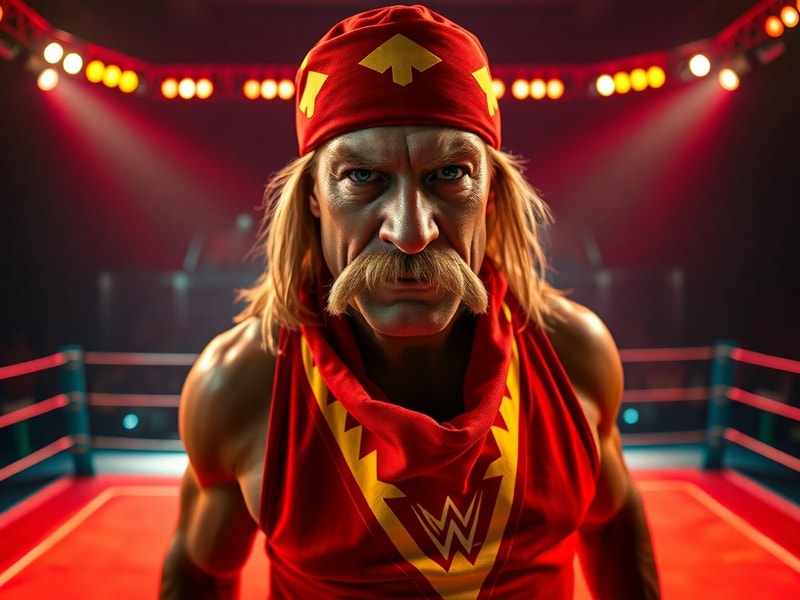
Terry Bollea, better known as Hulk Hogan, remains one of the most recognizable figures in professional wrestling history. His bleached blonde mustache, red-and-yellow bandana, and larger-than-life persona transformed him into a global icon during the 1980s and 1990s. Hogan didn’t just wrestle—he became a cultural symbol, bridging the gap between sports entertainment and mainstream entertainment.
His influence extended beyond the squared circle. Through television appearances, movies, and even music, Hogan became a household name, proving that professional wrestling could transcend its niche audience. Decades later, his legacy continues to shape both wrestling and pop culture, making him a figure worthy of deeper examination.
The Rise of the Hulkster: From Local Promotions to Global Fame
Hogan’s journey began in the early 1970s when he trained under wrestling legend Hiro Matsuda in Florida. Early in his career, he wrestled under various names, including “The Super Destroyer,” before adopting the “Hulkster” persona. His breakthrough came in 1983 when he joined the World Wrestling Federation (WWF, now WWE) under the management of “Captain” Lou Albano.
The timing was perfect. The WWF was expanding nationally, and Hogan’s charisma, combined with his wrestling skills, made him the perfect face for the company. His feud with Iron Sheik culminated in Hogan winning his first WWE Championship at Madison Square Garden in 1984, a moment that cemented his status as the top star in wrestling.
- Key Milestones in Hogan’s Early Career:
- 1977: Debuts in Championship Wrestling from Florida under his real name.
- 1980: Wins his first NWA Florida Heavyweight Championship.
- 1983: Signs with WWF and adopts the “Hulkster” persona.
- 1984: Wins his first WWF Championship in a historic match against Iron Sheik.
Hogan’s popularity soared as he became the public face of WWF’s expansion. His matches drew massive crowds, and his promos—filled with catchphrases like “Whatcha gonna do, brother?”—became legendary. The Hulkster wasn’t just a wrestler; he was a phenomenon that brought wrestling into living rooms across America.
The Hulkamania Era: Wrestling’s First True Superstar
The mid-to-late 1980s are often referred to as the “Hulkamania” era, a period when Hogan became a household name. His rivalry with “Rowdy” Roddy Piper and André the Giant became the stuff of wrestling lore, particularly their match at WrestleMania III in 1987. The event drew over 93,000 fans to the Pontiac Silverdome, a record that stood for nearly 30 years.
Hogan’s matches were more than athletic performances; they were spectacles that blended storytelling with high-octane action. His feud with André the Giant culminated in a memorable WrestleMania III showdown where Hogan bodyslammed the 520-pound giant, a moment that remains one of the most iconic in wrestling history.
Beyond the ring, Hogan’s influence extended into pop culture. He appeared on talk shows, starred in movies like No Holds Barred (1989), and even recorded a rap song, “Hulk Hogan’s Theme,” which became a minor hit. His larger-than-life personality made him a magnet for media attention, further solidifying his status as a cultural icon.
Wrestling historian Dave Meltzer once noted, “Hogan wasn’t just a wrestler; he was a phenomenon. He brought wrestling to people who had never watched before. That kind of reach is unprecedented.”
Controversies and Comebacks: The Evolution of a Wrestling Legend
Hogan’s career wasn’t without controversy. In the late 1990s, his involvement in the WWF steroid trial and a well-publicized backstage altercation with Vince McMahon led to a temporary hiatus from wrestling. However, Hogan’s ability to reinvent himself kept him relevant. He made a surprising return to WWE in 2002, winning the World Heavyweight Championship at age 52, proving that his star power hadn’t faded.
His second act included a memorable feud with The Rock, another wrestling icon, which culminated in a star-studded match at WrestleMania XIX in 2003. Hogan’s ability to adapt to changing times while maintaining his core identity as the “Hulkster” is a testament to his enduring appeal.
In recent years, Hogan has faced further controversy, including a leaked racist rant in 2015 that led to his departure from WWE. Despite this, his legacy remains intact. Fans continue to celebrate his contributions to wrestling, and WWE has occasionally acknowledged his impact, even if his role in the company has diminished.
Hogan’s story is one of resilience. Whether through triumph or tribulation, he remains a figure who shaped an entire generation of wrestling fans and athletes.
The Hogan Legacy: How He Changed Wrestling Forever
Hogan’s impact on professional wrestling is immeasurable. He was the first true crossover star, bringing wrestling into the mainstream and paving the way for future generations of wrestlers. Without Hogan, it’s unlikely that figures like The Rock, John Cena, or even current stars like Roman Reigns would have achieved the same level of global recognition.
His influence extends beyond wrestling. Hogan’s persona inspired countless imitations, parodies, and homages in television, film, and music. From Family Guy to The Simpsons, his larger-than-life character has been immortalized in pop culture.
Even today, Hogan’s legacy is visible in WWE’s programming. His catchphrases, mannerisms, and even his bandana have been referenced or replicated by wrestlers and commentators. WWE’s Hall of Fame, which Hogan was inducted into in 2005, serves as a reminder of his contributions to the sport.
For those looking to explore Hogan’s influence further, the Sports and Entertainment sections on Dave’s Locker offer additional insights into wrestling history and pop culture icons.
Hogan’s story is a reminder that wrestling is more than just a sport—it’s a form of entertainment that can shape culture. His ability to captivate audiences, both inside and outside the ring, ensures that his legacy will endure for generations to come.
Conclusion
Hulk Hogan’s career is a tapestry of triumph, controversy, and reinvention. From his early days as a regional wrestler to his global superstardom, he redefined what it meant to be a professional wrestler. His influence on wrestling and pop culture is undeniable, and his legacy continues to inspire new generations of fans and athletes.
Whether you remember him as the golden-haired hero of the 1980s or the controversial figure of later years, Hogan’s impact on the world of sports entertainment is permanent. As wrestling evolves, Hogan’s contributions serve as a foundation for the industry’s past, present, and future.