Hulk Hogan: The Icon Who Redefined Professional Wrestling
“`html
Hulk Hogan: The Icon Who Redefined Professional Wrestling
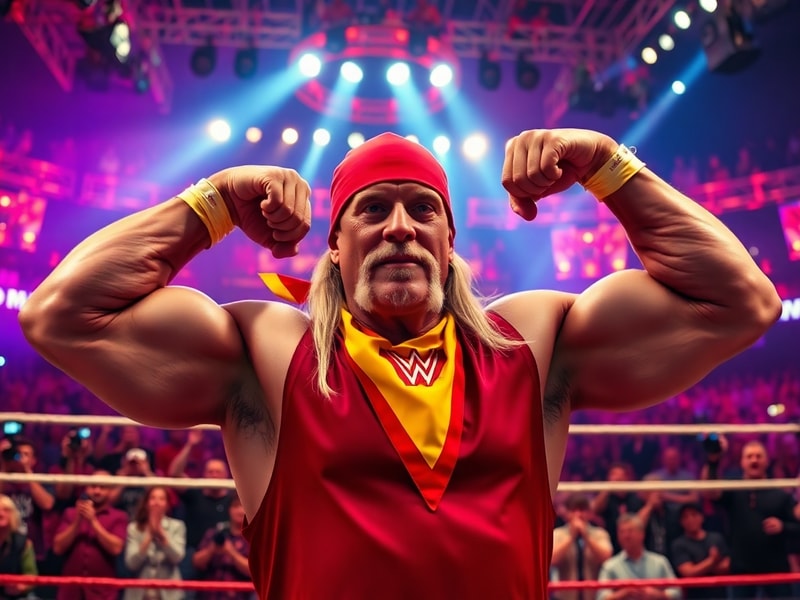
Few figures in professional wrestling have left as indelible a mark as Terry Bollea, better known by his larger-than-life persona, Hulk Hogan. Emerging from humble beginnings in Tampa, Florida, Hogan’s journey to global superstardom was fueled by charisma, an unmatched physique, and an uncanny ability to connect with audiences. His signature bandana, yellow-and-red striped singlet, and thunderous promos became symbols of an era when wrestling transcended sport to become pure spectacle.
Hogan wasn’t just a wrestler; he was a cultural force who helped transform the World Wrestling Federation (WWF, now WWE) into a billion-dollar enterprise. His rivalry with André the Giant, his battles against heels like “Rowdy” Roddy Piper, and his role in WrestleMania I cemented his legacy as one of the most influential figures in sports entertainment. Decades later, Hogan’s impact continues to resonate, shaping the careers of wrestlers who followed in his footsteps.
The Rise of a Wrestling Legend
Hogan’s path to wrestling stardom began in the late 1970s when he trained under the legendary wrestler and trainer Hiro Matsuda in Tampa. Before wrestling, he played bass guitar in a local band and worked odd jobs, including as a limousine driver. His big break came when he caught the attention of Vincent J. McMahon, the patriarch of the WWF, who saw potential in Hogan’s marketable look and larger-than-life personality.
Hogan made his WWF debut in 1983, and his arrival coincided with the promotion’s expansion into mainstream entertainment. His first major feud was against “Mr. Wonderful” Paul Orndorff, but it was his rivalry with André the Giant that catapulted him to superstardom. Their historic match at WrestleMania III in 1987, where Hogan bodyslammed André and retained the WWF Championship in front of 93,000 fans at the Pontiac Silverdome, remains one of the most iconic moments in wrestling history.
Hogan’s in-ring style was simple yet effective. He relied on power moves like the leg drop and suplex, but his true strength was his ability to sell himself as an underdog fighting against villainous foes. His promos were equally compelling, often ending with the now-legendary catchphrase, “Whatcha gonna do, brother, when Hogan and the Mega Powers run wild on you?”
Hogan’s Cultural Impact Beyond the Ring
Hogan’s influence extended far beyond the wrestling ring. In the 1980s, he became a pop culture icon, appearing on talk shows, in movies, and even releasing a rap song titled “Hulk Hogan’s Theme.” His larger-than-life persona made him a natural fit for Hollywood, and he starred in films like No Holds Barred (1989) and Suburban Commando (1991).
Hogan’s crossover appeal was unparalleled. He appeared on The Tonight Show Starring Johnny Carson, graced the cover of Sports Illustrated, and even had a cameo in Rocky III alongside Mr. T. His presence in mainstream media helped legitimize professional wrestling as a form of entertainment that could appeal to audiences beyond die-hard fans.
- Music: Hogan released a rap song, “Hulk Hogan’s Theme,” which became a novelty hit in the late ’80s.
- Television: He appeared in numerous TV shows, including Thunder in Paradise, a made-for-TV movie that later spawned a sequel.
- Merchandising: Hogan’s face adorned everything from action figures to lunchboxes, making him one of the first wrestling stars to achieve such widespread commercial success.
Hogan’s persona also tapped into the era’s fascination with larger-than-life heroes. His battles against villainous characters like Piper, “The Million Dollar Man” Ted DiBiase, and “The Iron Sheik” mirrored the good vs. evil narratives popular in comics and films. This duality made him relatable to fans who saw him as both a hero and an everyman.
The Controversies and Comebacks
Despite his unparalleled success, Hogan’s career wasn’t without controversy. In the early 2000s, his personal life became tabloid fodder when his then-wife Linda Hogan filed for divorce, alleging infidelity and emotional abuse. The revelation of Hogan’s extramarital affair with his children’s nanny further fueled media scrutiny.
Hogan’s career took another hit in 2015 when a leaked sex tape surfaced, followed by racist remarks he made in a 2009 conversation that were later published by the National Enquirer. WWE responded by severing ties with Hogan, removing him from its Hall of Fame and erasing his presence from its programming. The fallout was swift, and Hogan’s once-untouchable status was called into question.
Yet, Hogan’s ability to reinvent himself proved resilient. In 2018, he made a surprise return to WWE, appearing at WrestleMania 34 to a mixed reaction from fans. While his legacy remained complicated, his influence on the industry was undeniable. Former WWE Chairman Vince McMahon acknowledged Hogan’s role in building the company, even as the promotion distanced itself from his personal controversies.
Hogan’s Enduring Legacy
Hogan’s impact on professional wrestling is immeasurable. He was the face of the WWF during its most explosive growth period, helping to turn WrestleMania into the “Super Bowl of Sports Entertainment.” His matches, promos, and larger-than-life persona set the template for future wrestling stars, from “Stone Cold” Steve Austin to Dwayne “The Rock” Johnson.
Even today, Hogan’s influence can be seen in the wrestling industry. His catchphrases, mannerisms, and even his physical appearance have been parodied and homaged by countless wrestlers. His feuds with André the Giant, Piper, and Randy Savage remain benchmarks for storytelling in wrestling.
Hogan’s legacy is also a reminder of the complexities of celebrity. While he was a hero to millions, his personal flaws and controversies exposed the vulnerabilities of even the most untouchable figures. His story serves as a cautionary tale about the perils of fame, but it also highlights the resilience of those who can rise from adversity.
For a generation of fans, Hogan was more than a wrestler—he was a symbol of defiance, a beacon of hope, and a reminder that sports entertainment could be as compelling as any other form of storytelling. Whether loved or criticized, Hogan’s place in wrestling history is secure, and his impact will continue to be felt for generations to come.
To explore more about the golden era of wrestling that Hogan helped define, visit our Sports category. For a deeper look at the cultural impact of wrestling icons, check out our Entertainment section.