scotland
“`html
Scotland: A Land Where History, Nature, and Innovation Collide
Few places on Earth manage to blend ancient mystique with modern dynamism as effortlessly as Scotland. From the rugged Highlands to the bustling streets of Edinburgh, this northern nation offers layers of culture, history, and natural beauty that have shaped its identity for centuries. It’s a land where castles whisper tales of clans, where folk music echoes through pubs, and where innovation thrives amid a backdrop of timeless landscapes.
Scotland’s influence extends far beyond its borders. The Scottish Enlightenment produced some of history’s greatest thinkers. The nation’s legal and educational systems have inspired models worldwide. Even its culinary traditions—think haggis, whisky, and tablet—have become cultural ambassadors. Yet, for all its global footprint, Scotland remains deeply rooted in its local communities, where traditions are preserved with pride and modernity is embraced with cautious optimism.
The Heart of Scotland: Culture and Tradition
Scotland’s cultural identity is as rich as it is distinctive. At its core lies a deep connection to tradition, most visibly celebrated through music, dance, and storytelling. The bagpipes, though often associated with military parades, are central to Highland gatherings and weddings. The sound of a lone piper at a funeral or a ceilidh dance in a village hall tells a story of continuity and belonging.
The country’s literary legacy is equally formidable. From the poetic genius of Robert Burns—whose works like Auld Lang Syne are sung globally—to the dark, brooding narratives of Irvine Welsh, Scottish writers have captured the human condition with raw honesty. The Edinburgh International Book Festival, the largest of its kind in the world, underscores the nation’s literary prominence.
Traditional dress also plays a vital role. The kilt, originally a practical garment for Highlanders, has become a symbol of Scottish heritage. Each clan’s tartan pattern is a visual genealogy, linking wearers to their ancestors. While kilts are now worn at formal events and even weddings, their evolution reflects Scotland’s ability to honor the past while adapting to the present.
Festivals That Define a Nation
Scotland’s calendar is punctuated by festivals that showcase its cultural vibrancy. The most famous is the Edinburgh Festival Fringe, the world’s largest arts festival, where thousands of performers take over the city every August. Theatre, comedy, dance, and music spill into streets and venues, turning Edinburgh into a global stage for creativity.
The Highland Games, held across the country from spring to autumn, blend sport, music, and community. Events like caber tossing, hammer throwing, and tug-of-war are rooted in Highland traditions, while pipe bands and Highland dancing provide the soundtrack. These gatherings are less about competition and more about preserving a way of life.
Then there’s Hogmanay, Scotland’s New Year’s Eve celebration, which predates the Gregorian calendar. Edinburgh’s street party draws over 200,000 revellers, while smaller towns host torchlight processions and fireworks. It’s a time when the entire nation unites to bid farewell to the old year and welcome the new with whisky, song, and solidarity.
Nature’s Masterpiece: Landscapes That Inspire
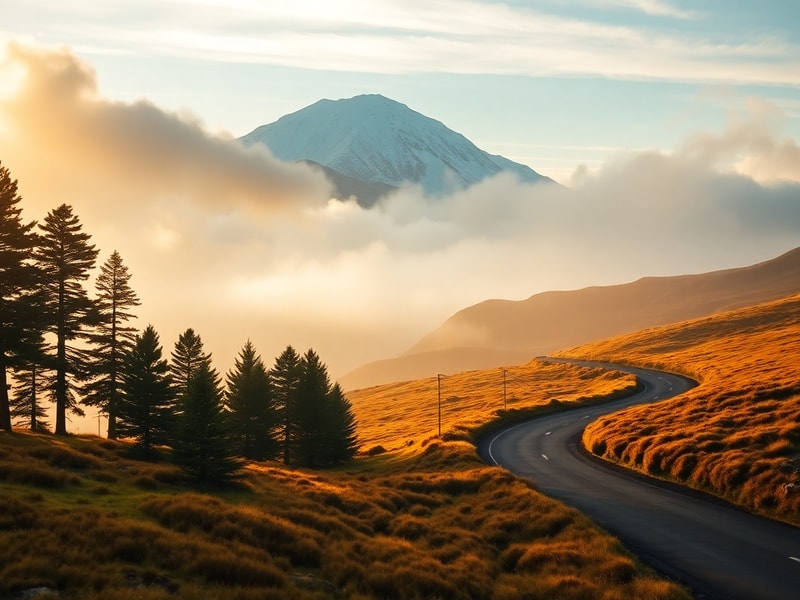
Scotland’s geography is nothing short of spectacular. The Highlands alone cover nearly a third of the country, with peaks like Ben Nevis, the UK’s highest mountain, dominating the skyline. Glencoe, a valley forged by ancient glaciers, is a place of raw beauty and geological wonder. Its dark, brooding mountains and sweeping glens have inspired countless artists, writers, and filmmakers—most notably, the Harry Potter series, which filmed key scenes at the Jacobite Steam Train route, often called the “Hogwarts Express.”
Scotland’s lochs are equally iconic. Loch Ness, stretching over 23 miles, is famous for its elusive resident, “Nessie.” But beyond the myth lies a body of water so deep and clear that it preserves centuries of history in its depths. Nearby, Loch Lomond offers a more serene experience, its islands and wooded shores perfect for hiking and kayaking.
The islands of Scotland—from the rugged Shetlands in the north to the Hebrides in the west—are microcosms of isolation and resilience. The Isle of Skye, with its fairy-tale landscapes like the Old Man of Storr and the Fairy Pools, attracts visitors from around the world. Meanwhile, the Orkney Islands boast some of Europe’s best-preserved Neolithic sites, including Skara Brae, older than Stonehenge and the Pyramids.
A Haven for Outdoor Enthusiasts
For those who crave adventure, Scotland delivers. The West Highland Way, a 96-mile trek from Milngavie to Fort William, is one of the UK’s most popular long-distance walking routes. The Cairngorms National Park, the largest in the UK, offers hiking, skiing, and wildlife spotting, including rare species like the golden eagle and the Scottish wildcat.
Water sports also thrive here. The Orkney Islands are a hotspot for surfing, while Loch Morar is renowned for its cold-water diving. Even the urban landscape offers opportunities—Edinburgh’s Water of Leith provides a scenic walking route through the heart of the city.
Scotland’s commitment to conservation is evident in its national parks and protected areas. The rewilding movement, championed by organizations like Trees for Life, aims to restore native forests and bring back species like the beaver and lynx. These efforts reflect a growing awareness of the need to balance tourism with environmental stewardship.
Scotland’s Modern Pulse: Innovation and Identity
While Scotland is often seen through the lens of its past, it is also a nation looking firmly toward the future. Edinburgh, its capital, is a hub for financial technology, or fintech. Companies like Skyscanner and FanDuel originated here, attracting global talent and investment. The city’s tech scene is bolstered by institutions like the University of Edinburgh, which ranks among the top universities in the world for computer science and artificial intelligence.
Scotland is also leading the charge in renewable energy. The Pentland Firth, between mainland Scotland and Orkney, has some of the strongest tidal currents in Europe. Projects like the MeyGen tidal array aim to harness this power, positioning Scotland as a key player in the global green energy transition. Wind and hydroelectric power also contribute significantly to the nation’s energy mix.
Yet, Scotland’s modern identity is perhaps most defined by its relationship with independence. The 2014 referendum on Scottish independence, which resulted in a 55% vote to remain in the UK, sparked intense debate. The issue resurfaced during Brexit, as Scotland voted overwhelmingly to remain in the EU. The Scottish National Party (SNP), which advocates for independence, continues to push for a second referendum, arguing that the democratic will of the Scottish people must be respected.
Education and the Arts: Pillars of Progress
Scotland’s education system is another area of modern strength. The University of St Andrews, founded in 1413, is the third-oldest in the English-speaking world and consistently ranks among the top universities globally. Its reputation for academic excellence and picturesque setting make it a magnet for students from around the world.
The nation’s commitment to the arts is equally robust. The National Theatre of Scotland, which has no permanent home, stages productions across the country, often in unconventional spaces like abandoned buildings or community halls. This approach ensures that theatre remains accessible to all, not just those in major cities.
Scotland’s film industry is also on the rise. Productions like Trainspotting and Brave have left indelible marks on cinema, while contemporary films like The Acid House and Fisherman’s Friends showcase the country’s raw storytelling talent. The Glasgow Film Festival and Edinburgh International Film Festival further cement Scotland’s place on the global stage.
A Nation That Wears Its Heart on Its Sleeve
What makes Scotland truly unique is its ability to wear its contradictions with grace. It is a land of ancient castles and cutting-edge science, of tartan-clad traditions and avant-garde art, of misty glens and bustling tech hubs. This duality is perhaps best embodied in its people—warm, witty, and fiercely proud of their heritage, yet open to the world and its possibilities.
Scotland’s influence is felt far beyond its borders. Scottish expatriates have shaped nations, from Canada to New Zealand. The diaspora remains a vital link, with events like Tartan Week in New York and the Edinburgh Military Tattoo drawing global audiences. Even the Scottish diaspora’s contributions to music—think of AC/DC’s Angus Young or Runrig’s enduring legacy—highlight the nation’s enduring creative spirit.
Yet, for all its global reach, Scotland’s strength lies in its local communities. Villages like Ullapool in the Highlands or Portree on Skye are microcosms of resilience, where neighbours know each other by name and traditions are passed down through generations. These places remind us that Scotland’s soul is not found in its landmarks alone, but in the everyday lives of its people.
Why Scotland Matters Today
In an era of rapid globalization, Scotland offers a compelling counterpoint. It proves that a nation can embrace modernity without erasing its past. It demonstrates that small countries can wield outsized influence in fields like education, technology, and environmental stewardship. And it shows that identity is not a monolith but a tapestry woven from history, landscape, and the dreams of its people.
Whether you’re drawn by the call of the bagpipes, the allure of a Highland hike, or the intellectual buzz of Edinburgh’s cafés, Scotland invites you to explore not just its sights, but its stories. It’s a journey that lingers long after you’ve left its shores.
For those seeking to delve deeper into Scotland’s cultural and natural wonders, Dave’s Locker Culture section offers curated insights into the traditions and modern expressions that define this remarkable nation. Meanwhile, the Travel section provides practical guides for those eager to experience Scotland’s landscapes firsthand.
Scotland is more than a destination. It’s an experience—one that challenges, inspires, and endures.
—MET