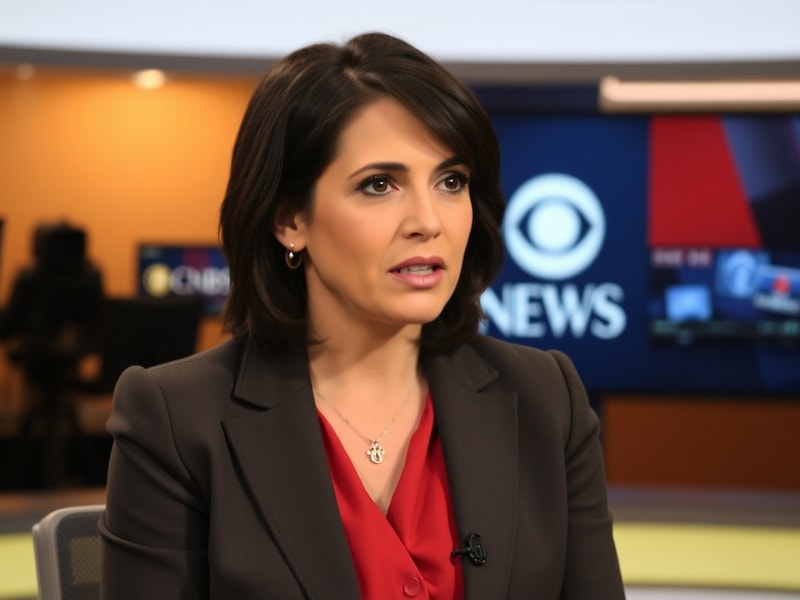
In a recent interview on CBS Mornings, conservative commentator and former New York Times editor Bari Weiss delivered a critique of modern media that resonated with critics of mainstream journalism. Weiss, known for her outspoken views on free speech and institutional bias, used the platform to highlight what she argues are systemic failures in how news organizations cover contentious social and political issues.
The segment, which aired on May 15, 2024, drew immediate attention not only for Weiss’ arguments but also for the visible reactions from the show’s hosts. Her appearance reignited discussions about journalistic integrity, the role of opinion in news coverage, and the increasing polarization of public discourse. While supporters praised her courage in challenging perceived orthodoxies, critics accused her of oversimplifying complex issues. The interview quickly became a flashpoint in broader debates about media accountability.
The Core Arguments Weiss Presented
During the 12-minute segment, Weiss outlined several key points that have become central to her public advocacy. She argued that mainstream media outlets often prioritize ideological consistency over factual accuracy, particularly on issues related to gender, race, and free expression. She cited specific examples—such as coverage of campus protests and corporate DEI policies—to illustrate what she described as a pattern of self-censorship and groupthink.
Weiss also emphasized the importance of viewpoint diversity in newsrooms, suggesting that ideological homogeneity leads to predictable and often misleading coverage. “When you have newsrooms that look and think alike,” she stated, “you end up with stories that reflect that uniformity rather than the complexity of the world.” Her comments echoed themes from her 2020 book The Year That Broke America, in which she chronicled her departure from the Times and her evolving perspective on media ethics.
Among the most debated moments was Weiss’ assertion that certain topics—such as gender-affirming care for minors or the origins of COVID-19—have become “untouchable” in mainstream discourse. She questioned why, in her view, journalists often avoid rigorous scrutiny of progressive policies while applying intense skepticism to conservative positions. The claim drew sharp responses from some viewers, who accused her of cherry-picking examples to fit a narrative.
Public and Media Reaction: A Divided Response
The CBS interview did not go unnoticed. Within hours, clips circulated widely on social media, with clips receiving over 1.3 million views on X (formerly Twitter) alone. Commentary on the segment split sharply along ideological lines. On the right, figures such as podcaster Ben Shapiro and commentator Matt Walsh praised Weiss for “speaking truth to power.” Conservative-leaning outlets like The Daily Wire and Fox News ran headlines framing the interview as a rare moment of candor in mainstream media.
Conversely, progressive critics argued that Weiss misrepresented journalistic standards. The Washington Post media critic Erik Wemple called the segment a “one-sided lecture” that ignored the broader context of editorial decision-making. Others pointed out that Weiss’ own past as a Times editor—a publication she now frequently criticizes—undermined her credibility on media reform. The exchange highlighted a growing frustration among audiences who feel that media appearances often devolve into performative debate rather than substantive discussion.
The division extended beyond commentary into activism. Progressive groups launched digital campaigns calling for CBS to issue a correction or offer a rebuttal segment. Meanwhile, free speech organizations like the Foundation for Individual Rights and Expression (FIRE) defended Weiss’ right to air her views, framing the controversy as evidence of the very “chilling effect” she warns about.
Broader Implications for Journalism and Public Trust
Weiss’ CBS appearance is part of a larger pattern in which high-profile figures from across the political spectrum use mainstream media platforms to challenge institutional narratives. These moments often expose deep fractures in how news is produced, consumed, and perceived. For journalism professionals, the interview raises uncomfortable questions: Is objectivity still possible in an era of hyper-partisanship? Can news organizations maintain credibility when audiences increasingly expect advocacy over reporting?
One consequence of such appearances is the erosion of trust in media institutions. A 2023 Gallup poll found that only 34% of Americans have “a great deal” or “fair amount” of trust in mass media—a decline from 53% in 1999. Weiss’ critique taps into this skepticism, offering a narrative that resonates with those who believe the press is more interested in shaping opinion than informing the public. Yet, her approach also risks deepening polarization by framing the issue as a moral struggle between truth-tellers and censors.
Another implication lies in the changing role of the journalist-as-commentator. Weiss, like others before her, has transitioned from traditional reporting to advocacy, leveraging her platform to influence public discourse. While this shift is not new—think of figures like Hunter S. Thompson or P.J. O’Rourke—it has accelerated with the rise of social media and the decline of local news. The result is a media ecosystem where opinion often overshadows reporting, and where audiences gravitate toward voices that confirm their existing beliefs.
What Comes Next? The Future of Media Accountability
The fallout from Weiss’ CBS interview is still unfolding. As of this writing, CBS has not issued a formal response, though industry observers expect continued scrutiny of the network’s editorial choices. The incident also raises practical questions for news organizations: How should they balance transparency with fairness? Can they engage with controversial figures without legitimizing fringe views?
For viewers, the lesson may be one of critical media literacy. In an environment where every interview can become a viral moment, audiences must learn to distinguish between substantive critique and performative outrage. That includes recognizing when a commentator like Weiss is highlighting real issues—such as the suppression of dissenting voices in academia or the dangers of unchecked institutional power—and when she is simplifying complex debates for rhetorical effect.
Ultimately, the Weiss-CBS exchange is less about one person’s arguments and more about the health of public discourse. It reflects a moment in which media institutions are being called to account—not just by external critics, but by their own audiences. Whether that accountability leads to reform or further fragmentation remains to be seen.
Key Takeaways from the Bari Weiss CBS Interview
- Critique of Media Bias: Weiss argued that mainstream journalism often prioritizes ideological consistency over factual accuracy, particularly on social issues.
- Viewpoint Diversity: She emphasized the need for ideological diversity in newsrooms to avoid groupthink and self-censorship.
- Controversial Claims: Weiss labeled certain topics as “untouchable,” drawing both support and backlash for her framing.
- Public Divide: Reactions to the interview revealed sharp ideological splits in how media credibility is perceived.
- Broader Trust Issues: The segment highlighted ongoing concerns about declining trust in mainstream news organizations.
For those interested in exploring similar debates around media ethics and cultural commentary, visit our News and Culture sections for ongoing analysis and commentary.
Conclusion: A Moment That Reflects a Larger Shift
Bari Weiss’ appearance on CBS Mornings was more than a talking point—it was a mirror held up to the media landscape. It revealed the tensions between accountability and advocacy, between truth-seeking and truth-telling. While Weiss’ critics accuse her of exaggeration, her supporters see her as a necessary corrective to a system that has lost its way.
What remains clear is that the demand for transparent, honest journalism has never been greater. Whether Weiss’ interview will lead to meaningful change—or merely add to the noise—depends largely on how audiences, journalists, and institutions choose to respond. One thing is certain: the conversation is far from over.