Baseball in Georgia is more than a sport—it’s a cultural institution that reflects the state’s history, diversity, and connection to America’s pastime. From the Negro Leagues legends who called Georgia home to the modern stars who dominate Major League Baseball, the game thrives in the Peach State. This passion extends beyond the diamond, shaping local communities, youth development, and even global perceptions of Southern athleticism.
The Historical Foundations of Georgia Baseball
Georgia’s baseball legacy traces back to the late 19th century, when the sport was still finding its footing in the American South. The state’s warm climate and strong community ties made it an ideal incubator for the game. By the early 20th century, Georgia had become a hub for Black baseball, particularly through the Negro National League. Teams like the Atlanta Black Crackers and the Columbus Blue Birds showcased the talent and resilience of African American players during an era of segregation.
The Negro Leagues weren’t just about competition—they were cultural touchstones. Games in Georgia drew thousands of fans, creating a sense of unity and pride in Black communities. Players like Negro Leagues legend Buck O’Neil honed their skills in Georgia before leaving indelible marks on the game. Their contributions laid the groundwork for integration in Major League Baseball, a process that began in earnest with Jackie Robinson’s historic debut in 1947.
A Timeline of Key Moments
- 1880s: First recorded baseball clubs form in Atlanta and Savannah.
- 1910s-1940s: Negro Leagues teams like the Atlanta Black Crackers and Columbus Blue Birds thrive.
- 1950s: Integration begins with players like Henry Aaron, who played for the Atlanta Braves’ minor-league affiliate in Jacksonville.
- 1960s-1990s: Georgia becomes a hotbed for college baseball, with programs like Georgia Tech and the University of Georgia producing MLB talent.
- 2000s-Present: The Atlanta Braves win the World Series in 2021, cementing Georgia’s place in modern baseball lore.
Youth Development and Grassroots Growth
Georgia’s baseball ecosystem is built on a foundation of youth programs, high school competitions, and collegiate success. The state’s Little League programs have produced national champions, while high school teams like those in Marietta and Warner Robins consistently rank among the nation’s best. This pipeline feeds into college baseball, where Georgia’s universities have become recruiting powerhouses.
The Georgia High School Association (GHSA) oversees one of the most competitive baseball landscapes in the country. Programs like those at Peachtree Ridge and Walton High Schools have sent dozens of players to MLB organizations. Meanwhile, summer travel teams provide elite prospects with exposure to college recruiters and professional scouts. The result is a steady stream of talent that keeps Georgia at the forefront of American baseball development.
One of the most influential programs in the state is the Georgia Baseball Academy, a nonprofit that offers free training to underserved youth. Founded by former minor-league player Tajh Johnson, the academy emphasizes both athletic skill and academic achievement. Its success stories, including players who’ve gone on to sign professional contracts, highlight how baseball can be a vehicle for upward mobility in Georgia’s communities.
MLB’s Presence and the Atlanta Braves’ Impact
The Atlanta Braves have long been the face of Georgia baseball on the national stage. Since moving to Atlanta in 1966, the franchise has been a cornerstone of the city’s sports culture. The Braves’ golden era arrived in the 1990s and early 2000s, with stars like Chipper Jones, Tom Glavine, and Greg Maddux leading the team to unprecedented success, including a World Series title in 1995. Though the team struggled in the 2000s and 2010s, it roared back to win the World Series in 2021, ending a 26-year championship drought and igniting celebrations across the state.
The Braves’ home, Truist Park, has become more than a stadium—it’s a cultural landmark. Located in the Cumberland district of northwest Atlanta, the park hosts not just baseball games but also concerts, community events, and youth clinics. Its design, which incorporates nods to Georgia’s agricultural heritage, reflects the state’s identity. The Braves’ success has also boosted local businesses, from restaurants in Vinings to hotels in downtown Atlanta, proving the team’s economic impact.
Beyond the Braves: Georgia’s MLB Talent Pipeline
While the Braves are the state’s most visible team, Georgia has produced a wealth of MLB talent across multiple franchises. Some of the most notable players include:
- Ronald Acuña Jr. (Atlanta Braves) – A dynamic outfielder and 2023 National League MVP, Acuña’s electrifying play has redefined the game.
- Dansby Swanson (Chicago Cubs) – A key member of the Braves’ 2021 championship team, Swanson is known for his defensive prowess and clutch hitting.
- Jason Heyward (retired) – A former top prospect who won a World Series with the St. Louis Cardinals and played a pivotal role in the Braves’ 2010s resurgence.
- Michael Harris II (Atlanta Braves) – A rising star in the outfield, Harris won the 2022 National League Rookie of the Year award.
- Corey Seager (Texas Rangers) – A two-time World Series MVP, Seager’s roots in Georgia run deep, as he played high school baseball in Kannapolis.
Baseball’s Cultural Significance in Georgia
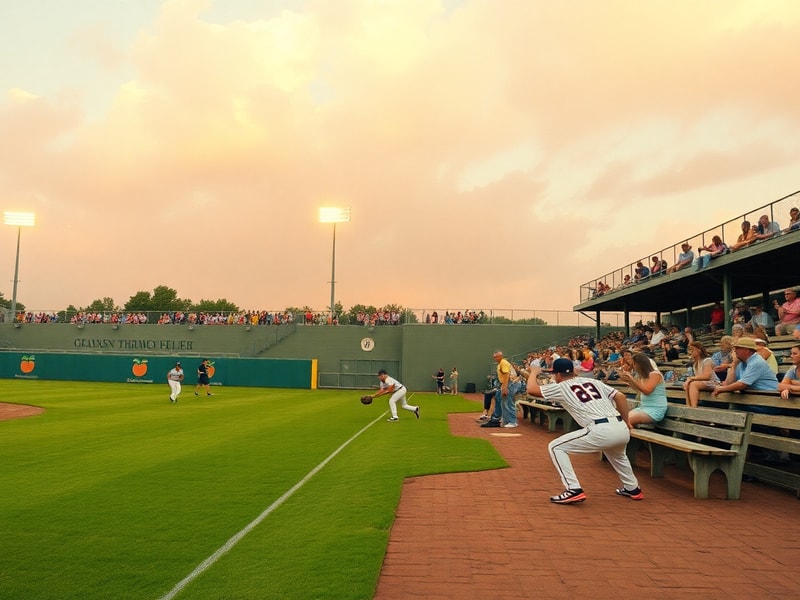
Baseball in Georgia is deeply intertwined with the state’s identity. For many Southerners, the sport evokes nostalgia for simpler times—backyard games, peanuts and Cracker Jack, and the crack of a bat echoing through a small-town park. This connection to tradition is evident in events like the annual Georgia Baseball Coaches Association convention, where coaches, players, and fans gather to celebrate the game.
Baseball also serves as a bridge between Georgia’s diverse communities. In cities like Atlanta, Savannah, and Albany, the sport brings together people of different backgrounds, united by their love for the game. Latin American players, in particular, have made significant contributions to Georgia baseball, both at the professional and amateur levels. Their influence is visible in the growing popularity of baseball in Latino communities and the emergence of Spanish-language broadcasts of Braves games.
Moreover, baseball has played a role in Georgia’s social history. During the Civil Rights Movement, Black baseball teams provided safe spaces for African Americans to gather and compete. Today, initiatives like the Georgia Dugout Project aim to preserve the stories of these pioneering players, ensuring their legacies are not forgotten. These efforts highlight baseball’s power to inspire change and foster unity.
The Future of Baseball in Georgia
Looking ahead, Georgia’s baseball landscape is poised for continued growth. The state’s investment in youth facilities, coupled with the Braves’ sustained success, has created an environment where the sport can thrive. New training academies, such as the one in Cartersville operated by the Braves, are providing cutting-edge resources to aspiring players. Meanwhile, the rise of data analytics and technology in baseball has opened new avenues for player development and fan engagement.
On the global stage, Georgia’s baseball community is increasingly connected to international talent. The Braves’ minor-league affiliates in the Dominican Republic and other Latin American countries serve as pipelines for future stars. Closer to home, Georgia’s colleges and universities are recruiting more international players, diversifying the talent pool and enriching the sport’s culture.
The state’s baseball culture is also adapting to modern trends. While traditionalists may bemoan the decline of sandlot games in favor of travel ball and showcase events, the passion for the game remains undiminished. Georgia’s high school and college seasons draw massive crowds, and youth participation numbers remain strong. The sport’s ability to evolve while preserving its core values ensures its continued relevance in Georgia.
Challenges and Opportunities
Despite its strengths, Georgia baseball faces challenges. Access to the sport remains unequal, with rural and underserved urban areas often lacking the resources of their affluent counterparts. Concerns about player safety, particularly regarding concussions and overuse injuries, have also prompted calls for better protection measures. Additionally, the sport’s slower pace can struggle to compete with faster-paced alternatives like basketball and soccer for youth attention.
Yet, these challenges are met with innovative solutions. Programs like Pitch Smart, a joint initiative by MLB and USA Baseball, provide guidelines to reduce injury risks. Meanwhile, organizations like Baseball Across Georgia are working to expand access by providing equipment and coaching to schools and communities in need. The sport’s leaders recognize that to grow, baseball must adapt without losing sight of its traditions.
For Georgia, baseball is more than a game—it’s a way of life. From the Negro Leagues to the modern-day Braves, from small-town diamonds to Truist Park, the sport’s legacy is woven into the fabric of the state. As Georgia continues to produce talent and inspire fans, its place in the baseball world is secure. The crack of the bat will echo for generations to come.