Oman vs Nepal: Comparing Two Unique Global Cultures
“`html
Oman vs Nepal: A Global Perspective on Two Distinct Nations
Oman and Nepal may not often appear side by side in global discussions, yet these two nations offer a fascinating contrast in geography, culture, and development. One nestled along the southeastern coast of the Arabian Peninsula, the other landlocked in the Himalayas, both countries have carved unique identities on the world stage. Their differences extend beyond mere geography, touching on economic structures, cultural traditions, and geopolitical roles.
While Oman is known for its vast deserts, historic forts, and modernizing economy, Nepal is celebrated for its towering mountains, ancient temples, and adventure tourism. Despite their disparities, both nations share a deep respect for tradition, a commitment to sustainable growth, and a role as bridges between distinct civilizations. This exploration delves into what sets them apart and what connects them in an ever-globalizing world.
Geography and Landscape: Deserts and Mountains
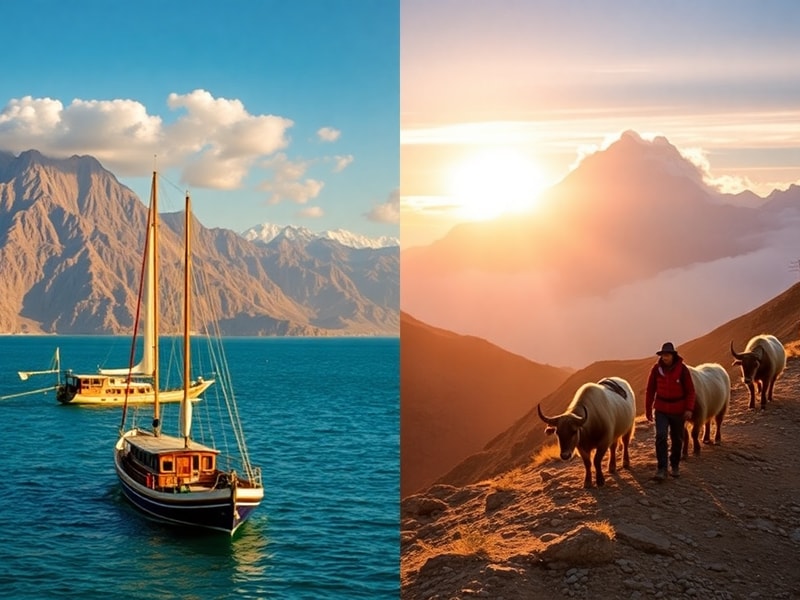
Oman’s terrain is a study in contrasts, dominated by the stark beauty of the Arabian Desert, where golden dunes stretch endlessly under a scorching sun. The Wahiba Sands, a vast desert expanse, provide a surreal landscape that has drawn adventurers and photographers alike. Yet Oman is also home to dramatic cliffs along its 1,700-kilometer coastline, where the Gulf of Oman and the Arabian Sea meet. The Hajar Mountains, with peaks rising over 3,000 meters, offer rugged terrain and cooler climates in the interior, including the historic region of Nizwa.
In stark contrast, Nepal rises from the lowland plains of the Terai, through the foothills of the Siwalik range, and into the towering summits of the Himalayas. Eight of the world’s ten highest mountains, including Mount Everest, crown Nepal’s northern border. The country’s dramatic elevation changes create diverse ecosystems, from subtropical jungles to alpine meadows. This geographic diversity supports rich biodiversity and makes Nepal a global destination for trekking and mountaineering.
The two nations’ landscapes not only shape their climates and ecosystems but also influence their cultures and economies. Oman’s arid environment has fostered a resilient, resourceful society, while Nepal’s mountainous terrain has cultivated a deeply spiritual connection to nature and a thriving outdoor tourism industry.
Cultural Heritage and Traditions
Oman’s cultural identity is deeply rooted in its history as a maritime crossroads. For centuries, Omani sailors and merchants traveled across the Indian Ocean, connecting East Africa, the Arabian Peninsula, and South Asia. This history is reflected in the nation’s architecture, cuisine, and music. Traditional Omani music features instruments like the oud and tanbur, while dishes such as shuwa, a slow-cooked lamb spiced with cardamom and turmeric, reveal the influence of Persian and East African culinary traditions.
The country’s Islamic heritage is evident in its grand mosques, such as the Sultan Qaboos Grand Mosque in Muscat, which blends modern design with traditional Islamic motifs. Oman’s tolerance and openness are also cultural hallmarks. The nation has long been home to diverse communities, including Hindu and Christian minorities, reflecting its historical role as a tolerant and inclusive society.
Nepal, on the other hand, is a tapestry of ethnic and religious traditions. Hinduism and Buddhism coexist harmoniously, with temples and monasteries dotting the landscape from the Kathmandu Valley to the high Himalayas. Festivals like Dashain and Tihar highlight Nepal’s rich cultural fabric, blending ancient rituals with vibrant communal celebrations.
The Newar community of the Kathmandu Valley is renowned for its intricate woodcarvings, metalwork, and traditional festivals. Meanwhile, the Gurungs and Sherpas of the mountains maintain animist and Buddhist traditions, where nature spirits and mountain deities play a central role in daily life. Nepal’s cultural heritage is not just preserved in monuments but lived through festivals, rituals, and everyday practices.
Economic Development and Global Role
Oman has undergone a remarkable transformation in recent decades, evolving from a traditional economy based on fishing and agriculture to a modern, diversified state. The discovery of oil in the 1960s propelled Oman into the global economy, and today, hydrocarbons remain a cornerstone of its revenue. Yet the government has actively pursued economic diversification through sectors such as tourism, logistics, and manufacturing. The Vision 2040 plan aims to reduce reliance on oil by fostering innovation, renewable energy, and a knowledge-based economy.
The country’s strategic location at the mouth of the Persian Gulf has made it a key player in regional trade and security. Oman maintains a neutral stance in regional conflicts, positioning itself as a mediator and facilitator. Its ports, such as those in Salalah and Sohar, serve as critical hubs for global shipping, connecting Asia, Africa, and Europe.
Nepal’s economy, by contrast, remains heavily reliant on agriculture, which employs nearly 70% of the workforce. However, tourism is the country’s second-largest industry, drawing millions of visitors annually to trek, climb, and explore its cultural treasures. Remittances from Nepali workers abroad—particularly in the Gulf states, Malaysia, and India—constitute a vital source of income for many families.
Despite its economic challenges, Nepal has made strides in hydropower development, leveraging its vast water resources to meet domestic energy needs and export electricity to neighboring countries. The government has also prioritized infrastructure development, with projects like the Kathmandu-Terai Fast Track aiming to improve connectivity and spur growth.
Both nations face unique economic pressures. Oman must navigate the volatility of oil markets and diversify its economy to ensure long-term stability. Nepal, meanwhile, grapples with political instability, infrastructure gaps, and the need to balance development with environmental conservation, particularly in the fragile Himalayan ecosystem.
The Role of Tourism in Shaping Identity
Tourism is a defining force in both Oman and Nepal, though it manifests in vastly different ways. In Oman, tourism is a carefully curated experience, emphasizing luxury, adventure, and cultural immersion. Visitors are drawn to the country’s pristine beaches, historic forts, and the serene beauty of the desert. Eco-tourism is growing, with projects like the Arabian Oryx Sanctuary and the Al Wusta Wildlife Reserve offering opportunities to experience Oman’s unique biodiversity.
The Omani government has invested in high-end hospitality, positioning the country as a premium destination for discerning travelers. The annual Muscat Festival and the Salalah Tourism Festival showcase the nation’s cultural and natural attractions, blending modernity with tradition.
Nepal’s tourism industry, while also a major economic driver, is more accessible and diverse. The country’s reputation as the ultimate adventure destination—home to Mount Everest, the Annapurna Circuit, and the birthplace of Buddha—attracts trekkers, pilgrims, and thrill-seekers from around the world. However, tourism in Nepal is not without challenges. The 2015 earthquake and the COVID-19 pandemic highlighted the sector’s vulnerability, while over-tourism in popular areas like Pokhara and the Everest region raises concerns about sustainability.
Both countries recognize the need to balance tourism growth with environmental and cultural preservation. Oman’s approach emphasizes controlled development and sustainability, while Nepal is working to diversify its offerings beyond trekking, promoting cultural tourism, wildlife safaris, and wellness retreats.
A Shared Commitment to Sustainability
Despite their differences, Oman and Nepal share a commitment to sustainable development and environmental stewardship. Oman has made significant investments in renewable energy, with plans to generate 30% of its electricity from renewables by 2030. The country’s vast solar and wind resources offer immense potential for clean energy production.
Nepal, meanwhile, is a global leader in hydropower and has set ambitious targets to become a carbon-neutral nation. The country’s topography makes it ideal for small-scale hydropower projects, which provide electricity to rural communities and reduce reliance on fossil fuels. Nepal has also prioritized forest conservation, with community forestry programs empowering local people to manage and protect their natural resources.
Both nations are vulnerable to the impacts of climate change. For Oman, rising temperatures and water scarcity pose significant challenges, while Nepal faces the threat of glacial melt and increased frequency of natural disasters. Their proactive approaches to sustainability reflect a broader global trend toward balancing development with environmental responsibility.
Oman and Nepal may seem worlds apart, yet they share a deep respect for tradition, a commitment to sustainable growth, and a role as bridges between distinct civilizations. Whether through the golden dunes of the Wahiba Sands or the towering peaks of the Himalayas, both nations offer a reminder of the world’s incredible diversity—and the shared challenges that unite us all.