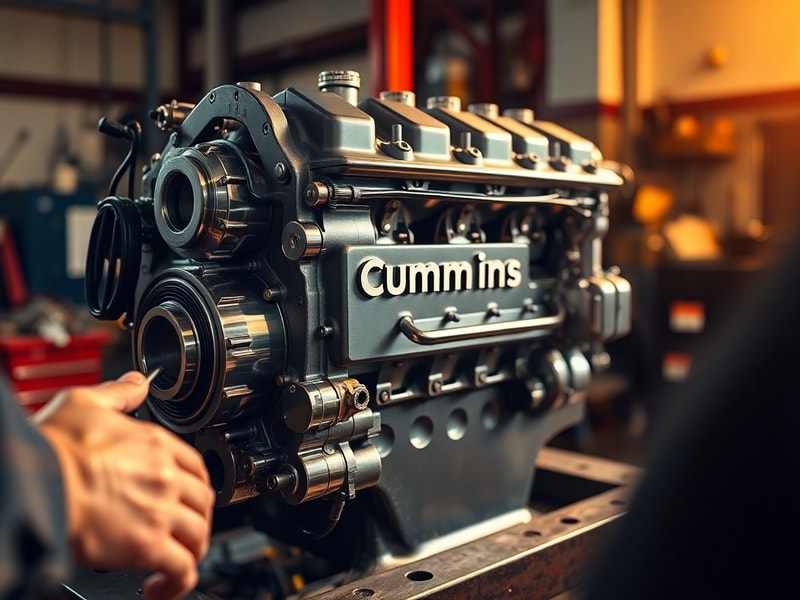
Few names resonate as consistently in the world of industrial power as Cummins Inc. Founded in 1919 by Clessie Cummins in Columbus, Indiana, the company has evolved from a modest machine shop into a multinational corporation with a presence in over 190 countries. What began as a repair business for diesel engines has transformed into a diversified power solutions provider, shaping industries from mining to marine, and from agriculture to aerospace.
The story of Cummins is not just one of mechanical innovation but of strategic adaptation. In an era where sustainability and efficiency are no longer optional but essential, Cummins has positioned itself at the forefront of the energy transition. Its engines power the trucks that deliver goods across continents. Its generators illuminate hospitals in remote villages. Its components keep critical infrastructure running during blackouts. This global reach reflects not only engineering excellence but also a deep understanding of regional needs and emerging markets.
The Engine of Global Infrastructure
Cummins’ core strength remains its engines, but the company has expanded far beyond them. Today, it designs, manufactures, and services power systems that include diesel, natural gas, electric, and hydrogen fuel cell technologies. This diversification is strategic. While diesel engines still dominate in heavy-duty transportation and industrial applications, the shift toward cleaner energy has become unavoidable.
The company’s QSX and QSK series engines, for instance, are workhorses in mining and construction. These engines deliver high torque and reliability under extreme conditions. Meanwhile, in Europe and parts of Asia, Cummins’ natural gas engines are gaining traction as governments phase out diesel in urban transit buses and delivery fleets. In India, the company has partnered with local manufacturers to bring cleaner power solutions to a rapidly motorizing population.
Cummins’ influence extends into technology through its acquisition of hydrogen fuel cell leader Hydrogenics and its investment in battery electric powertrains. These moves signal a clear vision: the future of power is multi-modal. Diesel will not disappear overnight, but Cummins is preparing for a world where zero-emission solutions are not just preferred but required.
Global Manufacturing Footprint: Local Solutions, Worldwide Reach
Cummins operates 60 manufacturing plants and 200 distributor locations across six continents. This network is not just about production—it’s about proximity. In Brazil, Cummins supports the country’s growing agribusiness sector with engines designed for sugarcane harvesters and irrigation systems. In China, one of its largest markets, Cummins has multiple joint ventures producing engines and components tailored to local emissions standards and cost structures.
In Africa, where unreliable power grids cripple economic growth, Cummins generators and microgrid solutions are powering clinics, schools, and small businesses. The company’s participation in the U.S. Power Africa initiative highlights its commitment to electrification in underserved regions. This localized approach—designing, building, and servicing equipment within regional contexts—has been a cornerstone of Cummins’ resilience during global supply chain disruptions.
Innovation and Sustainability: The Dual Engines of Growth
Cummins’ innovation strategy is built on three pillars: efficiency, electrification, and decarbonization. The company has committed to reducing greenhouse gas emissions from its products and facilities by 50% by 2030. This goal is backed by over $1 billion invested annually in research and development. Among its most promising projects is the development of hydrogen internal combustion engines—an interim step toward full fuel cell adoption.
In 2023, Cummins unveiled its X15H hydrogen engine, designed for long-haul trucking. Unlike battery electric trucks that require lengthy charging stops, hydrogen-powered engines offer quick refueling and extended range. This innovation addresses a critical gap in the zero-emission freight ecosystem. Similarly, in marine applications, Cummins is retrofitting ferries and workboats with hydrogen dual-fuel engines, reducing emissions in coastal cities plagued by air pollution.
The company’s sustainability efforts are not limited to products. Cummins’ facilities worldwide are transitioning to renewable energy sources. Its Jamestown, New York plant runs on 100% renewable electricity, and its Wuxi, China plant features a closed-loop water system. These initiatives reflect a corporate ethos that views sustainability as both a moral responsibility and a business imperative.
The Role of Partnerships in a Changing Energy Landscape
Cummins understands that no single company can drive the energy transition alone. Its partnerships span industries, governments, and academia. In the United States, it collaborates with the Department of Energy on advanced combustion research. In Europe, it works with truck manufacturers to integrate Cummins’ powertrains into next-generation electric and hydrogen vehicles. In India, it supports the government’s “Make in India” initiative by sourcing components locally and training technicians in clean energy maintenance.
One notable collaboration is with NASCAR, where Cummins powers safety trucks and generators using renewable diesel derived from waste fats and oils. This partnership not only reduces the sport’s carbon footprint but also demonstrates Cummins’ technology in high-visibility, high-stress environments. Such alliances help normalize advanced energy solutions in sectors traditionally resistant to change.
Cultural and Economic Impact: More Than Just Engines
Beyond its technical contributions, Cummins has woven itself into the fabric of communities worldwide. In Columbus, Indiana—the company’s birthplace—Cummins is the largest private employer. The city’s modernist architecture, much of it funded by Cummins philanthropy, has earned it the nickname “Athens of the Prairie.” The Cummins Foundation has donated over $200 million to education, health, and arts programs in the region, creating a model of corporate social responsibility that extends globally.
In India, Cummins has established vocational training centers to upskill young engineers in diesel and alternative energy technologies. In Brazil, it supports programs that bring solar-powered water pumps to smallholder farmers, increasing crop yields and food security. These initiatives reflect a philosophy that views corporate success as inseparable from community wellbeing.
The company’s impact is also felt in education. Cummins sponsors STEM programs in schools across the United States, China, and Mexico. Its “Engineering for Kids” curriculum introduces children to the principles of power generation, fuel efficiency, and environmental stewardship. By investing in the next generation of engineers, Cummins ensures a pipeline of talent capable of sustaining its innovation pipeline.
Challenges and Criticisms
Despite its achievements, Cummins faces challenges. Critics argue that even with hydrogen engines, the company remains too dependent on fossil fuel-based technologies. Others point to supply chain vulnerabilities exposed during the COVID-19 pandemic, when semiconductor shortages disrupted engine production. Additionally, in markets like Europe, where electric vehicles are gaining rapid adoption, Cummins must accelerate its battery electric offerings to remain competitive.
The company has responded by increasing its investment in battery systems and software integration. Its acquisition of Meritor, a leading manufacturer of drivetrain components, signals a move toward becoming a full-systems provider in the electric vehicle space. This transition is not without risk, but it demonstrates Cummins’ willingness to evolve rather than cling to legacy models.
Conclusion: Powering the Future, One Region at a Time
Cummins Inc. stands as a testament to the power of adaptability. From a small engine repair shop to a global leader in power solutions, the company has navigated technological revolutions, economic downturns, and shifting regulatory landscapes. Its success lies not only in engineering prowess but in its ability to listen to local needs and respond with solutions that are both practical and forward-thinking.
As the world moves toward decarbonization, Cummins is not merely reacting—it is leading. By investing in hydrogen, electrification, and sustainable manufacturing, the company is preparing for a future where power is clean, reliable, and accessible to all. Its story is one of quiet determination, of engines that roar not just with horsepower but with purpose.
In an era defined by energy uncertainty, Cummins offers more than machines. It offers a vision: one where industry and environment coexist, where innovation serves humanity, and where power is not just generated but stewarded responsibly. That vision may well be the most powerful thing Cummins has ever built.