Penn Station: The Architectural Giant We Can’t Afford to Keep Ignoring
Beneath the streets of Manhattan, an architectural colossus hums with the energy of half a million daily commuters. Pennsylvania Station, commonly known as Penn Station, is more than just a transit hub—it’s a testament to the contradictions of modern urban life. Housed largely underground, this 1960s-era concrete labyrinth replaced one of New York’s most celebrated Beaux-Arts masterpieces, a decision that still haunts preservationists and commuters alike. Today, Penn Station is both a marvel of efficiency and a symbol of urban neglect, a place where history, infrastructure, and human resilience intersect.
The Rise and Fall of a Beaux-Arts Icon
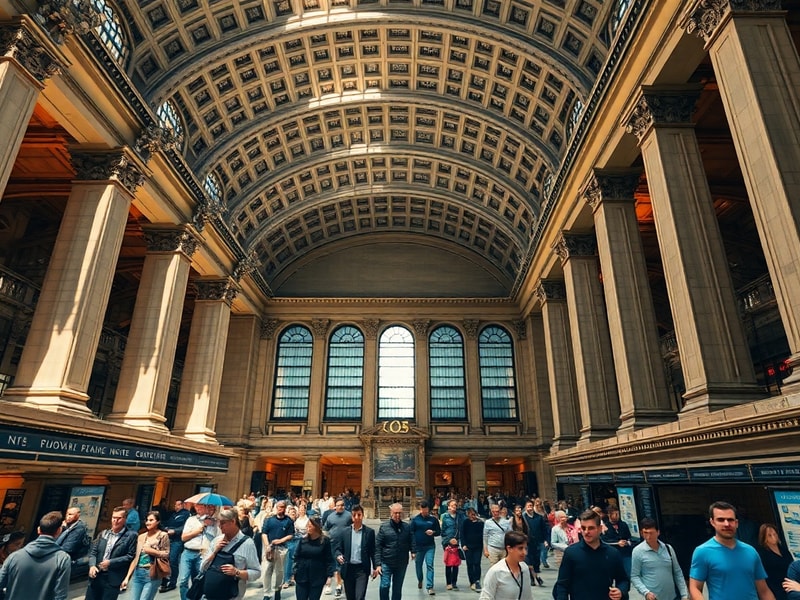
Designed by the renowned architectural firm McKim, Mead & White, the original Penn Station opened in 1910 as a gleaming monument to the power of rail travel. Its soaring steel-and-glass concourse, inspired by the Baths of Caracalla in Rome, was a marvel of engineering and aesthetics. The station’s grandeur was not merely decorative—it was a statement. It symbolized New York’s rise as a global city and the promise of rail travel as a clean, fast, and dignified way to move millions.
Yet by the 1960s, the station’s fate hung in the balance. The rise of the automobile and suburban sprawl had diminished the dominance of rail travel. The Pennsylvania Railroad, facing financial ruin, sought to monetize its prime Manhattan real estate. In a controversial move, the railroad sold the air rights above Penn Station to developers, who demolished the original structure to build Madison Square Garden and a modern underground station. The loss of Penn Station’s original facade sparked a national preservation movement, leading to the creation of the New York City Landmarks Preservation Commission in 1965.
The demolition of Penn Station remains one of the most controversial acts in American architectural history. As architecture critic Ada Louise Huxtable wrote in The New York Times at the time, “Until the latest demolition, New York had a majestic Beaux-Arts railroad terminal that was a civic achievement comparable to the public buildings of Rome.” The station’s destruction was not just an architectural loss—it was a cultural one, a reminder of how quickly progress can erase history when guided by short-term thinking.
Penn Station Today: A Transit Workhorse with a Fractured Identity
Today, Penn Station is a hive of activity, serving over 600,000 passengers daily who pass through its cramped corridors and dimly lit platforms. It’s the busiest intercity rail hub in North America, handling more passengers than JFK, LaGuardia, and Newark airports combined. Despite its critical role in the region’s transportation network, Penn Station suffers from chronic overcrowding, poor wayfinding, and an almost complete lack of daylight—a far cry from the grand civic spaces it replaced.
Architecturally, Penn Station is a study in contrasts. The 1960s-era design prioritized function over form, creating a utilitarian space that feels more like a subway station than a gateway to one of the world’s greatest cities. The station’s low ceilings and lack of natural light contribute to a sense of claustrophobia, while its labyrinthine layout frustrates even seasoned commuters. Yet, it remains a vital artery for the Northeast Corridor, connecting New York to Boston, Washington, D.C., and points in between.
For many, Penn Station is a place of transit rather than destination—a necessary stop on the way to somewhere else. But for others, it’s a symbol of resilience. Every day, students, workers, and travelers navigate its crowded halls with a mix of frustration and determination. It’s a reminder that even in an era of high-speed rail and sleek airports, the humble train station still plays a crucial role in shaping the rhythm of urban life.
The Push for a New Penn Station: Can New York Get It Right This Time?
The conversation around Penn Station has shifted from preservation to reinvention. In recent years, there’s been growing momentum to rebuild the station in a way that honors its past while addressing its present-day shortcomings. The most ambitious proposal comes from the Moynihan Train Hall, a $1.6 billion expansion that repurposes the Farley Post Office building into a modern, light-filled terminal. Opened in 2021, the Moynihan Train Hall has already improved the experience for Amtrak and Long Island Rail Road passengers, offering wider concourses, better retail options, and natural light streaming through its soaring glass ceilings.
Yet the Moynihan Train Hall is only part of the solution. Many advocates argue that Penn Station itself needs a complete overhaul. Ideas range from a full reconstruction of the original Beaux-Arts design to a modernist reinterpretation that prioritizes light, space, and passenger comfort. The challenge lies in balancing these aspirations with the practical realities of operating a functioning transit hub in one of the world’s most densely populated cities.
In 2022, New York Governor Kathy Hochul announced a $7 billion plan to transform Penn Station, including the construction of a new terminal with expanded capacity and improved amenities. The plan also includes upgrades to the station’s aging infrastructure, such as new tracks, signals, and platforms. If realized, the project could redefine Penn Station as a world-class transportation hub—one that reflects the ambition and dynamism of New York itself.
Why Penn Station Matters More Than Ever
Penn Station is more than just a transit hub—it’s a microcosm of the challenges facing modern cities. It embodies the tension between preservation and progress, between history and innovation. In an era where cities are increasingly defined by their skylines and digital connectivity, Penn Station reminds us that the spaces we move through every day shape our sense of place and identity.
For New Yorkers, Penn Station is a daily reality. It’s where dreams begin and end, where lives intersect in fleeting moments. For visitors, it’s often the first and last impression of the city—a crowded, chaotic, and occasionally overwhelming introduction to the energy of New York. But beneath its flaws, Penn Station holds the potential to be something greater. With thoughtful investment and a commitment to excellence, it could once again become a symbol of civic pride and architectural ambition.
As cities across the globe grapple with the demands of growth and sustainability, Penn Station offers a case study in how to balance the old and the new. It’s a reminder that great cities are not just built on steel and glass, but on the spaces where people come together—however imperfectly—to move forward.
For those interested in exploring more about urban development and architectural history, visit our News and Culture sections for in-depth analysis and the latest trends shaping our built environment.
Key Takeaways About Penn Station
- Historic Loss: The demolition of the original Penn Station in the 1960s sparked the modern preservation movement and remains a cautionary tale about prioritizing short-term gains over long-term value.
- Functional Challenges: Today’s Penn Station suffers from overcrowding, poor wayfinding, and a lack of natural light, making it a frustrating experience for commuters despite its critical role in the region’s transit network.
- Moynihan Train Hall: The 2021 expansion of the Moynihan Train Hall has improved the experience for some passengers, but it’s only a partial solution to the broader challenges facing Penn Station.
- Future Plans: A $7 billion plan to transform Penn Station includes expanded capacity, improved amenities, and upgrades to aging infrastructure, offering a chance to redefine the station as a world-class hub.
- Broader Implications: Penn Station’s story reflects the challenges of balancing preservation, progress, and practicality in modern urban development, making it a case study for cities worldwide.
Penn Station may never regain the grandeur of its Beaux-Arts predecessor, but with the right vision and investment, it could become something even better—a transit hub that reflects the best of New York’s past, present, and future.