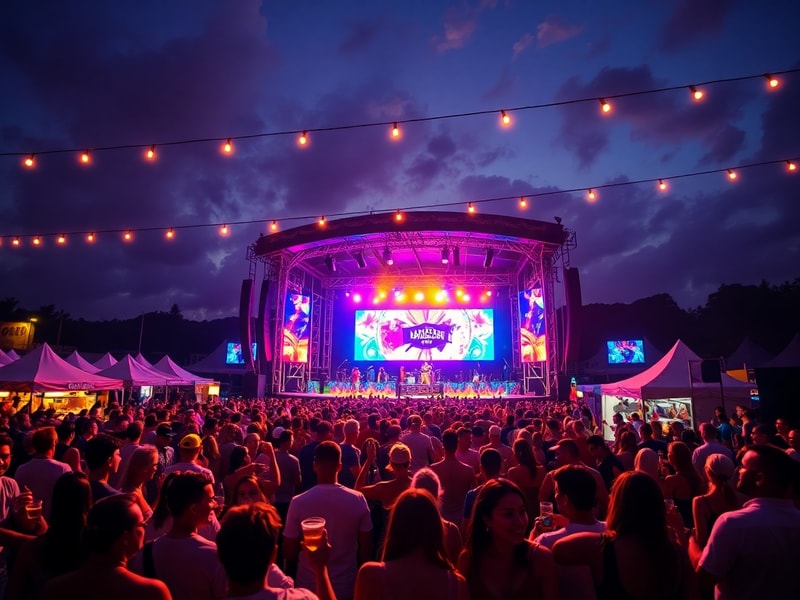
For half a century, Summerfest has stood as a pillar of American music festivals, blending eclectic performances with Midwestern charm. Held annually along the shores of Lake Michigan in Milwaukee, Wisconsin, the event has grown from a modest local gathering into a sprawling nine-day extravaganza that draws over 800,000 attendees each summer. With its diverse lineup, free admission policy, and unparalleled lakeside setting, Summerfest has cemented its reputation as a cultural institution.
The festival’s origins trace back to 1968, when a group of Milwaukee business leaders sought to create a summer event that would invigorate the city’s cultural scene. What began as a modest one-day festival has since expanded into one of the most visited music festivals in the world, according to the Guinness World Records. Today, Summerfest features more than 800 acts across 12 stages, showcasing everything from mainstream pop to underground indie, hip-hop to polka. The festival’s ability to balance commercial appeal with artistic integrity has made it a model for other cities looking to replicate its success.
The Evolution of a Festival: From Humble Beginnings to Global Recognition
Summerfest’s growth mirrors the evolution of the music festival industry itself. In its early years, the festival operated on a shoestring budget, relying on local sponsorships and volunteers. By the 1980s, it had expanded to a multi-day event, and in 1999, it shattered attendance records by drawing over 900,000 visitors. The festival’s crowning achievement came in 2017 when it was officially recognized by Guinness World Records as the largest music festival in the world.
The festival’s longevity can be attributed to its adaptability. Unlike many festivals that focus on a single genre or demographic, Summerfest has consistently reinvented itself to appeal to broader audiences. In recent years, it has embraced electronic dance music, Latin rhythms, and even classical performances alongside its traditional rock and pop headliners. This inclusivity has allowed Summerfest to remain relevant in an increasingly fragmented entertainment landscape.
Another key to its success has been its commitment to accessibility. While many major festivals charge premium prices for tickets and camping, Summerfest offers free admission on select days, making it one of the few major music festivals where attendees can experience world-class performances without breaking the bank. The festival also prioritizes local artists, dedicating stages to Milwaukee-based musicians and providing a platform for emerging talent.
A Weekend in the Life of Summerfest
Attending Summerfest is an immersive experience that begins the moment visitors step onto the Henry Maier Festival Park grounds. The 75-acre venue, located adjacent to Milwaukee’s downtown, transforms into a vibrant microcosm of music, food, and culture. With 12 distinct stages, attendees can hop between performances with ease, discovering new artists or catching sets from their favorite headliners.
The festival’s layout is designed for exploration. Attendees can start their day with an acoustic set on the smaller, more intimate stages before migrating to the main stages for high-energy performances. The largest stage, the American Family Insurance Amphitheater, hosts the festival’s biggest names, while the U.S. Cellular Connection Stage features up-and-coming acts. For those seeking a more laid-back experience, the SkyBarge Stage offers a relaxed setting with stunning views of Lake Michigan.
Food and drink are integral to the Summerfest experience. The festival’s culinary offerings reflect Milwaukee’s diverse food scene, with vendors serving everything from classic brats and cheese curds to innovative fusion dishes. Local breweries and craft cocktail bars are scattered throughout the grounds, providing refreshments that pair perfectly with the music. For those looking to indulge, the festival’s signature drink, the Summerfest Rum Runner, is a must-try.
Beyond the music and food, Summerfest fosters a sense of community that is palpable among attendees. The festival’s emphasis on inclusivity and diversity is evident in its programming, which celebrates artists from all backgrounds and genres. Whether it’s the Latin sounds of the Chulita Vinyl Club or the soulful rhythms of the Milwaukee Symphony Orchestra, Summerfest ensures that there’s something for everyone.
The Business of Summerfest: Economics and Impact
Summerfest is more than just a music festival; it’s a significant economic driver for the city of Milwaukee. According to a study by the University of Wisconsin-Milwaukee, the festival generates over $200 million in economic impact annually, supporting local businesses, hotels, and restaurants. The festival’s ability to attract visitors from across the country and around the world has made it a cornerstone of Milwaukee’s tourism industry.
The festival’s economic impact extends beyond the nine days it’s in operation. Year-round, Summerfest’s organizers work to secure sponsorships, book acts, and plan logistics, creating jobs and fostering partnerships with local businesses. The festival’s commitment to sustainability has also paid dividends, with initiatives like its zero-waste program reducing its environmental footprint and setting a standard for other large-scale events.
However, organizing an event of Summerfest’s scale is not without its challenges. Budgeting for a festival that spans nine days and features over 800 acts requires careful planning and foresight. In recent years, the festival has faced rising costs for security, production, and talent, which have put pressure on its financial model. To offset these costs, Summerfest has increasingly relied on corporate sponsorships and partnerships, a trend that has become common among major festivals.
Despite these challenges, Summerfest remains a model for how to balance artistic integrity with financial sustainability. Its ability to attract top-tier talent while maintaining its grassroots appeal is a testament to its unique positioning in the festival landscape. For many artists, performing at Summerfest is a career-defining opportunity, and the festival’s reputation for fostering new talent has made it a sought-after platform for emerging musicians.
Summerfest’s Cultural Legacy and Future Directions
Summerfest’s influence extends far beyond its annual run. Over the past 50 years, the festival has played a pivotal role in shaping Milwaukee’s cultural identity, fostering a sense of pride and community among residents. It has also served as a platform for social and political commentary, with artists using their performances to address issues like racial justice, LGBTQ+ rights, and environmental sustainability.
The festival’s commitment to social responsibility is evident in its programming and partnerships. In 2020, Summerfest launched its “Summerfest Cares” initiative, which focuses on community engagement, education, and charitable giving. The initiative includes partnerships with local nonprofits, scholarship programs for young musicians, and efforts to promote diversity and inclusion within the music industry. These initiatives have not only strengthened the festival’s ties to the community but have also set a standard for other festivals to follow.
Looking to the future, Summerfest is poised to continue its evolution as a leader in the music festival industry. The festival’s organizers are exploring new technologies, such as virtual reality and augmented reality, to enhance the attendee experience. They are also expanding their focus on sustainability, with plans to reduce waste, lower carbon emissions, and promote eco-friendly practices. These efforts reflect a broader trend in the festival industry, as organizers seek to balance growth with environmental responsibility.
For attendees, the future of Summerfest promises even more innovation and excitement. With its finger on the pulse of the music industry, the festival is likely to continue introducing new genres, artists, and experiences to its lineup. Whether it’s a surprise performance by a legendary act or a breakthrough set by an unknown artist, Summerfest remains a place where magic happens.
Why Summerfest Matters
In an era where music festivals come and go, Summerfest stands out as a testament to the enduring power of live music. Its commitment to accessibility, diversity, and community sets it apart from other festivals, making it a cherished tradition for generations of music lovers. For many attendees, Summerfest is more than just an event; it’s a rite of passage, a place to create memories, and a celebration of the universal language of music.
The festival’s ability to adapt and thrive over five decades is a reminder of the resilience of the live music industry. In a world where digital streaming dominates, Summerfest proves that there’s still nothing like the experience of seeing your favorite artist perform live, surrounded by thousands of people united by their love of music. As it enters its next chapter, Summerfest is poised to continue its legacy as a beacon of creativity, culture, and community.
For those who have never experienced Summerfest, it’s more than worth the trip to Milwaukee. Whether you’re a die-hard music fan, a casual listener, or simply looking for a memorable summer adventure, Summerfest offers something for everyone. And with its free admission days and diverse lineup, there’s no better time to discover what makes this festival so special.
To learn more about music festivals and their impact on local communities, visit our Music category page for in-depth analysis and features. For a deeper look at the business side of entertainment, check out our Analysis category page.
© 2023 Dave’s Locker. All rights reserved.