The 2026 NCAA Division I Baseball Championship is already shaping up to be one of the most competitive in recent memory. With talent pipelines stronger than ever and coaching staffs refining their strategies, the road to Omaha promises unpredictability and high-stakes drama. Programs that have dominated in recent years are facing challenges from rising programs, while transfer portals and elite recruiting classes are reshaping rosters across the country.
Below, we break down the teams most likely to contend for the 2026 title, analyze their strengths and weaknesses, and highlight the young stars who could define the next era of college baseball. Whether you’re a die-hard fan or a casual observer, this preview will help you understand who’s ready to make a run in Omaha.
Top Contenders: Programs with Championship Pedigree
The usual suspects remain firmly in the conversation. Programs like Florida, Tennessee, and Arkansas have built sustainable winning cultures under proven coaches, and they continue to recruit at an elite level. Florida, under head coach Kevin O’Sullivan, has reloaded despite recent draft losses, with a pitching staff that features multiple first-round-caliber arms. Tennessee’s lineup is stacked with power hitters, and their bullpen has quietly become one of the nation’s best.
Arkansas, meanwhile, remains a model of consistency. The Razorbacks’ pitching rotation is anchored by veterans and supplemented by transfers from Power Five conferences. Their 2025 recruiting class—ranked in the top 10 nationally—includes multiple players who could contribute immediately. For a deeper look at how Arkansas approaches player development, visit our Baseball Development section.
Other perennial threats include Texas A&M, which is coming off a surprising 2025 run to Omaha, and LSU, always a threat with its elite offensive firepower and deep pitching depth. The SEC remains the gold standard in college baseball, but the ACC and Big 12 are not far behind in terms of raw talent.
Florida Gators: Reloading Without Rebuilding
The Gators have lost key players to the draft, including two first-round selections from last year’s squad. Yet, Florida’s system under O’Sullivan has shown an uncanny ability to develop talent quickly. The pitching staff is led by right-hander Christian Moore, a 2025 Freshman All-American who could emerge as a Friday night ace in 2026. Behind him, sophomore lefty Jake Brown has shown mid-90s velocity and a devastating slider.
Offensively, Florida returns its top two hitters from 2025, including shortstop Jace Purvis, a potential All-American candidate with plus bat speed and elite defensive range. The lineup is built for power and contact, with multiple switch-hitters who can drive the ball out of the yard. The Gators’ defense is also among the best in the nation, with a middle infield duo that ranks among the top defensive units in college baseball.
Tennessee Volunteers: Power at the Plate and in the Bullpen
Led by head coach Tony Vitello, Tennessee has become a powerhouse thanks to its offensive approach and bullpen depth. The Volunteers return four everyday position players from a lineup that ranked third nationally in home runs in 2025. First baseman Mason McComb, a 2025 Freshman All-American, is a left-handed slugger with a 95th-percentile exit velocity. Behind him, catcher Drew Gilbert provides a left-handed bat in the middle of the order with plus on-base skills.
The bullpen is Tennessee’s secret weapon. Closer Wyatt Hudepohl has saved 12 games in two seasons and owns a fastball that regularly touches 98 mph. The Volunteers have developed a culture of pitching under pitching coach Frank Anderson, who emphasizes command and secondary stuff. Tennessee’s ability to shorten games with late-inning dominance makes them a favorite in elimination games.
Dark Horses: Programs Poised for Breakout Seasons
While the SEC and ACC receive most of the attention, several programs outside the Power Five are quietly assembling rosters capable of challenging for the title. Coastal Carolina, a traditional mid-major power, returns nearly every key player from a 2025 squad that made a surprising run to the Super Regionals. The Chanticleers’ pitching staff is built on groundballs and deception, with right-hander Cade Belton leading a rotation that could stifle even the best offenses.
Another program to watch is Wake Forest. The Demon Deacons have steadily climbed the rankings under head coach Tom Walter, and their 2026 class is one of the most talented in the ACC. Wake’s offense is built around speed and small-ball execution, but they’ve added power bats in the transfer portal. If their pitching can take a step forward, Wake Forest could be a Cinderella story in Omaha.
Further west, Arizona State is making a resurgence under new head coach Mitch Thompson. The Sun Devils have added multiple elite transfers, including a power-hitting first baseman from a Big 12 program and a closer from a national runner-up squad. Thompson’s system emphasizes aggressive baserunning and timely hitting, which could make Arizona State a dangerous opponent in the postseason.
Rising Stars: Freshmen and Transfers Who Could Define 2026
The 2026 season will introduce a wave of new talent that could shape the next decade of college baseball. The transfer portal has leveled the playing field, allowing programs to quickly address roster needs. One of the most impactful additions is outfielder Cooper Hjerpe, who left Stanford to join Vanderbilt. Hjerpe is a two-way talent with a .300-plus career batting average and experience as a weekend starter on the mound. His presence in the lineup gives the Commodores another elite bat.
Another standout is catcher Brady Smith, a transfer from Ole Miss to Mississippi State. Smith is a defensive specialist with a cannon for an arm and a knack for handling pitching staffs. His leadership and game-calling ability could elevate Mississippi State’s pitching rotation, which was already among the SEC’s best in 2025.
Freshman classes are also packed with future stars. Texas’s 2026 recruiting class is ranked No. 1 nationally, headlined by shortstop Jace Norman, a 6-foot-3, 200-pound left-handed hitter with 20-20 potential. Norman could step directly into the Longhorns’ lineup and provide immediate impact at the plate and in the field. Similarly, Oklahoma State’s class includes a trio of pitchers who could form the nucleus of a dominant rotation by 2026.
The following table highlights key transfers and freshmen expected to make an immediate impact in 2026:
| Player | Position | Previous School | New School | Impact |
|---|---|---|---|---|
| Cooper Hjerpe | OF/P | Stanford | Vanderbilt | Elite bat and pitching depth |
| Brady Smith | C | Ole Miss | Mississippi State | Defensive anchor and pitch-framer |
| Jace Norman | SS | High School (TX) | Texas | 5-tool prospect with power-speed combo |
| Cade Belton | RHP | Coastal Carolina | Coastal Carolina | Groundball machine with plus slider |
Key Storylines to Follow in 2026
The 2026 season will be defined by several narratives that could shift the balance of power in college baseball. One of the most intriguing is the potential for a non-SEC team to win the title. Programs like Wake Forest, Coastal Carolina, and Arizona State have the pitching and defense to compete with the best in the country. If one of these teams can string together a run in the postseason, it could signal a shift away from SEC dominance.
Another storyline is the impact of the transfer portal. With more players transferring each year, the balance of power is constantly shifting. Programs that can identify underrated talents and integrate them quickly will have a significant advantage. For example, a mid-major program like UNC Wilmington could use the portal to assemble a roster capable of challenging for a regional title.
The draft also looms large. Programs with top recruiting classes will need to develop players quickly to replace those lost to professional baseball. Florida and Texas, both of which have multiple projected first-round picks in 2026, will need to rely on depth and player development to maintain their championship aspirations.
Finally, the role of analytics and technology will continue to grow. Teams are increasingly using data to optimize lineups, defensive shifts, and pitch sequencing. Programs that invest in analytics staff and technology will have a competitive edge in close games.
Conclusion: Predicting the 2026 Champion
Predicting a national champion in college baseball is notoriously difficult, but based on roster construction, coaching, and recent trends, the 2026 title is likely to be decided among a handful of programs. Florida, Tennessee, and Arkansas remain the safest bets, thanks to their elite talent and experienced coaching staffs. However, dark horses like Coastal Carolina and Wake Forest could emerge if their pitching holds up under pressure.
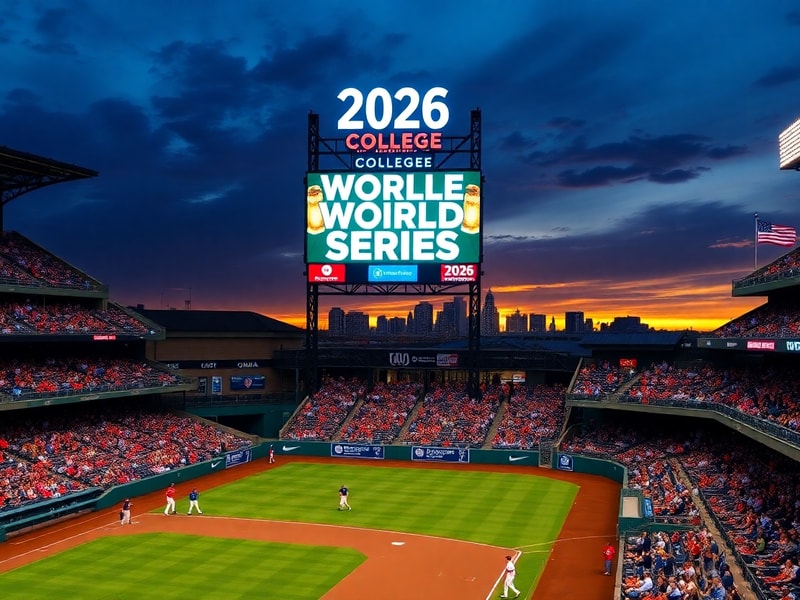
The transfer portal will continue to reshape rosters, and the freshmen entering in 2026 could redefine the sport. Programs that adapt quickly to roster changes and leverage analytics will have the best chance to make a deep run in Omaha. Regardless of who wins, one thing is certain: the 2026 College World Series will deliver the drama, excitement, and high-stakes baseball that fans crave.
Keep an eye