Michael Jordan’s Enduring Legacy in Sports and Beyond
“`html
Michael Jordan: The Man Who Redefined Greatness
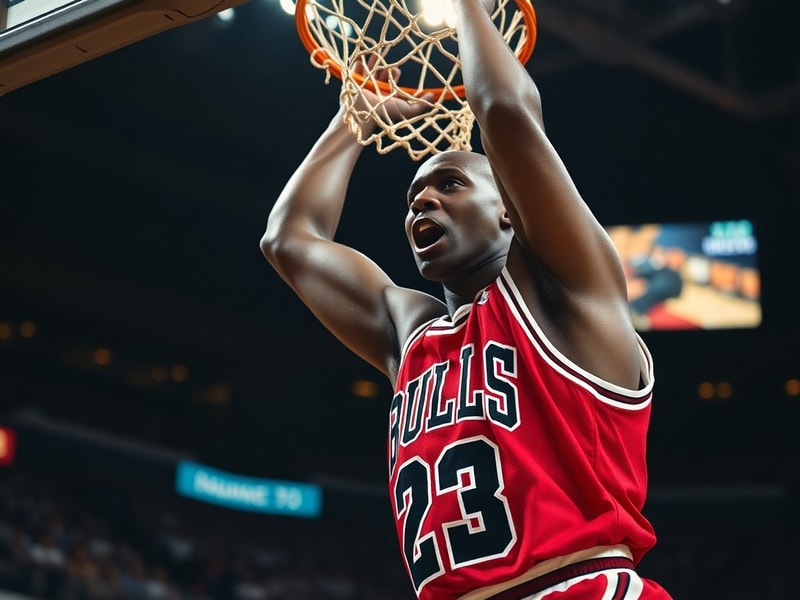
Few names in sports history carry the weight of Michael Jordan. Beyond the six NBA championships and five MVP awards, his influence stretches far beyond basketball courts. Jordan didn’t just play the game—he transformed it into a global spectacle, turning athletes into cultural icons and redefining what it meant to compete at the highest level.
The Rise of a Legend
Michael Jeffrey Jordan was born on February 17, 1963, in Brooklyn, New York, but his story truly begins in Wilmington, North Carolina, where he spent his formative years. As a high school sophomore, he was initially cut from the varsity team—a moment that fueled his relentless work ethic. By the time he reached the University of North Carolina, Jordan had already developed the competitive fire that would define his career.
The 1982 NCAA Championship game against Georgetown showcased his clutch gene. With seconds remaining, Jordan sank the game-winning shot, announcing his arrival on the national stage. This moment foreshadowed what was to come: a career marked by decisive plays in high-pressure situations. After three seasons at UNC, Jordan declared for the 1984 NBA Draft, where the Chicago Bulls selected him third overall.
Key Accomplishments in His Early Career
- Rookie of the Year (1985): Averaged 28.2 points per game, instantly becoming the face of the franchise.
- Scoring Titles: Led the league in scoring for seven consecutive seasons (1986-1993).
- Olympic Gold (1984): Dominated as part of the U.S. men’s basketball team before his NBA career took off.
Dominance on the Court
Jordan’s first three-peat with the Bulls (1991-1993) cemented his status as the most electrifying player in the world. His 1991 Finals performance against Magic Johnson’s Lakers showcased his ability to elevate his game in the biggest moments. The iconic “shrug” after hitting six three-pointers in a half against Portland in the 1992 Finals further solidified his reputation as a showman.
But Jordan’s greatness wasn’t just about statistics or highlight-reel plays. It was about his mental toughness. His rivalry with the Detroit Pistons, particularly Isiah Thomas and the “Bad Boys,” defined an era. The Bulls’ inability to overcome Detroit in the playoffs during the late 1980s drove Jordan to refine his game. His 1990 playoff run, where he averaged 36.7 points per game against the Pistons, marked the beginning of a new chapter in his career.
His first retirement in 1993 to pursue baseball added another layer to his mythos. Though his minor league stint with the Birmingham Barons was brief, the move demonstrated Jordan’s refusal to be defined solely by basketball. His return in 1995 with the legendary “I’m back” fax to the NBA signaled the beginning of another dynasty.
Statistical Dominance
- 10x Scoring Champion: No player has matched his consistency in scoring titles.
- 5x MVP Awards: His 1988 MVP season remains one of the most dominant individual campaigns in NBA history.
- 9x All-Defensive First Team: Proved his two-way excellence long before modern players prioritized defense.
- 14x All-Star: Selected to every All-Star game he was eligible for during his career.
Beyond Basketball: Jordan’s Cultural Impact
Jordan’s influence transcended sports. The Air Jordan sneaker line, launched in 1985 in collaboration with Nike, revolutionized athletic footwear. What started as a basketball shoe became a fashion staple, with each new release generating massive hype. The cultural crossover between sports and streetwear owes much to Jordan’s partnership with Nike.
His 1996 film Space Jam further embedded him in pop culture. While critics panned the movie, its nostalgic appeal and Jordan’s star power ensured its endurance. The animated-live-action hybrid became a time capsule of 90s entertainment, blending sports, animation, and celebrity.
Jordan’s business acumen also set him apart. After retiring from basketball for the second time in 1999, he focused on ownership. His purchase of the Charlotte Hornets in 2010 made him the first former player to become a majority owner of an NBA franchise. His ownership tenure, though controversial at times, demonstrated his commitment to the game beyond his playing days.
The Jordan Effect: How He Changed the Game
Jordan’s legacy is evident in the way modern athletes approach their careers. His relentless competitiveness inspired a generation of players to prioritize mental toughness alongside physical skill. LeBron James, Kobe Bryant, and Steph Curry have all cited Jordan as a primary influence, each adopting aspects of his killer instinct and work ethic.
The globalization of the NBA can also be traced back to Jordan. During the 1990s, his international appeal helped grow the league’s footprint beyond North America. The NBA’s popularity in China, for instance, owes much to Jordan’s charisma and marketability. Today, international players like Giannis Antetokounmpo and Luka Dončić continue to benefit from the path Jordan helped pave.
Even the business side of sports evolved because of Jordan. Athlete endorsements became more lucrative, with stars like LeBron James and Kevin Durant securing lifetime deals worth hundreds of millions. Jordan’s ability to monetize his brand set a new standard for athlete entrepreneurship.
Lessons from Jordan’s Career
- Work Ethic: Jordan’s infamous “breakfast club” routine—arriving at 6 AM to practice before school—highlighted his dedication.
- Adaptability: From scoring machine to defensive anchor, Jordan evolved with each era of his career.
- Mental Toughness: His ability to thrive under pressure, such as in the 1998 Finals against the Jazz, remains unmatched.
- Brand Building: Jordan proved that athletes could be more than just players; they could be global brands.
Jordan’s post-playing career hasn’t been without controversy. His ownership of the Hornets drew criticism for his hands-off approach and the team’s struggles. His public persona, often described as aloof or demanding, has sparked debates about the expectations placed on Black athletes in leadership roles. Yet, these complexities only add depth to his legacy, showing that greatness isn’t without its contradictions.
Conclusion: Why Michael Jordan Still Matters
More than three decades after his final NBA game, Michael Jordan remains the gold standard for athletic excellence. His combination of skill, competitiveness, and marketability created a blueprint for modern athletes. Whether it’s through his on-court dominance, his business ventures, or his cultural influence, Jordan’s impact is undeniable.
For younger generations, Jordan serves as both an inspiration and a reminder of what it takes to achieve greatness. His story isn’t just about basketball; it’s about perseverance, innovation, and the relentless pursuit of excellence. As long as sports and culture intersect, Michael Jordan’s legacy will endure.