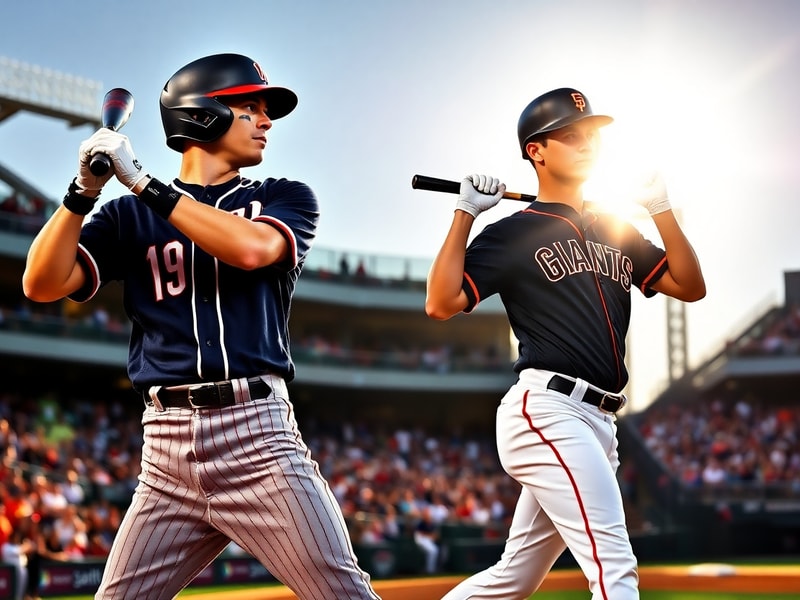
Washington Nationals vs. San Francisco Giants: A Rivalry Beyond the Diamond
The matchup between the Washington Nationals and the San Francisco Giants is more than just a clash of baseball teams. It represents a collision of cultures, histories, and playing styles that have evolved over decades. While the Giants have long been a powerhouse in the National League, the Nationals—once the Montreal Expos—embarked on a new identity in 2005, bringing fresh energy to the East Coast.
This rivalry extends beyond the 600 miles separating Washington, D.C., from San Francisco. It reflects broader themes in American sports: the tension between tradition and reinvention, the influence of global talent, and the way teams shape their identities around their cities. To understand this dynamic, we must look at the histories of both franchises, their playing philosophies, and how they engage with their fanbases.
The Historical Foundations of Two Franchises
The Giants trace their origins to New York in 1883, where they became one of baseball’s earliest dynasties. Their move to San Francisco in 1958 marked a pivotal moment in West Coast sports history, symbolizing the broader shift of baseball’s center of gravity westward. The franchise has since built a legacy of success, with eight World Series titles, including memorable victories in 2010, 2012, and 2014 under manager Bruce Bochy.
The Nationals, however, have a more complicated lineage. Originally the Montreal Expos (founded in 1969), they were the first Major League Baseball team in Canada. Financial struggles and declining attendance led to their relocation to Washington, D.C., in 2005. The Nationals’ arrival revitalized baseball in the nation’s capital, culminating in a World Series title in 2019—a victory that felt like a redemption story for a franchise that had once struggled to find its footing.
This contrast in histories—one of enduring success, the other of reinvention—shapes how each team is perceived globally. The Giants are often seen as a storied franchise with deep roots, while the Nationals embody the idea of second chances and new beginnings. Both approaches resonate in different markets, appealing to fans who value tradition as much as those who embrace change.
Playing Styles: Power vs. Precision
The Giants and Nationals have developed distinct identities on the field, reflecting broader trends in baseball. The Giants, particularly during their championship years, have been associated with a balanced approach—strong pitching, clutch hitting, and a defense-first mentality. Their success under Bochy was built on pitching depth, timely hitting, and a team-first ethos that prioritized fundamentals over flash.
The Nationals, meanwhile, have often been defined by their power. With stars like Bryce Harper, Anthony Rendon, and Juan Soto in their prime, the Nationals’ lineup has been one of the most feared in baseball. Their 2019 World Series-winning team featured a core of sluggers who could change games with a single swing, embodying the modern emphasis on offensive production.
This contrast in playing styles mirrors broader shifts in baseball. The Giants represent a more traditional, methodical approach, while the Nationals align with the league’s growing reliance on analytics and power hitting. Globally, this duality reflects how baseball is played and perceived in different regions. In Japan, for example, teams often prioritize small-ball tactics and pitching, while in the Dominican Republic and Venezuela, power and athleticism dominate. The Giants and Nationals offer a microcosm of these global trends.
Fan Cultures and Global Engagement
The relationship between a team and its fans is a defining aspect of sports culture. The Giants boast one of the most loyal and engaged fanbases in baseball, known for their passion and long-standing traditions. Oracle Park in San Francisco is a cathedral of baseball, where fans gather to celebrate not just the team, but the city’s identity as a hub of innovation and culture. The Giants’ global appeal is bolstered by their success and the star power of players like Buster Posey and Madison Bumgarner, who became household names beyond the diamond.
The Nationals, though newer to D.C., have cultivated a passionate following in a city that craves sports success. Nationals Park is a modern stadium that blends baseball with the political and cultural energy of the nation’s capital. The team’s 2019 championship run was a unifying moment for Washington, proving that even a franchise without deep historical roots could capture the imagination of a city.
Globally, baseball’s popularity has surged in recent years, particularly in Asia and Latin America. The Giants and Nationals have both benefited from this trend, attracting international talent and engaging with fans worldwide through digital platforms. The Giants, with their long history, have a natural advantage in global recognition, but the Nationals have leveraged their 2019 triumph to build a broader international following, particularly in markets like the Dominican Republic and Japan.
The Business of Baseball: Revenue, Sponsorships, and Market Dynamics
Beyond the field, the Giants and Nationals represent different business models in baseball. The Giants have consistently ranked among the league’s top teams in revenue, thanks to their historic brand, strong local sponsorships, and consistent success. Oracle Park is not just a ballpark; it’s a destination that hosts concerts, corporate events, and international competitions, further embedding the Giants in the fabric of San Francisco’s economy.
The Nationals, while financially robust, have faced challenges in building a comparable brand. Their relocation from Montreal and the early struggles of the franchise created hurdles in establishing a global identity. However, their 2019 World Series win provided a significant boost, attracting new sponsors and increasing their marketability. The Nationals’ partnership with the Washington, D.C., tourism board and their focus on community engagement have helped them carve out a unique niche in a crowded sports landscape.
Globally, the business of baseball is evolving. Teams are increasingly looking to international markets for revenue streams, whether through player development academies, global tours, or digital content. The Giants have a head start in this regard, with a brand that transcends borders. The Nationals, however, are catching up, using their recent success to expand their reach in Latin America and Asia.
The Cultural Impact of Baseball’s Rivalries
Rivalries in sports are more than just competitions; they are cultural touchstones that reflect the values and identities of the communities they represent. The Giants-Nationals matchup may not have the same historical weight as Yankees-Red Sox or Dodgers-Giants, but it embodies themes that resonate globally. It’s a clash of tradition versus innovation, of established power versus rising ambition. In cities like Tokyo, Seoul, and Caracas, where baseball is deeply embedded in the culture, such rivalries are celebrated as part of the fabric of the game.
For fans, these matchups offer a chance to engage with the sport on a deeper level. Whether it’s the nostalgia of Giants fans or the hope of Nationals supporters, the rivalry provides a narrative that extends beyond wins and losses. It’s a story of cities, of players, and of the global community that baseball has become.
As baseball continues to grow internationally, the Giants-Nationals rivalry will likely evolve into something even bigger. With more players from diverse backgrounds entering the league and teams expanding their global reach, the cultural significance of these matchups will only increase. For now, fans can enjoy the competition on the field while appreciating the broader context that makes it meaningful.
What’s Next for the Rivalry?
The future of the Giants-Nationals rivalry is as much about the players as it is about the cities they represent. With young stars like Luis García Jr. for the Nationals and Joey Bart for the Giants, the next generation of talent will shape how this rivalry is perceived. The Nationals, fresh off their 2019 title, are looking to build on their success, while the Giants are aiming to return to their winning ways after a period of transition.
For fans, the rivalry offers a chance to engage with baseball in a way that feels personal and meaningful. Whether it’s through the lens of history, culture, or business, the Giants vs. Nationals matchup is more than just a game—it’s a reflection of the sport’s global appeal and its power to unite communities.
As baseball continues to expand its footprint worldwide, rivalries like this one will play a key role in shaping the future of the game. They remind us that sports are not just about competition; they are about identity, culture, and the shared experiences that bring people together.
For those looking to dive deeper into the world of baseball, Sports on Dave’s Locker offers a wealth of analysis, news, and cultural commentary on the sport’s biggest stories.