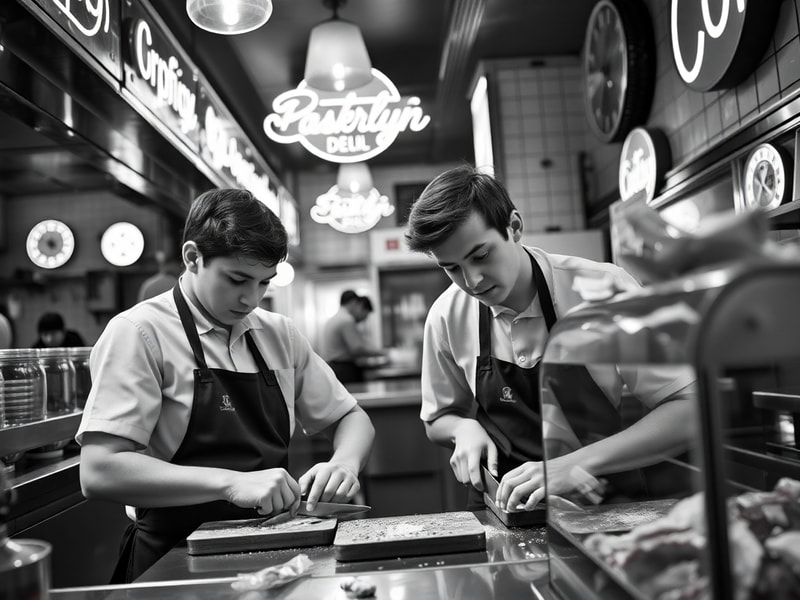
Who Are the Deli Boys? The Fast-Paced World Behind Your Sandwiches
“`html
The Unsung Heroes Behind Your Favorite Sandwiches: Who Are the Deli Boys?
From the crack of dawn until the last customer leaves, a dedicated group of workers keeps the deli counter running. These are the deli boys—the unsung heroes of lunchtime. Their roles extend far beyond slicing meat and cheese. They are the backbone of an industry that thrives on speed, precision, and customer satisfaction.
A Day in the Life of a Deli Boy
The life of a deli boy begins early. By 5:30 AM, many are already at their stations, prepping for the day’s rush. Their responsibilities include slicing meats and cheeses to order, arranging sandwich platters, and maintaining the delicate balance of inventory. The pace is relentless, especially during lunch hours when lines stretch out the door.
Behind the counter, deli boys wear many hats. They are salespeople when recommending sandwich combinations. They are artists when layering ingredients with precision. They are problem-solvers when a customer’s order doesn’t quite match their expectations. Their work requires both physical stamina and mental agility.
One deli boy in Brooklyn, who asked to remain anonymous, shared his experience: “You think it’s just about making sandwiches, but it’s not. You’re managing expectations, keeping the line moving, and making sure the bread doesn’t get soggy. One mistake can ruin someone’s whole lunch break.”
The Skills That Set Them Apart
Not everyone can handle the pressure of a busy deli counter. The best deli boys possess a unique set of skills:
- Speed: Customers expect their sandwiches in under two minutes. Delays mean lost business.
- Memory: Regulars often order the same thing, but deli boys must also remember custom requests.
- Adaptability: Whether it’s a sudden rush or a missing ingredient, they must think on their feet.
- Customer Service: A smile and a friendly demeanor can turn a one-time customer into a regular.
The Evolution of the Deli Boy
The role of the deli boy has transformed over the decades. In the mid-20th century, delis were neighborhood staples where customers knew the staff by name. Orders were handwritten, and sandwiches were made to order with care. Today, many delis operate under corporate ownership, with standardized recipes and assembly-line efficiency.
However, some delis still uphold the old-school traditions. In New York City, delis like Katz’s Deli and Junior’s have maintained their reputation by balancing speed with authenticity. Their deli boys are trained to uphold the deli’s legacy while meeting modern demands.
The rise of food delivery apps has also impacted the role. Deli boys now juggle in-person orders with pickup and delivery requests. This shift has added another layer of complexity to their already demanding jobs.
Technology’s Role in the Deli
While technology hasn’t replaced the deli boy, it has changed how they work. Point-of-sale systems track inventory and sales, reducing waste and improving efficiency. Some delis use tablets to take orders, allowing deli boys to focus on preparation rather than writing down requests.
Yet, despite these advancements, the human touch remains irreplaceable. A deli boy’s ability to read a customer’s mood or adjust an order on the fly is something no app can replicate.
The Challenges Facing Deli Boys Today
The life of a deli boy is not without its struggles. Long hours, physically demanding work, and low pay are common complaints. Many deli boys work 10-hour shifts with minimal breaks, and the job’s physical toll can lead to burnout.
Wage disparities are another issue. While corporate delis may offer benefits, many independent delis operate on tight margins, leaving little room for competitive salaries. This has led to a shortage of skilled deli boys in some areas, forcing delis to rely on temporary or inexperienced workers.
Health and safety concerns have also come to the forefront. The COVID-19 pandemic highlighted the risks deli boys face daily. From handling food to interacting with customers, their exposure to germs is constant. Many delis implemented strict hygiene protocols, but the mental strain of the pandemic lingers.
Why the Job Remains Essential
Despite these challenges, deli boys play a vital role in the food industry. They are the face of the deli, the first and last point of contact for customers. Their work ensures that sandwiches, the ultimate comfort food, remain accessible to everyone.
Moreover, delis are cultural hubs. They serve as gathering places where people from all walks of life come together. The deli boy is often the glue that holds these communities together.
The Future of the Deli Boy
The future of the deli boy is uncertain but full of potential. As food delivery services grow, delis may need to adapt by offering more takeout and delivery options. This could mean deli boys will spend more time packaging orders and less time interacting with customers.
However, the demand for high-quality, handcrafted food shows no signs of slowing down. Deli boys who can balance efficiency with craftsmanship will always be in demand. Training programs and apprenticeships could help bridge the skills gap, ensuring that the next generation of deli boys is prepared for the challenges ahead.
For those willing to put in the work, the rewards can be substantial. Beyond the paycheck, deli boys gain valuable skills in customer service, food preparation, and time management. Many go on to open their own delis or move into management roles within the industry.
One former deli boy, now a manager at a popular sandwich shop in Chicago, reflected on his journey: “I started as a deli boy making $12 an hour. Now, I run the place. It’s hard work, but it’s worth it.”