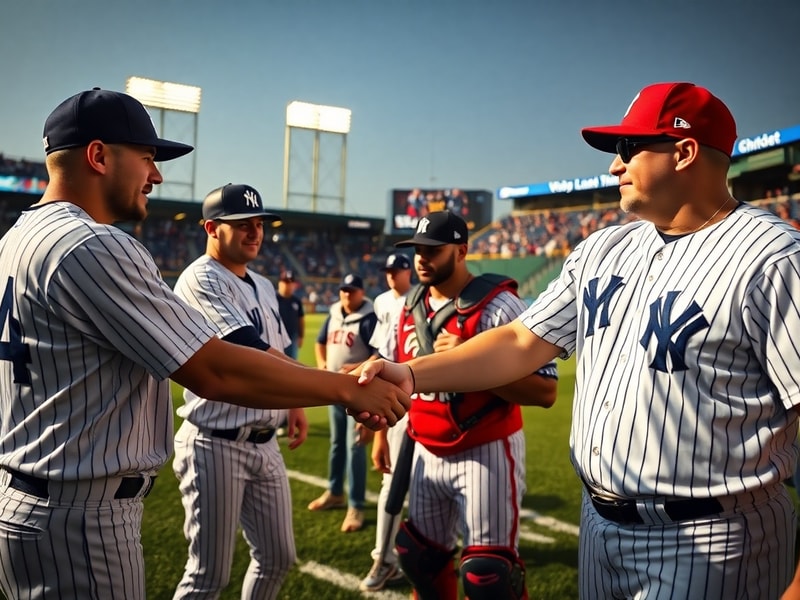
Yankees vs. Guardians: Baseball’s Global and Local Rivalry Explored
“`html
Yankees vs. Guardians: Baseball’s Global Stage Meets Local Identity
The New York Yankees and Cleveland Guardians are two of Major League Baseball’s most storied franchises, but their recent matchups reveal more than just wins and losses. These games highlight baseball’s enduring global appeal, the cultural significance of team identity, and how regional pride shapes the sport’s future. From the Yankees’ iconic status in the world’s largest media market to the Guardians’ grassroots revival in Ohio, this rivalry underscores baseball’s unique ability to bridge continents while staying rooted in local communities.
As MLB continues to expand its international footprint, the Yankees-Guardians series becomes a microcosm of the league’s broader ambitions. The Guardians, once known as the Indians, represent a franchise in transition—one that balances tradition with modern values. Meanwhile, the Yankees embody the relentless pursuit of excellence, a brand recognized even by those who’ve never set foot in the Bronx. Together, they illustrate how baseball transcends borders, uniting fans under a shared love of the game while reflecting their distinct cultural values.
The Yankees: A Global Brand Rooted in New York Pride
The New York Yankees aren’t just a baseball team; they’re a cultural institution. With 27 World Series titles, the franchise’s history is inseparable from the city that never sleeps. The Yankees’ global recognition stems from their dominance in the 1920s, 1950s, and late 1990s, periods when they became synonymous with success. Today, their brand extends far beyond the diamond, influencing fashion, entertainment, and even international business.
In countries like Japan, where baseball is a national pastime, the Yankees are revered as much for their star players as for their relentless winning culture. Ichiro Suzuki’s tenure with the team in the mid-2000s cemented their status in Asia, while today’s stars like Aaron Judge draw global attention whenever they step into the batter’s box. The Yankees’ ability to attract international talent and fans demonstrates baseball’s role as a cultural bridge, connecting diverse audiences through a shared passion for the sport.
Yet, the Yankees’ global appeal comes with challenges. Their high-profile status often invites scrutiny, especially regarding salary disparities and the team’s perceived disconnect from its working-class fanbase. In an era where sports franchises increasingly prioritize community engagement, the Yankees face pressure to balance their global brand with local accessibility. Their home games at Yankee Stadium remain a pilgrimage for fans worldwide, but the team’s future may depend on how well it adapts to changing expectations.
The Guardians: Rebuilding Identity in the Heartland
The Cleveland Guardians, formerly the Indians, represent a different kind of baseball legacy—one deeply tied to regional identity and social progress. The franchise’s decision to rebrand in 2021 was more than a name change; it was a response to decades of criticism over its use of Native American imagery and the broader conversation about cultural sensitivity in sports. The transition to the Guardians, named after a 19th-century symbol of Cleveland’s resilience, marked a new chapter for a team long overshadowed by its more glamorous counterparts.
On the field, the Guardians have embraced a scrappy, analytical approach that mirrors the city’s blue-collar ethos. Under manager Terry Francona, the team became a model of consistency in the competitive American League Central. Players like José Ramírez and Shane Bieber have become local heroes, embodying the franchise’s commitment to developing homegrown talent. Off the field, the Guardians’ emphasis on community outreach, including youth programs and cultural initiatives, reflects a broader shift in how MLB teams engage with their fanbases.
The Guardians’ resurgence is part of a larger trend in baseball, where smaller-market teams leverage analytics and player development to compete with financial giants like the Yankees. Their success in the 2020s has drawn attention from fans who appreciate baseball’s unpredictability—a stark contrast to the Yankees’ star-studded lineup. In an era where sports fans crave authenticity, the Guardians offer a refreshing reminder that baseball’s heart still beats strongest in its communities.
Cross-Cultural Dynamics: How Global and Local Forces Shape the Rivalry
The Yankees-Guardians matchups are more than just games; they’re a clash of baseball philosophies and cultural narratives. The Yankees, with their $200 million payrolls and international superstars, represent the globalization of the sport. The Guardians, meanwhile, embody the grassroots tradition of baseball, where loyalty and resilience matter more than marquee names. This dynamic plays out in subtle ways, from the types of players each team targets to the fan experiences they cultivate.
Consider the contrast in stadium atmospheres. Yankee Stadium is a spectacle, with corporate luxury boxes and a fanbase that spans continents. Progressive Field, home of the Guardians, offers a more intimate experience, where families and lifelong fans gather to celebrate the game’s purest elements. These differences aren’t just aesthetic; they reflect broader trends in how baseball is consumed globally. In markets like Japan or South Korea, fans crave the Yankees’ star power, while in the U.S., many prefer the Guardians’ relatable charm.
Baseball’s global growth has also influenced how these teams operate. The Yankees’ international scouting network spans continents, while the Guardians focus on developing talent through their minor league system. This divide highlights a key debate in modern baseball: Should teams prioritize global appeal or local roots? The Yankees-Guardians rivalry suggests that the answer may lie in balance—celebrating the sport’s international reach while honoring its grassroots origins.
What’s Next for the Yankees and Guardians?
The future of this rivalry will be shaped by several key factors, from on-field performance to off-field trends. For the Yankees, the challenge is maintaining their competitive edge while addressing criticism about accessibility and player development. The franchise’s recent investments in young talent, such as Anthony Volpe and Jasson Domínguez, signal a shift toward sustainability. Yet, with the financial might of other MLB teams, the Yankees must navigate a landscape where spending alone doesn’t guarantee success.
The Guardians, on the other hand, face the task of sustaining their recent success. Their 2022 and 2023 seasons proved that small-market teams can compete, but the window to capitalize on this momentum is narrow. The franchise’s ability to retain homegrown talent and attract complementary veterans will determine whether they become perennial contenders or a flash in the pan. Off the field, the Guardians’ commitment to community engagement will be crucial in building a loyal fanbase that transcends baseball’s traditional demographics.
For fans worldwide, the Yankees-Guardians matchups offer a glimpse into baseball’s evolving identity. Whether it’s the Yankees’ star power or the Guardians’ underdog spirit, these games remind us why baseball remains America’s pastime—and a global phenomenon. As the sport continues to grow, the rivalry between these two franchises will serve as a barometer for baseball’s ability to adapt, innovate, and stay true to its roots.
One thing is certain: The Yankees and Guardians aren’t just playing for wins. They’re playing for the soul of baseball itself.
Key Takeaways:
- The Yankees represent baseball’s global brand, with a history of dominance and international appeal.
- The Guardians embody grassroots baseball, focusing on community and player development.
- Their rivalry highlights the tension between global ambition and local identity in modern sports.
- Both teams face challenges in balancing tradition with innovation as baseball evolves.