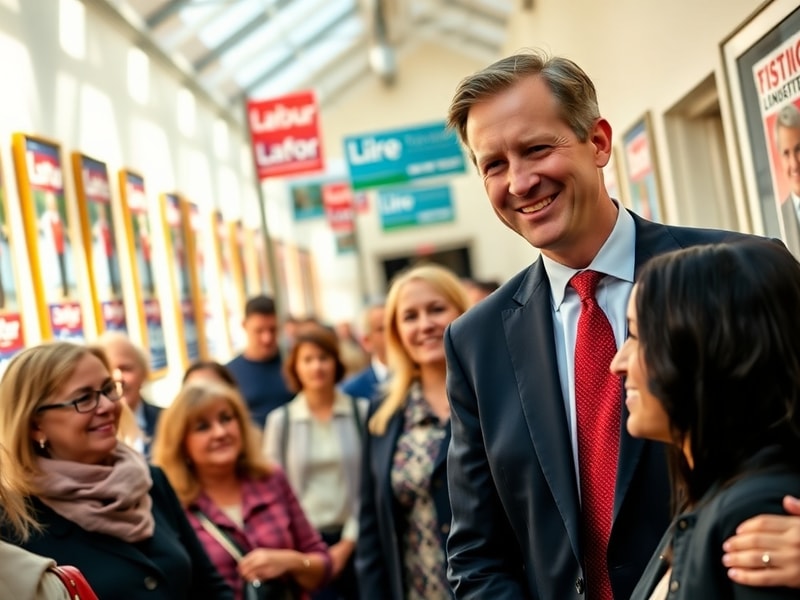
Dan Jarvis’s political career is a study in contrasts. The former British Army officer turned Member of Parliament has spent years navigating the tension between public service and political pragmatism. His journey reflects broader global trends where military leaders transition into civilian leadership roles, a phenomenon observed in countries from the United States to France. Jarvis’s story is not just about personal reinvention but also about how a nation grapples with the legacy of its armed forces.
The Early Years: Discipline and Service
Born in Sheffield in 1972, Jarvis grew up in a working-class family with a strong sense of duty. His decision to join the British Army at 18 was less about career ambition and more about a calling to serve. He spent over two decades in the military, rising to the rank of Major and serving in Bosnia, Kosovo, and Iraq. His experiences on the front lines shaped his worldview, instilling in him a belief in leadership through action rather than rhetoric.
Jarvis’s military service coincided with a period of intense global conflict. The post-Cold War era saw the British Army engaged in multiple peacekeeping and combat missions, from the Balkans to the Middle East. These experiences left an indelible mark on a generation of soldiers who later entered politics. Unlike many of his peers who pursued civilian careers in defense contracting or security consulting, Jarvis chose a different path—one that led him directly into the heart of British democracy.
Transition to Politics: A New Battlefield
Jarvis’s entry into politics in 2010 was marked by a rare authenticity. He won the Barnsley Central by-election with a majority that stunned even seasoned observers. His campaign was devoid of the usual political theatrics, focusing instead on practical solutions to local issues like unemployment and healthcare. This approach resonated with voters weary of traditional politicians.
His rise in the Labour Party was meteoric. By 2011, he was appointed Shadow Minister for Justice, a role that allowed him to leverage his legal training (he earned a law degree while in the military) to critique government policies on prisons and rehabilitation. Jarvis’s military background gave him a unique perspective on justice reform, particularly in how societies reintegrate former combatants into civilian life.
Key Policy Positions
- Defense and Security: Jarvis has consistently advocated for increased defense spending, particularly in light of global instability. He has criticized the government’s handling of military budgets, arguing that underfunding compromises both national security and the welfare of service personnel.
- Veterans’ Welfare: A vocal advocate for veterans, Jarvis has pushed for better mental health support and employment opportunities. His work in this area aligns with global trends where former soldiers face challenges transitioning to civilian life.
- Economic Revival: Representing a former coal-mining constituency, Jarvis has been a strong proponent of economic diversification in post-industrial regions. His policies often focus on retraining programs and infrastructure investment.
Global Parallels: Military Leaders in Politics
Jarvis’s career is part of a broader global phenomenon where military leaders transition into politics. In the United States, figures like John McCain and Wesley Clark leveraged their military reputations into political careers. In France, Emmanuel Macron’s presidency was bolstered by his service in the military, though his path was less conventional. These examples highlight how military service can confer a legitimacy that civilian careers sometimes lack.
However, this trend is not without controversy. Critics argue that military leaders often bring a hierarchical, top-down approach to governance, which can clash with the collaborative nature of democratic systems. Jarvis himself has had to navigate this tension, balancing his disciplined worldview with the messy realities of political compromise.
Globally, the intersection of military and political careers raises questions about the role of the armed forces in civilian governance. In countries with histories of military coups, such as Pakistan or Thailand, the presence of former soldiers in politics can be contentious. Even in stable democracies like the UK, the trend invites scrutiny over whether military experience inherently translates to effective leadership.
Legacy and Future Prospects
As of 2024, Jarvis remains a prominent figure in the Labour Party, though his influence has waned slightly as younger leaders rise through the ranks. His legacy, however, is secure—not just as a politician but as a symbol of how military service can shape a nation’s political landscape. Whether he ultimately ascends to higher office or remains a key voice in defense and veterans’ affairs, his career offers a fascinating case study in the fusion of duty and democracy.
For students of political science or military history, Jarvis’s journey underscores the evolving relationship between the armed forces and civilian governance. It also serves as a reminder that leadership can emerge from unexpected places—whether on the battlefield or in the corridors of power.
As the UK and other nations grapple with global challenges, from rising tensions in Eastern Europe to the ongoing impacts of climate change on security, Jarvis’s blend of military discipline and political acumen may yet prove invaluable. His story is far from over, and the lessons it offers are still being written.
Where to Follow Dan Jarvis
Jarvis remains active on social media, where he shares updates on his work in Parliament and his advocacy for veterans. Follow him on Twitter or read his latest speeches on the UK Parliament website.