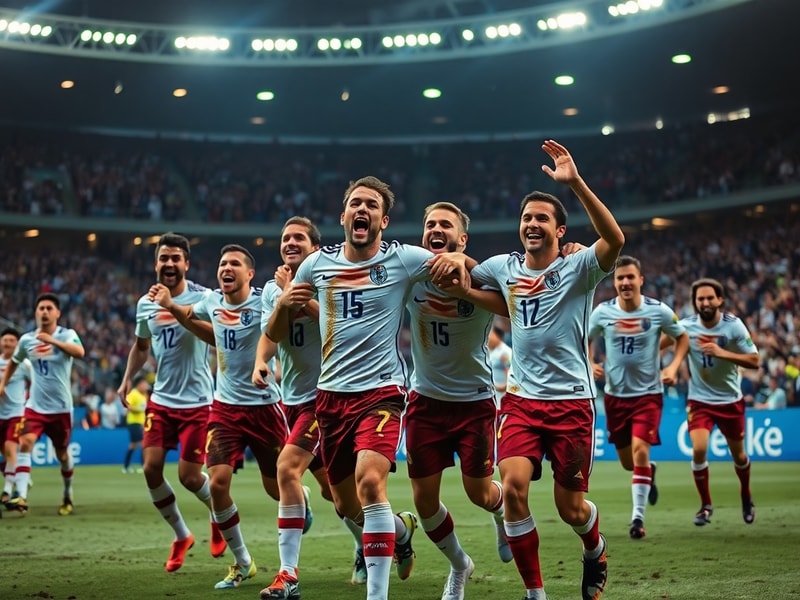
The FIFA World Cup is more than just a tournament—it’s a stage where legends are born, careers are defined, and moments are etched into history. Every four years, the world’s best footballers converge to compete for the ultimate prize: the World Cup trophy. Behind the dazzling stadiums and global broadcasts are the players who turn dreams into reality, often sacrificing everything for a single chance at glory.
From Maradona’s “Hand of God” to Messi’s redemption in Qatar, the World Cup has a way of immortalizing its participants. But what makes these players stand out? How do they prepare, and what challenges do they face? This is the story of the athletes who step onto the pitch not just as professionals, but as symbols of their nations’ hopes.
The Evolution of World Cup Players: From Amateurs to Global Icons
When the first World Cup was held in 1930, football was still finding its footing as a global sport. Players were largely amateurs, competing for the love of the game rather than financial gain. Uruguay’s victory that year marked the beginning of a tradition that would grow into the planet’s most-watched sporting event.
The 1950s and 60s saw the emergence of professionalism, with players like Pelé and Ferenc Puskás becoming household names. Pelé, who won three World Cups (1958, 1962, 1970), redefined what it meant to be a footballer. His blend of skill, athleticism, and charisma turned him into a global ambassador for the sport.
By the 1990s, World Cup players had become celebrities, with endorsement deals and media coverage rivaling that of Hollywood stars. Ronaldo, Zidane, and Beckham weren’t just athletes—they were brands. Today, players like Mbappé and Haaland command social media followings in the tens of millions and lucrative sponsorships worth hundreds of millions.
This evolution reflects broader changes in football: the commercialization of the game, the rise of data analytics, and the increasing pressure on athletes to perform at the highest level. Yet, amid all the changes, one thing remains constant—the World Cup’s ability to elevate ordinary players to legendary status.
The Physical and Mental Toll on World Cup Players
Competing in a World Cup is a grueling physical and mental challenge. The tournament demands peak performance over a compressed period—just 32 days to decide a champion. Players often face congested schedules, playing multiple matches with limited recovery time. Injuries are common, and fatigue can derail even the most talented squads.
Consider the case of France’s 2018 World Cup-winning team. Players like Kylian Mbappé and Paul Pogba were expected to carry the team through knockout rounds after intense domestic and European club seasons. The mental strain is immense—players must stay focused while knowing that a single mistake could cost their country the tournament.
Sports psychologists have become integral to national teams. Players undergo mental resilience training to manage pressure, handle media scrutiny, and cope with the weight of expectations. Some teams even employ sleep specialists to optimize recovery, recognizing that rest is as crucial as training.
Injury risks are another major concern. A torn ACL, like the one suffered by Neymar in 2014, can sideline a player for months. Teams invest heavily in medical staff and advanced recovery technologies—ice baths, hyperbaric chambers, and personalized nutrition plans—to keep their stars fit. Yet, despite these precautions, injuries still shape World Cup narratives.
This combination of physical demands and mental pressure ensures that only the most resilient players thrive on this grandest of stages.
The Role of Club vs. Country: Balancing Loyalty and Ambition
One of the most contentious issues in modern football is the balance between club and country. Players are often caught between their professional clubs and national teams, especially with the increasing demands of modern football calendars.
For instance, Manchester City’s Kevin De Bruyne has been a key figure for Belgium, helping them reach the 2018 semifinals and the 2022 quarterfinals. Yet, during club season, he must balance his domestic responsibilities with international duties—a logistical nightmare for both player and club.
Some players prioritize their clubs. Cristiano Ronaldo, for example, has often cited his club commitments as a reason for missing international breaks. Others, like Mohamed Salah, see their national teams as a higher calling, even when it risks injury or fatigue.
The debate reached a boiling point during the 2022 World Cup when clubs like Bayern Munich and Manchester United clashed with FIFA over player availability. FIFA’s decision to expand the World Cup to 48 teams in 2026 will only intensify this issue, as more matches mean more physical strain on players.
For fans, the tension between club and country adds another layer of drama. Will a player choose club success over international glory? Or will they risk burnout for the chance to lift the trophy? The answer often defines their legacy.
Young Stars and Veteran Leaders: The Generational Shift in World Cup Players
The World Cup has always been a platform for both young prodigies and seasoned veterans. In 2022, players like 23-year-old Jude Bellingham (England) and 24-year-old Jamal Musiala (Germany) showcased the rise of a new generation. These players grew up watching World Cup heroes like Messi and Ronaldo and are now stepping into the spotlight themselves.
But veterans still play a crucial role. Lionel Messi, now 36, defied age to lead Argentina to victory in Qatar 2022, proving that experience and intelligence can outweigh physical decline. Similarly, veterans like Luka Modrić (Croatia) and Cristiano Ronaldo (Portugal) continue to defy expectations, inspiring younger teammates with their work ethic and leadership.
This generational shift creates a fascinating dynamic on the pitch. Young players bring energy, creativity, and fearlessness, while veterans provide stability, tactical insight, and mentorship. Teams that balance both often find success.
For example, France’s 2018 World Cup-winning team featured both experienced stars like Antoine Griezmann and emerging talents like Kylian Mbappé. This blend of youth and experience allowed them to dominate both possession and counterattacks.
As the World Cup evolves, so too does the profile of its participants. The next generation of players will face even greater challenges—higher expectations, more pressure, and a more competitive landscape. Yet, if history is any indication, they will rise to the occasion.
What’s Next for FIFA World Cup Players?
The future of World Cup players is shaped by technological advancements and changing football dynamics. With the expansion to 48 teams in 2026, more nations will have a chance to showcase their talent, increasing competition and unpredictability.
Players will also face new challenges, such as increased scrutiny from social media and the pressure to perform consistently across multiple tournaments. Clubs and federations will need to adapt, investing in player welfare and recovery technologies to prevent burnout.
For fans, the evolving landscape promises even more drama and excitement. Whether it’s a young unknown rising to stardom or a veteran defying age to claim one last glory, the World Cup will continue to be a stage where heroes are made.
One thing is certain: the players who step onto the pitch in 2026 and beyond will carry the legacy of those who came before them—each one adding a new chapter to football’s greatest story.
Key Takeaways:
- Legacy: World Cup players often transcend their club careers to become global icons.
- Pressure: The mental and physical demands of the tournament are immense, requiring resilience and preparation.
- Balance: The tension between club and country commitments continues to shape players’ careers.
- Generational Shift: A mix of young talent and veteran experience defines successful teams.
- Future Trends: Expansion, technology, and player welfare will redefine the World Cup experience.
For more insights into the world of football, explore our Sports and Analysis sections on Dave’s Locker.