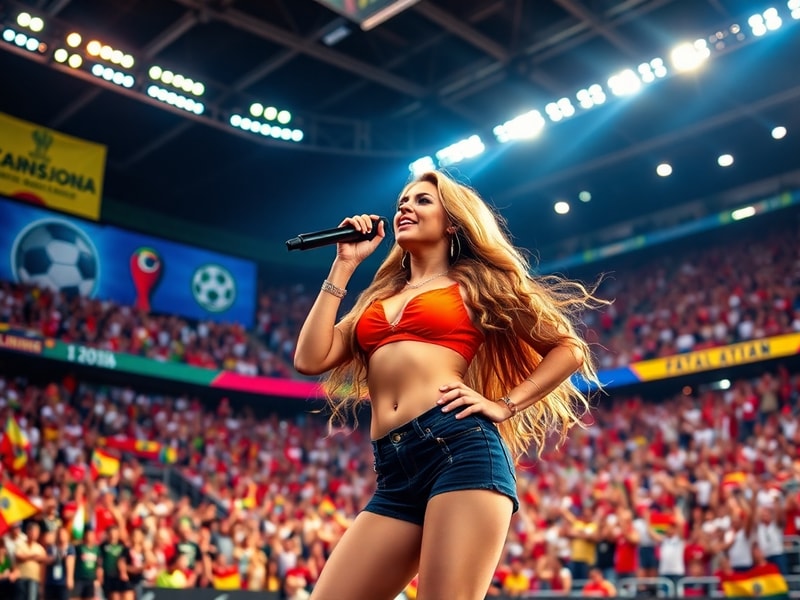
Shakira’s World Cup Songs: A Global Anthem Across Four Tournaments
Few artists have shaped the soundtrack of the FIFA World Cup as profoundly as Shakira. Since her debut performance at the 2006 tournament in Germany, her music has become synonymous with the global celebration of football. These songs transcend language barriers, blending Latin rhythms with pop sensibilities to create anthems that unite stadiums and living rooms worldwide.
The Colombian superstar’s World Cup contributions are more than just musical interludes—they are cultural milestones. Each track reflects the energy of the tournament while incorporating regional influences that resonate with diverse audiences. From stadium chants to radio hits, Shakira’s World Cup songs have evolved alongside the event itself, mirroring changes in global music trends and the expanding reach of the competition.
The 2006 Debut: “Hips Don’t Lie” and the Birth of a World Cup Icon
Shakira’s first World Cup song, “Hips Don’t Lie,” featuring Wyclef Jean, premiered for the 2006 tournament in Germany. The track became an instant classic, blending salsa, reggaeton, and pop into a high-energy anthem that felt tailor-made for football celebrations. Its infectious rhythm and playful lyrics made it a natural fit for fans gathering to watch matches.
The song’s global success was undeniable. It topped charts in over 55 countries and became one of the best-selling singles of the year. Its music video, set in a Moroccan marketplace, added a vibrant visual dimension that aligned with the tournament’s multicultural ethos. “Hips Don’t Lie” didn’t just soundtrack the World Cup—it became part of its identity.
For many, the track remains the gold standard for World Cup music. Its fusion of Latin sounds with mainstream pop created a template that later artists would attempt to replicate, often falling short of its cultural impact.
The 2010 South Africa Era: “Waka Waka (This Time for Africa)” as a Continental Celebration
Four years later, Shakira returned for the 2010 World Cup in South Africa with “Waka Waka (This Time for Africa),” an official song that felt destined for the occasion. The track, built around a traditional African soldiers’ chant, transformed the age-old melody into a modern pop explosion. Its message of unity and perseverance resonated deeply in a tournament hosted on the continent where football’s spirit was born.
“Waka Waka” wasn’t just a hit—it was a phenomenon. It became the most-streamed World Cup song in history at the time, with over 3 million downloads in its first month. The song’s success was amplified by its music video, which featured South African dancers, football legends, and vibrant cityscapes. It wasn’t just about the music; it was about celebrating Africa’s role in the global game.
The song’s legacy endures. In 2020, it was named the most successful FIFA World Cup song of all time by FIFA, a testament to its enduring popularity. Even today, it remains a staple at sporting events, school assemblies, and cultural celebrations across Africa and beyond.
The 2014 Brazil Campaign: “La La La (Brazil 2014)” and the Power of Simplicity
By the time the World Cup returned to South America in 2014, Shakira was once again the chosen voice of the tournament. “La La La (Brazil 2014)” embraced a simpler, more rhythmic approach, blending whistles, percussion, and a catchy melody that felt like a football chant. The song’s title and structure paid homage to Brazil’s love for football, where the sport is woven into the national identity.
While not as universally acclaimed as “Waka Waka,” “La La La” served its purpose. It captured the festive spirit of Brazil’s hosting, even as the country faced challenges off the pitch. The song’s music video featured football legends like Neymar and Lionel Messi, further cementing its connection to the tournament’s stars.
This track highlighted Shakira’s ability to adapt her sound to the cultural context of each host nation. In Brazil, where football is religion, the song didn’t need to be complex—it just needed to feel authentic and joyful.
The 2022 Qatar World Cup: “TQG” and the Evolution of a Global Star
Shakira’s most recent World Cup contribution came in 2022 with “TQG,” a collaboration with Puerto Rican rapper Karol G. The song marked a shift in tone, blending reggaeton, pop, and electronic beats into a modern, club-ready anthem. Its lyrics, which playfully reference love and infidelity, stood in contrast to the earnestness of her earlier World Cup tracks.
Despite some criticism for straying from the traditional World Cup anthem formula, “TQG” delivered where it mattered most—on the global charts. It topped Billboard’s Global 200 chart and became one of the most-streamed songs of the year. Its music video, filled with neon lights and high-energy choreography, reflected the glitz and glamour of Qatar’s World Cup, even as the tournament faced scrutiny over human rights concerns.
The song’s success underscored Shakira’s enduring relevance in pop music, even as her World Cup role evolved. It also highlighted how the FIFA World Cup’s official music had diversified, incorporating urban sounds and global collaborations that mirrored changes in the music industry itself.
A Legacy Beyond the Stadium
Shakira’s World Cup songs are more than just tournament anthems—they are cultural artifacts that reflect the spirit of each era. From “Hips Don’t Lie” to “TQG,” her contributions have mirrored the globalization of football, the rise of Latin music, and the shifting dynamics of pop culture.
These songs have also played a role in elevating the World Cup’s cultural footprint. They’ve given non-football fans a reason to engage with the tournament, while reinforcing the idea that football is as much about celebration as it is about competition.
For Shakira, the World Cup has been a stage unlike any other. It’s allowed her to reach audiences far beyond the Latin music market, proving that her artistry transcends borders. Even as new artists take on the challenge of creating World Cup anthems, Shakira’s legacy remains unmatched in its impact and longevity.
The Future of World Cup Music
As the World Cup expands to 48 teams in 2026, the role of music in shaping the tournament’s identity will only grow. Shakira may not return for future editions, but her influence will linger. The bar she set—blending cultural authenticity, global appeal, and infectious energy—remains a benchmark for artists aiming to capture the magic of the World Cup.
For now, her World Cup songs stand as a testament to the power of music in uniting people across languages, cultures, and continents. They remind us that football is more than a game—it’s a global celebration, and Shakira has been its most iconic voice.
To explore more about the intersection of music and sports, visit our Sports section. For a deeper look at Latin music’s global influence, check out our Music category.