California has long been a bellwether in national elections, yet its reputation for slow vote counting persists. While some states finalize results on election night, California often extends the process for days or even weeks. This delay isn’t due to inefficiency alone—it reflects a deliberate system designed to prioritize accuracy and accessibility. Yet the delays fuel skepticism and misinformation, particularly in closely contested races where every vote counts.
The Role of Mail-In Voting Expansion
California’s shift toward universal mail-in voting has significantly altered its counting timeline. Before 2020, mail ballots required postmarks and had to arrive by Election Day. Now, any registered voter can request a mail ballot without justification, and ballots are accepted if postmarked by Election Day and received up to seven days later. This expansion increases voter participation but also extends the time needed to process and verify ballots.
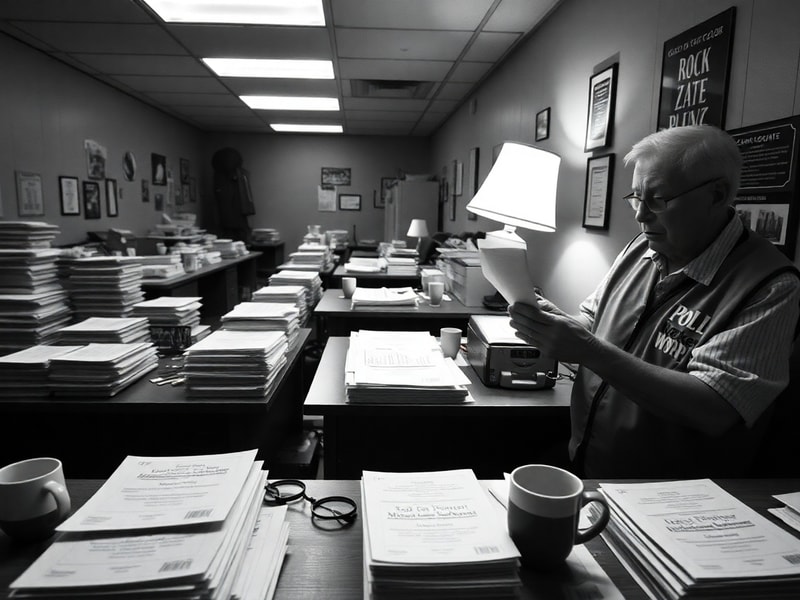
The state’s reliance on mail-in voting means election workers must handle a massive volume of ballots—often millions more than in-person voters. Processing these ballots involves several steps:
- Signature verification: Workers compare each ballot’s signature to the one on file. This step is critical for preventing fraud but requires time and meticulous attention.
- Ballot duplication: Damaged or unreadable ballots must be duplicated to ensure accurate tabulation, a process that adds to the delay.
- Provisional ballots: Voters who encounter issues at polling places cast provisional ballots, which require additional verification before counting.
These steps are essential for maintaining election integrity, but they inherently slow down the process. While some states have adopted faster verification methods, California’s emphasis on security comes at the cost of speed.
Legal and Procedural Safeguards
California’s election laws include multiple layers of oversight to protect voters and prevent errors. One of the most time-consuming aspects is the post-election audit, which California conducts by randomly selecting a percentage of precincts to hand-count. This audit ensures the accuracy of electronic results but adds days to the final tally.
Additionally, the state allows voters to “cure” their ballots if there’s a signature mismatch or other issue. Voters receive notifications and have until a set deadline to correct problems, which can delay final counts. While this process ensures no eligible voter is disenfranchised, it also prolongs uncertainty for candidates and the public.
Another factor is the state’s decentralized election system. California’s 58 counties operate independently, each with its own staffing, equipment, and procedures. While this allows for localized decision-making, it also creates inconsistencies in processing speeds. Coastal counties like Los Angeles and San Francisco, for example, often take longer due to higher volumes, while smaller counties may report results sooner.
Cultural and Political Implications
The slow count isn’t just a logistical challenge—it carries broader cultural and political consequences. In an era of instant gratification, prolonged uncertainty can erode public trust in elections. Social media amplifies speculation, with pundits and partisans filling the void with theories about fraud or incompetence. Yet these narratives often overlook the safeguards in place to protect the vote.
For candidates, the delay can be agonizing. In close races, every uncounted ballot could swing the outcome, and campaigns must tread carefully to avoid premature declarations of victory or concession. The 2020 presidential election highlighted this tension, as California’s late shift toward Joe Biden underscored the state’s outsized role in national politics.
The process also reflects California’s progressive values. By prioritizing accessibility and security over speed, the state sets an example for other jurisdictions grappling with election reforms. However, critics argue that the delays undermine confidence in the system, particularly among voters who expect faster results in other aspects of life.
Looking Ahead: Can California Speed Up?
Reform advocates have proposed several solutions to shorten California’s counting timeline. One approach is to adopt electronic signature verification, which could reduce the time spent on manual checks. Another is to standardize county procedures, ensuring that all jurisdictions follow the same best practices for processing ballots.
However, any changes must balance speed with security. California’s slow count isn’t a flaw—it’s a feature of a system designed to protect democracy. The challenge lies in communicating this to the public, ensuring that voters understand why the process takes time and trust the outcome when it finally arrives.
For now, California’s election timeline remains a trade-off between inclusivity and immediacy. As the state continues to refine its methods, the rest of the country watches closely, weighing the benefits of accuracy against the demand for speed.
For more on election systems and their broader impacts, explore News and Analysis on Dave’s Locker.
While the wait can be frustrating, the process underscores a fundamental truth: elections aren’t about speed—they’re about trust. And in California, that trust is built one verified ballot at a time.