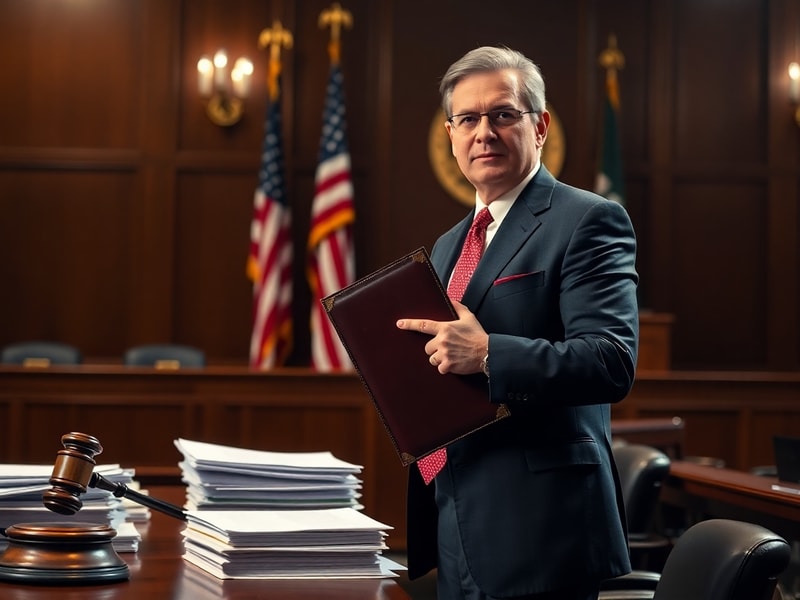
The United States Attorney serves as the chief federal law enforcement officer in each of the 94 judicial districts across the country. Appointed by the President and confirmed by the Senate, these officials are responsible for prosecuting federal crimes, defending the United States in civil cases, and collaborating with federal investigative agencies such as the FBI and DEA. Their role is pivotal in maintaining the integrity of the justice system while balancing the demands of public safety with constitutional protections.
The Core Responsibilities of a U.S. Attorney
A U.S. Attorney’s duties are multifaceted and extend beyond the courtroom. At the forefront, they oversee criminal prosecutions, which can range from white-collar crimes like fraud and corruption to violent offenses that cross state lines. Additionally, they handle civil litigation on behalf of the federal government, addressing issues like environmental violations, immigration disputes, and constitutional challenges. Their work often intersects with national priorities, such as cybercrime or drug trafficking, where they coordinate with other agencies to dismantle criminal networks.
Beyond prosecution and litigation, U.S. Attorneys play a critical role in community engagement. They frequently collaborate with local law enforcement, nonprofits, and advocacy groups to address public safety concerns. For example, some offices prioritize initiatives like opioid abuse prevention or human trafficking awareness, demonstrating how their work extends into social and public health spheres. This dual focus—on both enforcement and prevention—highlights the evolving nature of their responsibilities in an increasingly complex legal landscape.
The Appointment Process: Politics and Professionalism
The path to becoming a U.S. Attorney is as much about political alignment as it is about legal expertise. Presidents typically nominate candidates who share their ideological leanings, ensuring that the office reflects the administration’s priorities. However, the Senate Judiciary Committee scrutinizes these nominees for their qualifications, ethical standards, and commitment to impartial justice. Historically, this process has sparked debates about the balance between political influence and professional integrity.
Once confirmed, U.S. Attorneys serve at the pleasure of the President, meaning they can be removed at any time. This aspect of the role has drawn criticism, particularly when administrations replace prosecutors perceived as too independent or too aligned with the previous administration’s policies. For instance, during the Trump administration, several U.S. Attorneys were asked to resign shortly after the 2020 election, a move that raised questions about the politicization of the Justice Department. Such transitions underscore the tension between accountability to political leadership and the need for continuity in federal law enforcement.
To mitigate concerns about politicization, some legal experts advocate for a more standardized selection process, similar to the tenure protections enjoyed by federal judges. However, the current system remains firmly rooted in presidential discretion, ensuring that the office can adapt to shifting national priorities while also leaving it vulnerable to partisan shifts.
High-Profile Cases and Public Perception
The work of U.S. Attorneys often captures national attention, particularly in cases involving high-profile figures or contentious social issues. For example, the prosecution of January 6th defendants has fallen largely under the purview of U.S. Attorneys in the District of Columbia, where the events unfolded. These cases have tested the limits of free speech protections while also demonstrating the federal government’s commitment to holding individuals accountable for acts of domestic terrorism.
Another area where U.S. Attorneys have made headlines is in the fight against opioid-related crimes. Offices like the Southern District of Ohio have pursued aggressive litigation against pharmaceutical companies, alleging that they fueled the opioid epidemic through deceptive marketing practices. Such cases highlight how U.S. Attorneys can serve as a check on corporate misconduct while addressing public health crises. However, these efforts have also drawn criticism from those who argue that prosecutorial zeal may lead to overreach or unintended consequences for patients reliant on prescription medications.
Public perception of U.S. Attorneys is often shaped by the outcomes of their cases. When prosecutions result in convictions, they are hailed as victories for justice. Conversely, high-profile acquittals or dismissed charges can fuel perceptions of incompetence or bias. This duality underscores the challenges of operating in a role where the stakes are inherently high, and the scrutiny is relentless.
Challenges and Ethical Dilemmas
One of the most significant challenges faced by U.S. Attorneys is navigating the ethical tightrope between independence and political loyalty. While they are appointed by the President, their mandate is to uphold the law fairly and impartially. This tension is particularly evident in cases involving members of the administration or their allies. For instance, during the Mueller investigation into Russian interference in the 2016 election, then-Attorney General Jeff Sessions faced criticism for recusing himself from the probe, raising questions about whether U.S. Attorneys could remain objective in such politically charged environments.
Another ethical dilemma arises in the context of plea bargains, which account for the vast majority of federal cases. While plea deals can expedite justice and reduce court backlogs, they also raise concerns about coercion and disproportionate sentencing. U.S. Attorneys must weigh the benefits of efficiency against the potential for injustice, particularly in cases involving nonviolent offenders or marginalized communities. Organizations like the American Civil Liberties Union have long advocated for reforms to reduce the overreliance on plea bargaining, challenging U.S. Attorneys to rethink traditional approaches to prosecution.
Resource constraints also pose a significant hurdle. Many U.S. Attorney offices are understaffed and underfunded, particularly in rural districts where caseloads are heavy but staffing levels are low. This imbalance can lead to delays in justice, overworked prosecutors, and a higher likelihood of errors. Advocates for criminal justice reform argue that increased funding for these offices could improve outcomes while reducing disparities in how justice is administered across different regions.
The Future of the U.S. Attorney’s Office
The role of the U.S. Attorney is likely to evolve in response to emerging challenges, from cybercrime to climate-related litigation. One area of growth is the prosecution of environmental crimes, where U.S. Attorneys are increasingly working alongside the Environmental Protection Agency to hold corporations and individuals accountable for violations. Similarly, the rise of cryptocurrency has created new avenues for financial crimes, requiring U.S. Attorneys to develop specialized expertise in digital forensics and blockchain technology.
Technological advancements also present opportunities to improve the efficiency and fairness of the justice system. For example, data analytics tools can help prosecutors identify patterns in criminal behavior, allocate resources more effectively, and even predict recidivism risks. However, these tools also raise concerns about privacy and the potential for algorithmic bias. U.S. Attorneys will need to strike a balance between leveraging technology and safeguarding civil liberties.
Another trend shaping the future of the office is the growing emphasis on restorative justice. Some U.S. Attorneys are exploring alternatives to traditional prosecution, such as diversion programs for first-time offenders or partnerships with community organizations to address root causes of crime. These initiatives reflect a broader shift toward rehabilitation over punishment, though they remain controversial in cases involving violent or repeat offenders.
Ultimately, the U.S. Attorney’s office must adapt to a rapidly changing world while remaining steadfast in its commitment to the rule of law. Whether through technological innovation, ethical reform, or community engagement, the individuals who hold this office will continue to play a vital role in shaping the nation’s legal landscape.
Conclusion: A Pillar of Justice in an Uncertain World
The United States Attorney stands at the intersection of law, politics, and public service. Their work is often invisible to the average citizen, yet its impact is profound, influencing everything from the safety of local communities to the integrity of national institutions. While the role is not without its challenges—politicization, ethical dilemmas, and resource constraints—it remains a cornerstone of the American justice system.
As the legal landscape continues to evolve, U.S. Attorneys will face new and complex issues, from the rise of artificial intelligence to the global reach of transnational crime. Their ability to navigate these challenges will depend not only on their legal acumen but also on their commitment to fairness, transparency, and accountability. In an era of heightened scrutiny and polarized politics, the role of the U.S. Attorney has never been more critical—or more scrutinized.
For those interested in exploring related topics, the News and Analysis sections on Dave’s Locker offer further insights into the intersection of law, politics, and society.