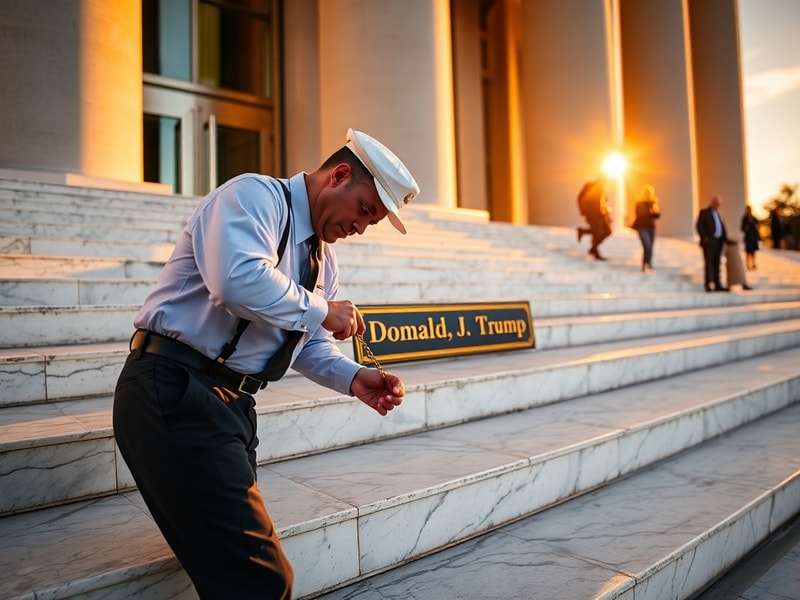
The Kennedy Center Honors, one of the United States’ most prestigious cultural awards, has removed former President Donald Trump’s name from its official program. This decision follows years of controversy surrounding his presidency and its impact on American society. The move reflects broader conversations about how institutions reconcile with figures whose legacies remain deeply polarizing.
The Decision and Its Immediate Impact
The Kennedy Center Honors, established in 1978, recognizes individuals who have made significant contributions to American culture through the performing arts. Recent reports confirm that Trump’s name has been omitted from the 2024 program, though the organization has not issued a formal statement explaining the change. This follows a pattern of institutions reassessing their associations with figures whose actions have sparked national debates.
The decision comes amid ongoing discussions about the role of public figures in cultural recognition. While the Kennedy Center has not explicitly cited Trump’s presidency as the reason for the removal, the symbolic weight of such a move cannot be ignored. Cultural institutions worldwide have increasingly faced pressure to align their values with contemporary social expectations.
Global Reactions to the Removal
The move has elicited varied responses across the globe. In Europe, where political figures often face scrutiny for their domestic and international policies, the decision has been met with cautious approval from some cultural critics. Others argue that institutions should remain neutral, focusing solely on artistic merit rather than political affiliations.
In contrast, supporters of Trump have framed the removal as an attempt to erase his legacy, particularly in the arts. Some have pointed to his administration’s policies, such as the creation of the Entertainment Liaison Office at the White House, as evidence of his engagement with cultural sectors. However, critics contend that symbolic gestures like the Kennedy Center’s decision are necessary to reflect evolving societal values.
The Broader Context of Cultural Reckoning
This is not the first instance of an institution distancing itself from a controversial figure. In recent years, statues, awards, and honors have been reevaluated in light of new historical perspectives. The Kennedy Center’s decision fits into a larger pattern where cultural bodies are reconsidering their past tributes in response to public pressure and shifting norms.
For example, the Politics section of major news outlets has frequently covered similar cases, such as the renaming of buildings or the revocation of honorary degrees. These actions often spark debates about the balance between historical accuracy and contemporary values. The Kennedy Center’s move underscores how cultural institutions are navigating these complex decisions.
How Institutions Decide What to Honor
Cultural institutions like the Kennedy Center operate under a mandate to celebrate artistic achievement, but they must also consider the broader implications of their choices. The decision to remove Trump’s name likely involved internal discussions about the institution’s mission and public perception. While some argue that art and politics should remain separate, others believe that cultural honors inherently reflect the values of their time.
This dilemma is not unique to the United States. In countries like the United Kingdom and France, similar debates have arisen over the commemoration of historical figures. For instance, statues of colonial-era leaders have been removed or reassessed, sparking national conversations about identity and history. The Kennedy Center’s decision may signal a broader trend where cultural institutions become more deliberate in their selections.
What This Means for Future Honors
The removal of Trump’s name from the Kennedy Center Honors could set a precedent for how other institutions handle controversial figures. As public opinion continues to evolve, cultural bodies may face increasing pressure to reassess their associations. This could lead to more transparent selection processes or clearer guidelines on what constitutes honorable recognition.
However, the decision also raises questions about the role of art in politics. Some argue that cultural honors should transcend political affiliations, focusing instead on artistic contributions. Others believe that institutions have a responsibility to reflect the values of their communities, even if it means making difficult choices.
The Kennedy Center’s Legacy Moving Forward
For the Kennedy Center, this moment presents an opportunity to redefine its role in contemporary culture. By addressing the removal of Trump’s name directly, the institution can demonstrate its commitment to inclusivity and relevance. Alternatively, silence on the matter could leave room for speculation and further debate.
Regardless of the outcome, the decision highlights the evolving nature of cultural recognition. As society changes, so too do the institutions that shape it. The Kennedy Center’s choice to omit Trump’s name may be a small step, but it reflects a larger conversation about how we honor—and reevaluate—our past.
Conclusion: A Reflection of Changing Times
The removal of Donald Trump’s name from the Kennedy Center Honors is more than a symbolic act; it is a reflection of how cultural institutions are adapting to a changing world. In an era where history is constantly being reassessed, organizations like the Kennedy Center must navigate complex decisions about what—and whom—to celebrate.
While the decision has sparked debate, it also opens the door for deeper conversations about the role of art, politics, and memory in our society. As cultural institutions continue to evolve, their choices will shape not only their own legacies but also the broader cultural landscape. The Kennedy Center’s move may be controversial, but it is a reminder that history is never static—and neither are the institutions that preserve it.