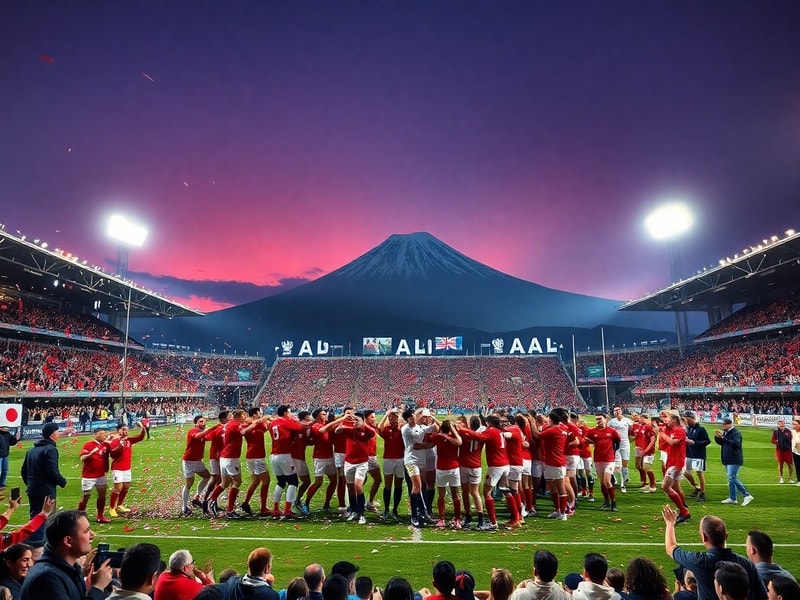
The FIFA World Cup represents the pinnacle of international football, a tournament where nations clash not just on the pitch but in the hearts of billions. Japan’s participation in the World Cup has become a story of resilience, tactical evolution, and cultural fascination. From their debut in 1998 to their recent campaigns, the Samurai Blue—Japan’s national team—has captured attention far beyond Asia. Their journey reflects broader trends in global football, including tactical innovation, the rise of Asian representation, and the intersection of culture and sport.
The Early Years: From Debut to Defining Moments
Japan first qualified for the World Cup in 1998, a historic moment that marked the arrival of Asian football on the global stage. The 1998 tournament in France was not kind to the Samurai Blue, as they lost all three group-stage matches. Yet, this debut set the foundation for future growth. Coached by Takeshi Okada, Japan played with a sense of purpose, even if the results didn’t immediately reflect their progress.
Their breakthrough came in 2002, when Japan co-hosted the World Cup alongside South Korea. Though they were eliminated in the Round of 16, the tournament became a turning point. The team’s performance under Philippe Troussier, a French coach who emphasized discipline and collective play, earned respect across the football world. Japan’s 2-0 victory over Russia in their opening match remains one of their most celebrated World Cup wins.
Tactical Evolution and Global Recognition
Japan’s World Cup campaigns have mirrored broader shifts in football tactics. In their early years, they relied heavily on physicality and set-pieces. By the 2010s, however, a new generation of Japanese players emerged, trained in European academies and influenced by pressing systems. This evolution culminated in their 2010 and 2018 campaigns, where they reached the Round of 16 twice in eight years—a remarkable consistency for an Asian team.
Their 2010 World Cup in South Africa was particularly memorable. Coached by Takeshi Okada again, Japan topped their group with victories over Cameroon and Denmark. The team’s 3-1 loss to Paraguay in the Round of 16 came in extra time, but their performance was widely praised for its intelligence and cohesion. Players like Keisuke Honda and Shinji Okazaki became household names, showcasing Japan’s ability to produce technically gifted footballers.
By 2018, Japan under Akira Nishino had refined their style further, blending quick transitions with disciplined defending. Their 2-1 win over Colombia in the group stage marked Japan’s first-ever World Cup victory against a South American side. Though they were eliminated by Belgium in a dramatic Round of 16 clash, their tournament left a lasting impression.
Key Tactical Principles of the Samurai Blue
Japan’s success stems from several core tactical principles:
- High Pressing and Quick Transitions: Japan often employs a high press to win the ball back quickly, transitioning into counterattacks with precision.
- Technical Proficiency: Japanese players are known for their technical skill, dribbling ability, and composure under pressure.
- Discipline and Teamwork: The team prioritizes collective effort over individual brilliance, making them difficult to break down.
- Adaptability: Japan adjusts formations based on opponents, often switching between 4-2-3-1 and 4-3-3 systems.
Cultural Impact: Beyond the Pitch
Japan’s World Cup appearances have transcended sport, becoming cultural touchpoints. The team’s blue jerseys, emblazoned with the sakura (cherry blossom) emblem, are instantly recognizable. Their matches draw massive TV audiences in Japan, where football has grown from a niche interest to a mainstream passion. The Samurai Blue’s resilience, particularly in close matches, has made them symbols of perseverance.
Their 2018 World Cup campaign, in particular, resonated deeply in Japan. Despite losing to Belgium in a dramatic fashion, the team’s sportsmanship and fighting spirit earned admiration worldwide. The phrase “Nadeshiko Spirit” (a term originally associated with Japan’s women’s football team) began circulating, symbolizing the team’s never-say-die attitude.
The Future: What Lies Ahead for Japan in the World Cup?
As Japan prepares for the 2026 World Cup in North America, the stakes are higher than ever. The team must balance the experience of veterans like Maya Yoshida with the emergence of young talents such as Takefusa Kubo and Ao Tanaka. Under Hajime Moriyasu, Japan has continued to evolve, emphasizing possession-based football while maintaining their trademark work ethic.
Their qualification for the 2022 World Cup in Qatar was a testament to their consistency. Though they were eliminated in the group stage—a rare setback—their performances hinted at future potential. With the expanded format in 2026, Japan has a real chance to advance further, especially if their development pipeline continues to thrive.
Japan’s World Cup journey is more than a sporting narrative. It reflects the country’s broader ambitions on the global stage, from technological innovation to cultural influence. As football continues to expand beyond its traditional European and South American strongholds, Japan stands as a beacon of what’s possible for Asian football.
For fans and analysts alike, the Samurai Blue’s World Cup story remains one of the most compelling in modern football. Their blend of discipline, creativity, and cultural pride offers a blueprint for emerging football nations. As Japan looks ahead to 2026, the world will be watching—not just to see if they can progress further, but to witness the next chapter in their remarkable journey.
To follow more on international football and global tournaments, visit our Sports category for updates and analysis.