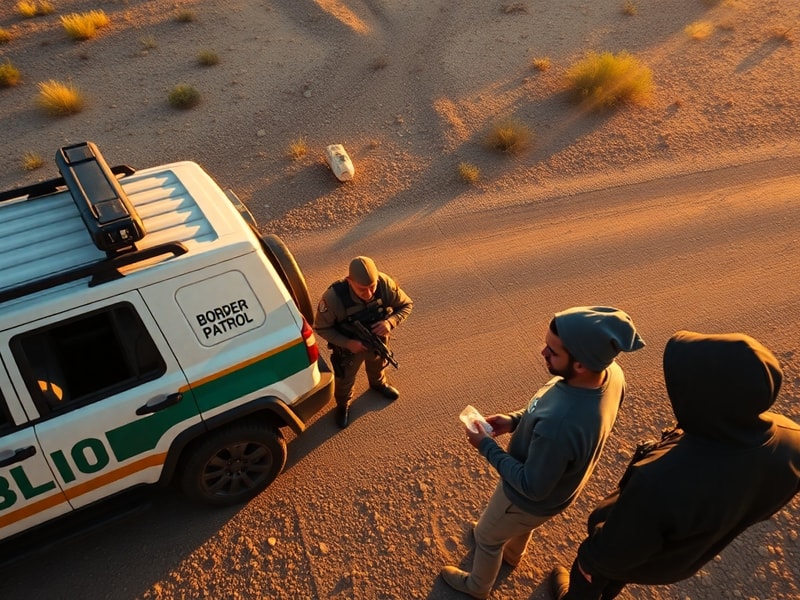
The recent surge in anonymous tips leading to searches in Nogales, Arizona, has raised questions about law enforcement practices and community trust. These operations, often triggered by tips from unnamed sources, highlight a growing reliance on citizen involvement in border security. While such tips can provide valuable intelligence, they also open debates about transparency and potential misuse.
The Nogales area has long been a focal point in discussions about border security. The influx of tips—whether from concerned residents, travelers, or anonymous whistleblowers—has become a tool for Customs and Border Protection (CBP) and local law enforcement. But what happens when these searches are conducted without clear public oversight?
How Anonymous Tips Drive Searches in Nogales
Anonymous tips are not new to law enforcement, but their role in Nogales has intensified in recent years. Reports indicate that these tips often lead to vehicle stops, property searches, or even arrests. The process typically follows a pattern:
- A tip is submitted through an official channel, such as CBP’s reporting systems or local police hotlines.
- Agencies evaluate the tip’s credibility, often without revealing the source.
- If deemed actionable, a search or investigation is launched, sometimes without a warrant.
- Outcomes vary—some tips result in seizures of contraband, while others lead to no findings or even legal challenges.
Critics argue that this system lacks accountability. Without knowing the tipster’s motives, whether they are accurate, or if they stem from bias, the process risks overreach. Yet, proponents say it empowers communities to play an active role in security.
Broader Implications for Border Security and Civil Liberties
The use of anonymous tips in Nogales reflects a larger trend in border enforcement. Agencies increasingly rely on community engagement, but this comes with trade-offs. On one hand, tips can uncover hidden threats, from drug smuggling to human trafficking. On the other, they can erode trust between residents and law enforcement.
Consider the following concerns:
- False tips: Misinformation or malicious reports could lead to unnecessary searches, wasting resources and infringing on civil liberties.
- Racial profiling: Critics warn that tips may disproportionately target certain groups, reinforcing stereotypes.
- Lack of oversight: Without transparency, there’s little recourse for those wrongly subjected to searches.
- Legal ambiguity: Courts have yet to fully define the standards for searches based solely on anonymous tips.
These issues are not unique to Nogales. Similar debates have emerged in other border towns, such as El Paso and San Diego, where anonymous tip programs are also in use. The challenge lies in balancing security with fairness—a delicate equilibrium that requires clear policies and community input.
Community Response and Calls for Reform
Residents of Nogales have mixed feelings about the practice. Some see it as a necessary tool in a high-stakes region. Others view it as a violation of privacy and a potential tool for harassment. Local advocacy groups have begun pushing for reforms, including:
- Mandatory reporting of tip sources in court cases.
- Independent audits of tip-based searches to assess their effectiveness.
- Public awareness campaigns to educate residents on their rights.
These efforts aim to ensure that anonymous tips serve justice rather than undermine it. Meanwhile, law enforcement agencies continue to defend the practice, citing its role in disrupting criminal activity.
Looking Ahead: What’s Next for Nogales?
The future of anonymous tips in Nogales will likely depend on several factors:
- Legal precedents: Upcoming court cases could set new standards for how these tips are used.
- Technological advancements: Tools like AI and data analytics may refine how tips are evaluated, reducing bias.
- Public pressure: As awareness grows, communities may demand greater accountability.
- Policy changes: Local and federal agencies might adjust their guidelines to address concerns.
For now, the debate in Nogales serves as a microcosm of broader challenges in border security. The balance between vigilance and justice remains delicate, and the role of anonymous tips will continue to evolve.
For more on border security and law enforcement practices, explore related topics on Dave’s Locker News and Dave’s Locker Analysis.
Conclusion
The use of anonymous tips in Nogales underscores the complexities of modern border enforcement. While these tips can aid in uncovering threats, they also raise critical questions about accountability and civil liberties. As the debate unfolds, the community’s voice will be essential in shaping a system that protects both security and rights.