Turkey’s World Cup Journey: A Story of Resilience and Rising Ambitions
The FIFA World Cup has long been a stage where nations showcase not just athletic talent, but cultural identity and national pride. For Turkey, the road to World Cup glory has been a marathon of perseverance, tactical evolution, and moments of brilliance that have left an indelible mark on the global football landscape. While the national team has yet to lift the trophy, its performances—especially in recent decades—have captured attention and fostered a deep passion among fans worldwide.
Turkey’s footballing identity is deeply woven into the fabric of its society. The country boasts a rich history in the sport, with clubs like Galatasaray, Fenerbahçe, and Beşiktaş standing as pillars of domestic and international competition. These clubs have not only shaped Turkey’s football culture but have also served as springboards for players who later shine on the world stage. The national team, affectionately known as the “Ay-Yıldızlılar” (Star and Crescent), embodies this legacy of grit, creativity, and collective spirit.
A Historic Debut and Immediate Impact
Turkey first qualified for the FIFA World Cup in 1954, a milestone that marked the beginning of its international football journey. Though the team was eliminated in the group stage, the participation itself was a source of national pride. For a nation still finding its footing in the post-war global order, football became a unifying force—one that transcended borders and social divides.
Over the next several decades, Turkey experienced a mix of progress and setbacks. The team qualified intermittently but struggled to advance beyond the group stage. Yet, each appearance reinforced a growing football consciousness in the country. The 1990s, in particular, saw a cultural shift as football became increasingly commercialized and professionalized across Turkey, aligning with global trends while retaining its local flavor.
The 2002 World Cup: A Turning Point in Turkish Football
The watershed moment for Turkish football came during the 2002 FIFA World Cup in South Korea and Japan. Under the guidance of coach Şenol Güneş, a team of underdogs exceeded all expectations. Turkey navigated a tough group featuring Brazil and Costa Rica before defeating co-hosts Japan in the Round of 16. The quarterfinal clash against Senegal became legendary—a match decided by a golden goal from İlhan Mansız in extra time. Though Turkey fell to Brazil in the semifinals, the 3–0 victory over South Korea in the third-place playoff secured a historic bronze medal.
The 2002 campaign was more than a sporting achievement; it was a cultural affirmation. Millions across Turkey watched the games in cafés, squares, and homes, united by shared emotion. The team’s success sparked a football boom, inspiring a generation of young players and elevating the profile of Turkish clubs in European competitions. Galatasaray’s 2000 UEFA Cup triumph and Fenerbahçe’s consistent Champions League appearances further solidified Turkey’s place in the football world.
From Near-Misses to Consistent Contenders
Following 2002, Turkey continued to qualify for major tournaments, including the 2008 and 2016 UEFA European Championships. While World Cup qualification remained elusive in 2006, 2010, and 2014, the team consistently demonstrated tactical discipline and flair, particularly under coaches like Fatih Terim and Şenol Güneş, who returned for a second stint.
Recent years have seen Turkey build a squad rich in technical ability and tactical awareness. With players like Hakan Çalhanoğlu, Cenk Tosun, and Çağlar Söyüncü featuring prominently, the team blends experienced campaigners with rising stars from top European leagues. The 2022 World Cup qualifiers highlighted this evolution, as Turkey narrowly missed out on automatic qualification but remained in contention until the final matchday.
Looking ahead, Turkey’s football federation has invested in youth academies and infrastructure, aiming to nurture homegrown talent. The establishment of modern training facilities and partnerships with European clubs have created pathways for development. The goal is clear: not just to qualify, but to compete for the ultimate prize.
Cultural Pride and the Global Fanbase
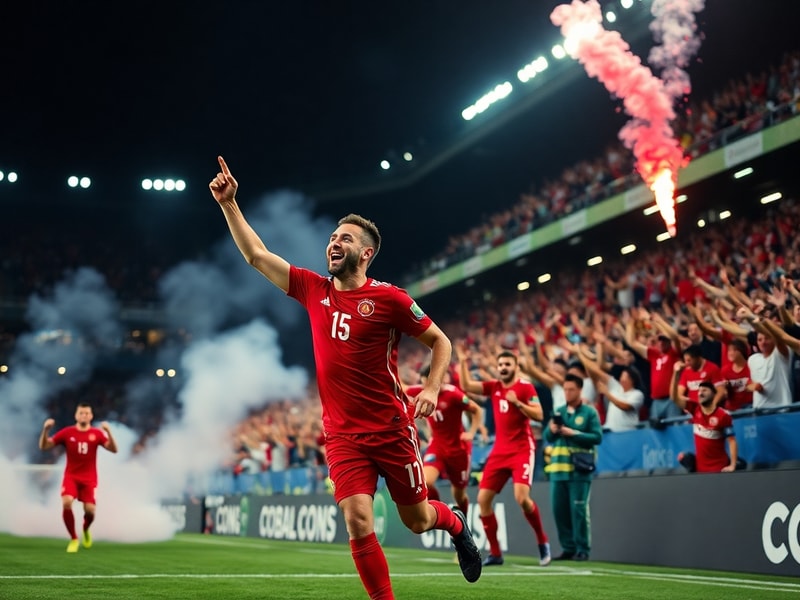
Football in Turkey is more than a sport—it’s a cultural institution. The passion of supporters, known for their vocal presence and colorful displays, creates an electrifying atmosphere at home and abroad. Whether in Istanbul’s Atatürk Olympic Stadium or in fan zones across Europe, the Turkish flag and anthems echo with pride.
The national team’s journey has also fostered a sense of global Turkish identity. Diaspora communities from Germany to the Netherlands proudly support the Ay-Yıldızlılar, turning matches into transnational celebrations. This connection extends Turkey’s influence beyond its borders, making each World Cup campaign a shared experience for millions of fans worldwide.
In 2026, when the World Cup expands to 48 teams, Turkey will have an unprecedented opportunity to return to the global stage. With increased access and a deeper talent pool, the dream of lifting the trophy is no longer distant fantasy—it is a tangible ambition.
What’s Next for Turkish Football?
The road to future World Cup success will require more than individual brilliance. It demands a cohesive system that values technical development, psychological resilience, and tactical innovation. The Turkish Football Federation (TFF) has begun implementing reforms, including coach education programs and scouting networks, to build a sustainable pathway to excellence.
Domestic success in the Süper Lig and consistent European performances by clubs will also play a role. Clubs like Galatasaray, who have won multiple league titles and European trophies, serve as models of professionalism and ambition. Their success trickles down to the national team, creating a virtuous cycle of growth and expectation.
For fans, the anticipation is building. Every qualifying campaign is now met with cautious optimism. The memories of 2002 linger, but so does the hunger for a new chapter—one where Turkey not only participates but competes at the highest level.
As the nation looks forward to the 2026 World Cup in North America, the question on everyone’s mind is simple: Could this be the year Turkey finally returns to the pinnacle of world football? The signs are promising. The talent is there. The passion has never faded. All that remains is the moment.
For more on international football and Turkey’s evolving role in the sport, explore our Sports section. To read about the cultural impact of football in Turkey, visit our Culture archive.
One thing is certain: when Turkey steps onto the World Cup stage, the world will be watching—not just as spectators, but as witnesses to a story still being written.