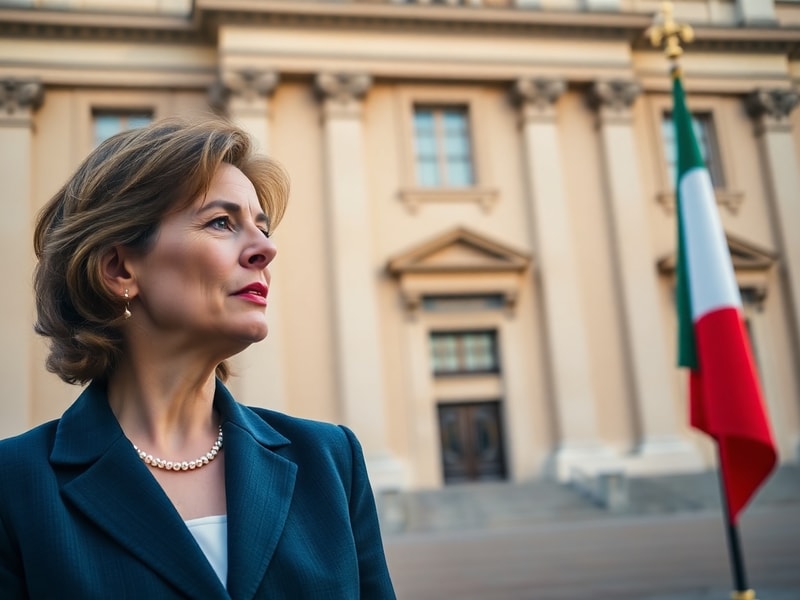
Giorgia Meloni: From Opposition Firebrand to Italy’s First Female Premier
Giorgia Meloni’s ascent to power in Italy represents one of the most dramatic political transformations in modern European history. In September 2022, she became the first woman to lead Italy’s government and the first far-right leader since World War II. Her journey from a teenage activist to prime minister has reshaped Italy’s political landscape while sending ripples across the continent.
Born in Rome in 1977, Meloni’s political consciousness emerged during Italy’s turbulent 1990s. She joined the Italian Social Movement (MSI), a party with neo-fascist roots, at just 15 years old. This early affiliation set the foundation for her political identity—a blend of nationalist conservatism, traditional values, and Euroscepticism that would define her career.
Political Evolution: From Fringe to Mainstream
Meloni’s political evolution mirrors Italy’s own transformation from post-fascist politics to mainstream conservatism. After the MSI’s dissolution in 1995, she helped found the National Alliance party, which eventually merged into the Brothers of Italy (Fratelli d’Italia) in 2012. Under her leadership, this once-marginal party grew from 4% in the 2018 elections to nearly 26% in 2022, becoming Italy’s dominant political force.
Her success stems from several key factors:
- Masterful use of social media to connect directly with voters
- A carefully calibrated nationalist message that resonates with working-class Italians
- Strategic alliances with other European right-wing parties
- Positioning as a defender of traditional Italian values against globalist pressures
The Brothers of Italy’s victory came despite opposition from Italy’s progressive establishment and international partners concerned about her party’s historical ties to fascism. Meloni’s ability to distance herself from the party’s controversial past while maintaining its core voter base demonstrates remarkable political acumen.
Policy Positions: Sovereignty, Security, and Social Conservatism
Meloni’s political platform rests on three pillars: national sovereignty, traditional family values, and strict immigration controls. These positions reflect broader trends in European politics where right-wing parties have gained ground by emphasizing border security and cultural preservation.
On immigration, Meloni has adopted a hardline stance, continuing the policies of her predecessor by restricting rescue operations in the Mediterranean and accelerating deportations. Her government’s approach to migration has drawn both praise from nationalist circles and criticism from human rights organizations.
Economically, Meloni has positioned herself as a pragmatic conservative. While maintaining some traditional right-wing economic policies, she has also embraced state intervention in key sectors, reflecting Italy’s complex relationship with European Union fiscal rules. Her government’s approach to energy policy—particularly regarding gas imports from Russia—has drawn international attention.
Socially, Meloni has championed policies that appeal to Italy’s conservative Catholic base. Her government has restricted access to abortion in some regions, opposed same-sex civil unions, and emphasized traditional gender roles. These moves have intensified debates about Italy’s secular future and its relationship with the European Union’s progressive values.
International Relations: Italy’s Shifting Global Role
Meloni’s foreign policy represents a significant departure from Italy’s traditional Atlanticist approach. While she has maintained strong ties with the United States and NATO, her government has pursued a more independent line in several areas.
Her relationship with the European Union has been particularly complex. Despite initial tensions over budget deficits and rule-of-law concerns, Meloni has managed to secure significant EU funding while maintaining her nationalist credentials. This balancing act has made her a key player in shaping the EU’s future direction.
Meloni has also positioned Italy as a bridge between Western powers and the Global South, particularly in Africa. Her government has sought to strengthen economic ties with African nations while maintaining Italy’s traditional alliances with Western partners. This approach reflects a broader trend among European right-wing governments seeking to redefine their countries’ global roles.
In politics, Meloni has emerged as a vocal advocate for European sovereignty, challenging the EU’s federalist tendencies while seeking greater strategic autonomy for member states. Her leadership has made her a key figure in the continent’s ongoing debates about the future of European integration.
Cultural Impact: Redefining Italian Identity
Beyond politics, Meloni’s rise reflects profound cultural shifts in Italy. Her emphasis on national identity and traditional values has resonated with many Italians disillusioned with globalization and rapid social change. This cultural moment extends beyond Italy, echoing similar movements across Europe and the West.
Meloni’s leadership style blends old-fashioned oratory with modern media savvy. Her speeches often reference Italy’s Roman heritage and Catholic traditions while employing contemporary political messaging. This combination has helped her connect with both older conservatives and younger voters seeking alternatives to establishment politics.
The cultural impact of her leadership extends to Italy’s artistic and intellectual circles. While some sectors have resisted her policies, others have embraced her challenge to progressive orthodoxy. This polarization mirrors broader societal divisions that have intensified during her tenure.
Challenges Ahead: Governing in Turbulent Times
As Italy’s first female prime minister from a right-wing party, Meloni faces unique challenges. Her government must navigate economic stagnation, demographic decline, and the pressures of European integration while maintaining her base’s support.
Domestically, her government has faced criticism over judicial independence, media freedom, and economic inequality. Internationally, her nationalist rhetoric continues to raise concerns about Italy’s commitment to European solidarity and democratic values.
Yet Meloni’s political resilience suggests she may adapt to these challenges. Her ability to moderate positions when necessary while maintaining her core identity has been a hallmark of her political career. Whether this approach will sustain her long-term remains one of the most compelling questions in European politics today.
For observers of global politics, Meloni’s leadership offers important insights into the future of conservative movements in the West. Her success demonstrates how traditional nationalist appeals can be modernized for contemporary electorates. At the same time, her tenure raises fundamental questions about the balance between national sovereignty and international cooperation in an increasingly interconnected world.
As Italy’s first female prime minister from the right, Meloni has broken multiple barriers while challenging established political norms. Her story—from teenage activist to Europe’s most influential right-wing leader—serves as both inspiration and cautionary tale for political movements worldwide. The coming years will reveal whether her blend of nationalism and pragmatism can deliver on its promises or if it will succumb to the same forces that have undone so many political transformations before it.