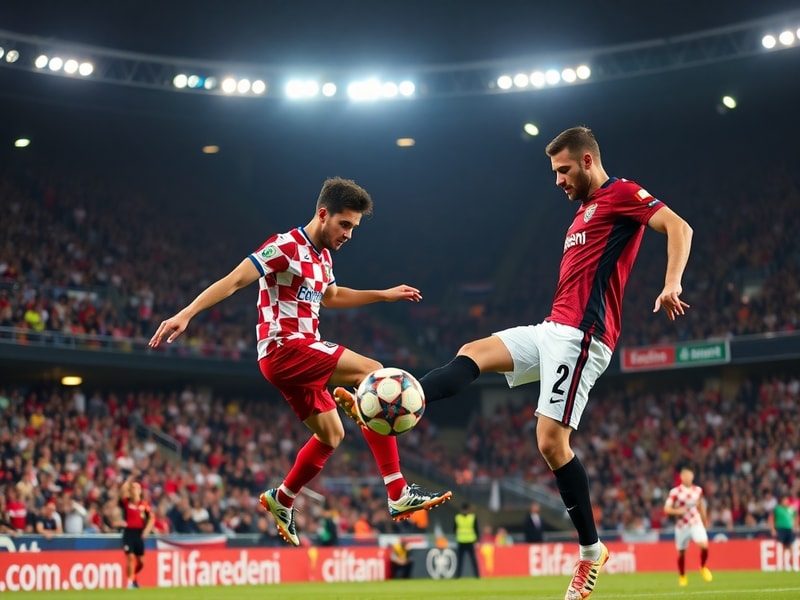
Niclas Schlotterbeck’s name has become increasingly difficult to ignore in football circles over the past 18 months. The 24-year-old German defender has transitioned from Bundesliga obscurity to becoming a key figure at both club and international level. His journey offers more than just a personal success story—it reflects broader trends in modern football’s approach to defensive recruitment and tactical flexibility.
The Freiburg academy product’s rise hasn’t followed the conventional pathway. Unlike academy graduates who immediately break into first teams, Schlotterbeck spent years refining his craft on loan before returning stronger. That resilience, combined with Freiburg’s progressive football philosophy, created the perfect environment for his development. His performances have since caught the attention of top European clubs, signaling a potential shift in how defensive talent is perceived and developed.
From Freiburg to the Spotlight: Schlotterbeck’s Career Trajectory
Schlotterbeck’s professional career began at SC Freiburg in 2016, but his early years were marked by loan spells that tested his adaptability. He honed his skills at Union Berlin and 1899 Hoffenheim, learning to thrive in different systems under varied tactical demands. This experience proved invaluable when he returned to Freiburg in 2020 and established himself as a starter.
His breakthrough season came in 2021–22, when he formed a formidable defensive partnership with Matthias Ginter. Schlotterbeck’s ability to read the game, coupled with his comfort on the ball, made him stand out in a league known for its tactical intelligence. By the following campaign, he had earned his first call-up to the German national team under Hansi Flick, a testament to his rapid progress.
His club performances did not go unnoticed. In January 2024, Schlotterbeck completed a move to Borussia Dortmund, one of Europe’s elite clubs. The transfer fee reportedly exceeded €25 million, a substantial investment for a player who had only recently entered his prime. This move underscored a growing trend: clubs are increasingly willing to pay premium prices for defenders who combine technical ability with tactical awareness.
The Tactical Evolution: What Schlotterbeck Brings to the Table
Schlotterbeck’s defensive profile is not built on brute force or aerial dominance. Instead, his value lies in his composure, positioning, and ability to initiate attacks from deep. He ranks highly in progressive passing metrics among Bundesliga defenders, a trait that aligns perfectly with Dortmund’s possession-based style under Edin Terzić.
His versatility is another asset. Schlotterbeck has played as a left-sided center-back, a right-sided center-back, and even as a defensive midfielder in a back-three system. This flexibility enhances his value in modern systems that demand positional interchangeability. It also makes him a safer long-term investment for clubs that may shift formations or adapt to opponents.
Defensively, he excels in 1v1 situations and reads the game well, often intercepting passes before they become dangerous. His ball-carrying ability allows his team to bypass midfield pressure, a skill increasingly prized in high-pressing leagues like the Premier League and La Liga.
The Broader Implications: How Schlotterbeck Reflects Modern Football
Schlotterbeck’s career trajectory mirrors a broader shift in football’s valuation of defensive players. Gone are the days when defenders were valued solely for their physicality or last-ditch tackles. Today, clubs prioritize defenders who can play out from the back, contribute to buildup play, and adapt to high-pressing systems. This evolution has been accelerated by rule changes, such as the back-pass rule, and the tactical demands of managers like Pep Guardiola and Jürgen Klopp.
His rise also highlights the importance of club development pathways. Freiburg’s ability to nurture Schlotterbeck through loans and patient integration demonstrates how smaller clubs can develop world-class talent. This model contrasts with the “galáctico” approach of superclubs and offers a sustainable alternative for clubs with limited resources.
At the international level, Schlotterbeck’s inclusion in the German squad signals a generational transition. With veterans like Mats Hummels and Jerome Boateng nearing retirement, Germany is investing in a new crop of defenders who can blend experience with youthful dynamism. His presence in the Euro 2024 squad, held in Germany, added an extra layer of significance to his journey.
What’s Next for Schlotterbeck?
As Schlotterbeck enters the most pivotal phase of his career, several questions loom. Can he replicate his club form at Dortmund on a consistent basis? Will he become a regular starter for Germany in major tournaments? And perhaps most importantly, can he avoid the pitfalls of burnout or injury that often affect young defenders making the leap to top clubs?
The pressure is undeniable. Dortmund’s recent struggles in the Champions League and Bundesliga have intensified scrutiny on their defensive unit. Schlotterbeck’s ability to remain composed under pressure will be key to his success. Equally important is his capacity to grow alongside teammates like Mats Hummels and Dan-Axel Zagadou, who bring experience but may also compete for his position.
Another factor to watch is his adaptability to different leagues. While the Bundesliga is known for its physicality and tactical discipline, leagues like the Premier League or Serie A present unique challenges. His transition will be closely monitored by scouts and pundits alike.
Key Takeaways: Schlotterbeck’s Journey in Context
The story of Niclas Schlotterbeck is more than a tale of individual success. It reflects broader themes in modern football: the increasing value of technical defenders, the importance of developmental patience, and the role of smaller clubs in nurturing talent. Below are the key points that define his rise:
- Development through loans: Schlotterbeck’s career was shaped by loan spells at Union Berlin and Hoffenheim, where he adapted to different systems and gained invaluable experience.
- Versatility as a defensive asset: His ability to play in multiple positions and formations makes him a valuable asset in modern, fluid systems.
- Technical and tactical evolution: Schlotterbeck’s rise coincides with a shift in how defenders are evaluated, emphasizing passing, positioning, and composure over physicality alone.
- Club vs. national team impact: His progression from Freiburg to Dortmund and Germany highlights the importance of both club and international pathways in a player’s development.
- Market value and transfer trends: His move to Dortmund reflects a broader trend of clubs investing heavily in defenders who can contribute to buildup play and adapt to tactical demands.
Schlotterbeck’s journey also serves as a reminder of football’s unpredictability. Few could have predicted that a player who spent his early career on loan would become one of Germany’s most promising defenders. His story underscores the importance of resilience, adaptability, and seizing opportunities when they arise.
Conclusion: A Defender for the Modern Era
Niclas Schlotterbeck represents a new breed of defender—one who blends technical skill with tactical intelligence and adaptability. His rise from Freiburg’s academy to Borussia Dortmund and the German national team is a testament to modern football’s evolving demands. While the future remains unwritten, his trajectory offers valuable insights into how defenders are valued, developed, and deployed in today’s game.
As clubs continue to prioritize defenders who can play out from the back and contribute to buildup play, Schlotterbeck’s model of development and versatility will likely become a blueprint. Whether he fulfills his potential as a world-class defender or becomes a cautionary tale of early hype remains to be seen. One thing, however, is clear: his journey has already left a mark on the game.
For aspiring defenders and football enthusiasts alike, Schlotterbeck’s story is a reminder that success is not always linear. It is built on resilience, adaptability, and the willingness to seize opportunities when they arise. As he continues to write his chapter in football’s ongoing narrative, one thing is certain—his name will remain on the lips of scouts, managers, and fans for years to come.
Explore more Sports articles or read expert Analysis to stay updated on rising talents like Schlotterbeck.