The Rise of Monterrey Stadium as a Global Venue
Monterrey Stadium, officially known as Estadio BBVA, stands as a testament to Mexico’s growing influence in international sports architecture. Inaugurated in 2015, this state-of-the-art facility has quickly become a benchmark for stadium design across Latin America and beyond. Its sleek, futuristic aesthetic contrasts sharply with the colonial-era plazas found in Mexico’s historic centers, signaling a deliberate shift toward modernity in the country’s sporting infrastructure.
The stadium’s location in Guadalupe, a municipality adjacent to Monterrey, places it at the heart of one of Mexico’s most economically vibrant regions. This positioning was no accident. Monterrey has long been a hub for industry and innovation, and Estadio BBVA reflects that entrepreneurial spirit. The stadium’s design incorporates elements that respond to the region’s climate, with its roof structure designed to provide shade while allowing natural ventilation—a crucial feature in Monterrey’s hot summers.
Architectural Innovation and Fan Experience
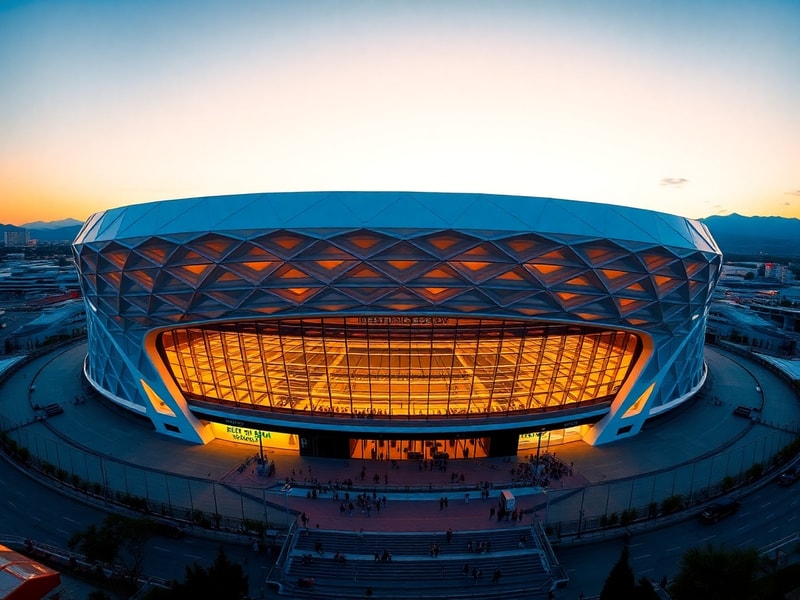
Designed by the renowned firm Populous, Estadio BBVA pushed the boundaries of what a football stadium could be. Its most striking feature is the undulating roof, which appears to ripple like a wave. This design not only serves an aesthetic purpose but also enhances acoustics, ensuring that crowd noise amplifies the atmosphere during matches. The stadium’s exterior is clad in a mix of glass and steel, giving it a translucent quality that changes appearance depending on the time of day.
Inside, the stadium prioritizes fan comfort. Unlike many older stadiums in Mexico, Estadio BBVA features individual seating with ample legroom, ensuring that spectators can enjoy matches without the cramped conditions often associated with Latin American football venues. The premium seating areas include boxes with private lounges, catering to corporate clients and affluent fans. Meanwhile, the concourses are wide and well-ventilated, equipped with modern amenities such as high-speed Wi-Fi and multiple food and beverage options.
The stadium’s capacity of 53,500 makes it one of the largest in Mexico, yet it avoids the sprawling, impersonal feel of some mega-stadiums. The seating bowl is steeply raked, ensuring that even spectators in the upper tiers have an unobstructed view of the pitch. This design choice reflects a global trend in stadium architecture, where intimacy and visibility are prioritized over sheer scale.
A Cultural Shift in Mexican Football
Estadio BBVA’s impact extends beyond its physical structure. It represents a cultural shift in Mexican football, where tradition has long clashed with modernization. The club that calls this stadium home, CF Monterrey, is one of Mexico’s most successful teams, with multiple domestic and international titles. However, in the past, the team often struggled to attract consistent crowds to its previous home, Estadio Tecnológico. The move to Estadio BBVA marked a turning point, coinciding with a period of renewed success for the club.
This stadium has also played a role in elevating the profile of Liga MX, Mexico’s top football division. Historically, Mexican clubs have struggled to compete with European leagues in terms of infrastructure and global appeal. Estadio BBVA, with its world-class facilities, has helped change that perception. The stadium has hosted international friendlies, CONCACAF Champions League matches, and even concerts by global artists like Coldplay and Metallica, further cementing its status as a multi-purpose venue.
Yet, the stadium’s influence isn’t limited to football. It has become a symbol of Monterrey’s identity, a city that has long prided itself on its industrial prowess and resilience. In 2016, the stadium was named the “Best Stadium in the World” by StadiumDB, a prestigious honor that underscored its global significance. This recognition has put Monterrey on the map for sports tourism, attracting fans and architects from around the world who come to study its design and operations.
Sustainability and Community Impact
One of the most forward-thinking aspects of Estadio BBVA is its commitment to sustainability. The stadium is LEED-certified, a rarity in Mexico’s sports infrastructure. This certification recognizes its efforts to reduce environmental impact through energy-efficient systems, water conservation, and waste management. The roof, for example, is equipped with photovoltaic panels that generate a portion of the stadium’s electricity, while the landscaping around the venue includes native plants that require minimal irrigation.
The stadium’s impact on the local community is equally noteworthy. Beyond hosting sporting events, Estadio BBVA has become a venue for cultural festivals, educational programs, and social initiatives. For instance, the stadium has partnered with local schools to promote sports and healthy lifestyles among youth. It has also hosted charity events, leveraging its high-profile status to raise funds for causes such as childhood cancer research.
However, the stadium’s construction was not without controversy. Critics argued that the project was a vanity investment, prioritizing aesthetics over practical needs like affordable housing and public transportation. The stadium’s location, while convenient for affluent fans, is somewhat isolated, requiring significant investment in infrastructure to ensure accessibility. These debates highlight the broader tensions in Mexico between development and inequality, themes that resonate in many rapidly growing cities.
The Future of Monterrey Stadium in a Global Context
As stadiums around the world evolve to meet the demands of modern spectators, Estadio BBVA serves as a case study in how architecture, technology, and culture intersect. Its success has inspired similar projects across Latin America, from Brazil’s Arena Corinthians to Colombia’s Estadio Metropolitano Roberto Meléndez renovations. These stadiums share a common goal: to create spaces that are not just functional but also iconic, capable of capturing the imagination of fans and non-fans alike.
Looking ahead, Estadio BBVA is poised to play an even larger role in Mexico’s sporting calendar. The stadium is a candidate to host matches during the 2026 FIFA World Cup, a tournament that will be co-hosted by Mexico, the United States, and Canada. The bid process has already sparked discussions about the stadium’s potential to become a regional hub for major sporting events, further solidifying its place in the global sports landscape.
For Monterrey, the stadium is more than just a venue; it’s a symbol of the city’s ambition and adaptability. In an era where sports venues are increasingly seen as economic engines, Estadio BBVA demonstrates how thoughtful design and community engagement can create lasting value. It’s a reminder that stadiums are not just places for games—they are living spaces that shape identity, foster connections, and drive progress.
Why Monterrey Stadium Matters Beyond Sports
The significance of Estadio BBVA extends into broader conversations about urban development, sustainability, and cultural identity. As cities across the globe grapple with the challenges of rapid urbanization, Monterrey’s approach offers valuable lessons. The stadium’s integration with its surroundings—its blend of cutting-edge design and local character—shows how infrastructure can enhance rather than detract from a city’s fabric.
Moreover, the stadium’s success has sparked conversations about the role of public funding in such projects. In a country where resources are often scarce, the decision to invest in a stadium of this scale raises questions about priorities. Should public money be directed toward entertainment venues when social services are underfunded? This debate is not unique to Monterrey, but the stadium’s high-profile status has brought it into sharper focus.
Ultimately, Estadio BBVA is a microcosm of Monterrey itself: ambitious, innovative, and unapologetically modern. It challenges preconceptions about what a stadium should be, proving that these structures can be more than just concrete bowls for spectators. They can be works of art, engines of sustainability, and catalysts for community engagement. As Mexico continues to assert itself on the global stage, venues like Estadio BBVA will play a crucial role in shaping its identity—and its future.
For those interested in exploring more about the intersection of sports and culture, be sure to check out our Sports and Culture sections for deeper analysis and insights.