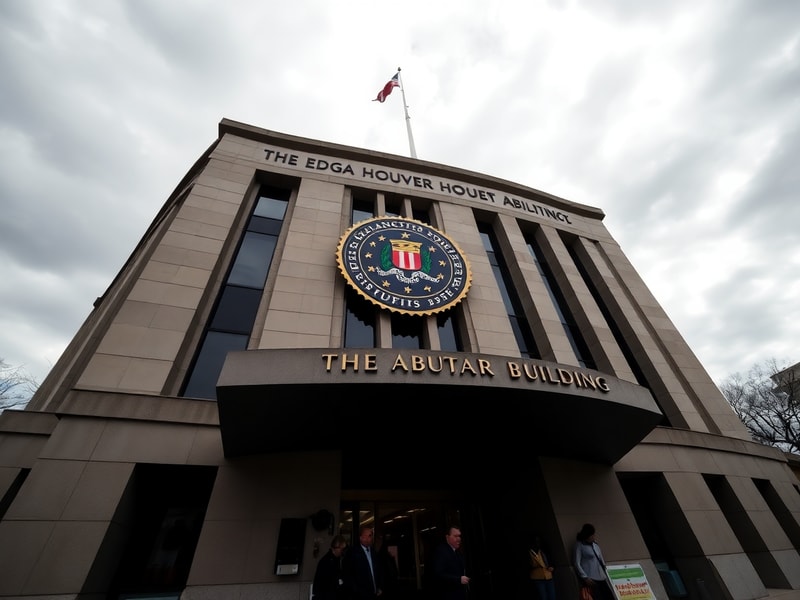
The Federal Bureau of Investigation (FBI) stands as one of the most recognizable law enforcement agencies in the world. With a mandate that spans domestic security, criminal investigations, and counterterrorism, the bureau has shaped not only American justice but also global security practices. Its history reflects the evolution of crime, espionage, and national priorities over more than a century.
From its modest beginnings in 1908 as a small investigative unit within the Department of Justice, the FBI has grown into a sophisticated intelligence and law enforcement organization. It now employs over 37,000 people—including special agents, analysts, scientists, and linguists—and operates from 56 field offices across the United States and more than 60 international offices in U.S. embassies worldwide.
Origins and Early Mission
The FBI traces its roots to the early 1900s, when the U.S. government recognized the need for a centralized investigative agency. Prior to its creation, federal law enforcement was fragmented, with agencies like the Secret Service handling limited tasks such as investigating counterfeit currency and protecting the president. In 1908, Attorney General Charles Bonaparte established the Bureau of Investigation—later renamed the Federal Bureau of Investigation in 1935—to conduct federal investigations under the Department of Justice.
One of the bureau’s earliest challenges was the rise of organized crime during Prohibition. The FBI’s role in targeting figures like Al Capone and John Dillinger helped cement its reputation as a relentless force against criminal enterprises. These high-profile cases not only expanded the bureau’s jurisdiction but also established its public image as an agency capable of taking on powerful adversaries.
Key Milestones in FBI History
Several defining moments have shaped the FBI’s development:
- 1924: J. Edgar Hoover becomes director, a position he holds for nearly 48 years. His tenure brought significant reforms, including stricter hiring standards, the development of fingerprint identification, and the creation of the FBI Laboratory.
- 1930s: The bureau intensifies its pursuit of bank robbers and kidnappers, leading to the famous 1934 capture of Public Enemy Number One, Lester Gillis, also known as “Baby Face” Nelson.
- 1972: Hoover’s death prompts a reevaluation of the FBI’s surveillance practices, particularly regarding civil liberties. This period leads to increased congressional oversight and reforms in domestic spying.
- 2001: Following the September 11 attacks, the FBI shifts its focus toward counterterrorism, intelligence gathering, and preventing future attacks. The USA PATRIOT Act expands its surveillance powers.
- 2010s: The bureau expands its cybercrime unit in response to the growing threat of digital fraud, identity theft, and state-sponsored hacking.
Structure and Jurisdiction
The FBI operates under a broad legal mandate, investigating violations of over 200 categories of federal law. Its authority extends across multiple domains, including terrorism, cybercrime, public corruption, civil rights violations, organized crime, and white-collar crime. Unlike local police departments, the FBI does not handle routine law enforcement but intervenes when federal laws are broken or when cases cross state lines.
The bureau is organized into several key divisions:
- National Security Branch: Oversees counterterrorism, counterintelligence, and weapons of mass destruction threats.
- Criminal Investigative Division: Handles major crimes such as organized crime, financial fraud, and human trafficking.
- Science and Technology Branch: Develops forensic tools, cybersecurity protocols, and digital investigative techniques.
- Intelligence Branch: Analyzes intelligence from domestic and international sources to identify threats.
- Training and Development: Operates the FBI Academy at Quantico, Virginia, where new agents receive rigorous instruction in law, firearms, and investigative techniques.
This structure enables the FBI to respond to complex, multi-jurisdictional threats with a blend of investigative expertise and technological innovation. The bureau also collaborates closely with international partners, including Interpol, Europol, and foreign intelligence services, to combat transnational crime and terrorism.
Cultural Impact and Public Perception
The FBI has long been a fixture in American popular culture, appearing in films, television, and literature. Movies like J. Edgar (2011) and TV series such as Mindhunter and FBI: Most Wanted have dramatized the bureau’s operations, often portraying agents as heroic figures who uphold justice against impossible odds. While these portrayals contribute to the FBI’s mystique, they also raise questions about accountability and the balance between security and civil liberties.
Internationally, the FBI’s reputation varies. In some nations, it is seen as a model of professional law enforcement, particularly in countries that lack strong investigative agencies. In others, especially those with strained diplomatic relations, the bureau’s presence is viewed with suspicion—particularly when it involves espionage or intelligence operations on foreign soil.
Cultural representations also differ. In Latin America, for example, the FBI’s involvement in counter-narcotics and anti-corruption efforts is often welcomed but sometimes criticized for overreach. In Europe, where data privacy laws are strict, the FBI’s use of surveillance tools like those authorized under the USA PATRIOT Act has sparked legal and ethical debates.
Notable FBI Cases and Their Global Echoes
Several FBI investigations have resonated far beyond U.S. borders:
- 1993 World Trade Center Bombing: The FBI’s investigation led to the conviction of Ramzi Yousef and revealed connections to international terrorist networks, setting the stage for future counterterrorism efforts.
- 2016 Democratic National Committee Email Hack: While the primary investigation focused on Russian interference, the case highlighted the FBI’s evolving role in cybersecurity and foreign election interference.
- Operation Ghost Click (2011): A global cybercrime ring was dismantled after the FBI traced malware that hijacked over four million computers worldwide, demonstrating the bureau’s growing cyber capabilities.
- Capture of Joaquín “El Chapo” Guzmán (2016): A multi-agency effort led by the FBI culminated in the arrest of the Sinaloa Cartel leader in Mexico, showcasing international law enforcement collaboration.
These cases illustrate how the FBI’s work often intersects with global security challenges, from terrorism to cybercrime to drug trafficking. The bureau’s ability to adapt to new threats while maintaining domestic stability has kept it relevant in an ever-changing world.
Challenges and Controversies
Despite its successes, the FBI has faced persistent criticism. One of the most enduring controversies involves surveillance practices. The bureau’s use of tools like national security letters and bulk data collection has drawn scrutiny from civil rights groups and privacy advocates, who argue that such powers infringe on constitutional rights.
Another challenge is maintaining public trust. High-profile missteps, such as the mishandling of the investigation into the 2016 presidential election or the erroneous forensic testimony in cases like those involving microscopic hair analysis, have eroded confidence in some quarters. The FBI has since implemented reforms to improve transparency and accuracy in forensic science.
Additionally, the bureau’s role in counterterrorism has sparked debates about racial profiling and community relations. Critics argue that certain investigative techniques disproportionately target Muslim and minority communities, while supporters contend that such measures are necessary to prevent attacks.
The FBI’s global operations also present diplomatic challenges. When agents conduct investigations abroad—particularly in countries with sovereign concerns—they must navigate complex legal and political landscapes. Incidents like the 2013 detention of a U.S. diplomat’s spouse in the UK, who was accused of causing a death while driving, have at times strained international relations.
Conclusion: The FBI in the 21st Century
The Federal Bureau of Investigation remains a cornerstone of American law enforcement and global security. As crime evolves—shifting from physical threats to digital ones, from lone actors to transnational networks—the FBI continues to adapt. Its ability to balance investigative rigor with ethical responsibility will determine its legacy in the decades ahead.
While the bureau’s power and reach make it a subject of both admiration and criticism, its mission remains clear: to protect the United States and its citizens from threats, both foreign and domestic. In an era of rapid technological change and geopolitical uncertainty, the FBI’s role will only grow more vital—and more scrutinized.
For those interested in the intersection of law, technology, and global security, the FBI offers a compelling case study in how institutions evolve to meet new challenges. Whether through its groundbreaking forensic science, its role in dismantling criminal networks, or its ongoing battle against cyber threats, the bureau remains a defining force in modern governance.