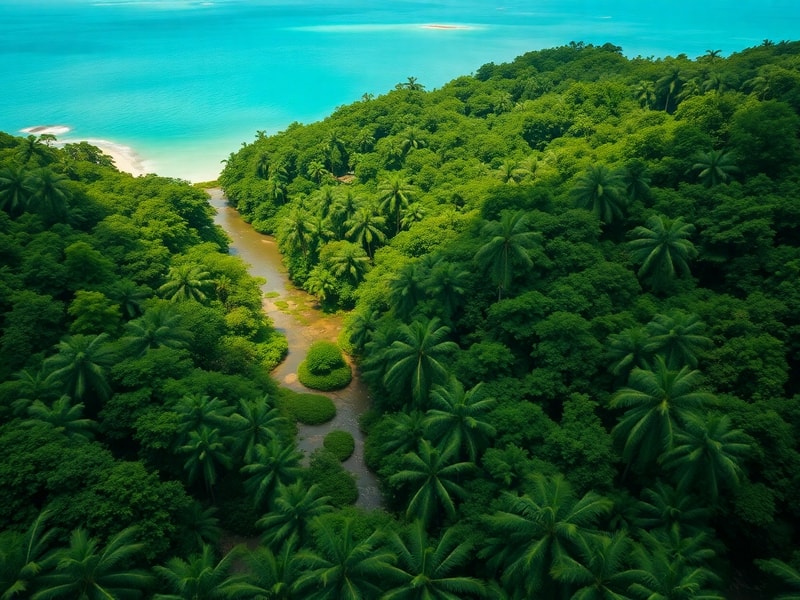
The tropics occupy a unique space in geography, culture and ecology. Stretching roughly between the Tropic of Cancer and the Tropic of Capricorn, they cover nearly 40% of Earth’s landmass and are home to some of the planet’s most diverse ecosystems and human societies. Yet, beyond the postcard image of palm trees and turquoise waters, the tropics represent a complex interplay of climate, biodiversity, migration and cultural evolution.
This region—defined not just by latitude but by consistent warmth and significant rainfall—has shaped human history, fueled global trade and inspired countless artistic traditions. From the ancient civilizations of Mesoamerica to the bustling port cities of Southeast Asia, the tropics have long been a crossroads of innovation, resilience and adaptation.
The Climate Engine: Why the Tropics Matter to the Planet
The tropics are the engine of Earth’s climate system. They receive the most direct sunlight year-round, driving the global atmospheric circulation known as the Hadley Cell. This system redistributes heat and moisture, influencing weather patterns from the Amazon to the Sahel. The tropical rainforests—including the Amazon, Congo Basin and Southeast Asian rainforests—act as the planet’s lungs, absorbing massive amounts of carbon dioxide and producing oxygen.
But these ecosystems are under threat. Deforestation, driven by agriculture, logging and urban expansion, is accelerating. According to the World Wildlife Fund, an area of tropical forest the size of a football field disappears every six seconds. This loss not only reduces biodiversity but also disrupts regional and global weather systems, potentially intensifying droughts and storms in distant regions.
A Living Laboratory of Biodiversity
The tropics host over 80% of the world’s terrestrial biodiversity. A single hectare of tropical rainforest can contain more tree species than all of North America. This richness supports countless species found nowhere else, from the vibrant poison dart frogs of Central America to the critically endangered Sumatran tiger.
Indigenous communities have lived in harmony with these ecosystems for millennia, developing sophisticated systems of forest management and sustainable agriculture. Their knowledge is increasingly recognized as vital to global conservation efforts. Yet, indigenous lands continue to face encroachment. Protecting these guardians of biodiversity is not just an environmental imperative—it’s a moral one.
Cultural Crossroads: The Tropics as a Cradle of Human Civilization
The tropics have been the cradle of some of humanity’s most influential civilizations. The Maya, Inca and Aztec empires flourished in the tropical Americas, building advanced astronomical observatories, complex irrigation systems and monumental cities. In Asia, the Khmer Empire constructed Angkor Wat in a tropical monsoon climate, while the ancient kingdoms of India and Sri Lanka thrived under similar conditions.
These societies developed unique cultural practices shaped by their environments. In West Africa, griots preserved oral histories through music and storytelling. In the Caribbean, the fusion of African, European and Indigenous traditions gave birth to vibrant musical forms like calypso, salsa and reggae. The tropics are not just a place—they are a living archive of cultural exchange.
Migration and Diaspora: The Tropics’ Global Reach
The tropical regions have long been a magnet for migration. The transatlantic slave trade forcibly relocated millions from West Africa to the Americas, creating enduring cultural legacies. Later, indentured laborers from South Asia and China were brought to the Caribbean, Fiji and Mauritius, further enriching the region’s demographic tapestry.
Today, tropical cities like Miami, São Paulo and Lagos are global hubs, drawing people from across the world in search of opportunity. This migration has reshaped economies, cuisines and urban landscapes. It has also highlighted issues of equity, as many tropical cities grapple with inequality, housing shortages and climate vulnerability.
The Tropics in the 21st Century: Challenges and Opportunities
The tropics face a paradox: they are both the most resource-rich and the most vulnerable regions on Earth. Rapid urbanization, climate change and economic inequality pose existential threats. Rising temperatures are intensifying tropical storms, while shifting rainfall patterns threaten agriculture. Coral reefs, often called the rainforests of the sea, are bleaching at unprecedented rates due to ocean warming.
Yet, the tropics are also home to some of the most innovative solutions to these challenges. Costa Rica has reversed deforestation through aggressive conservation policies. Singapore has transformed its urban landscape with vertical gardens and sustainable infrastructure. Indigenous communities in the Amazon are using technology to monitor illegal logging and protect their lands.
Economic Potential and Sustainable Development
The tropical regions hold immense economic potential, particularly in renewable energy, agroforestry and eco-tourism. Solar and wind energy projects are expanding across Africa and Latin America. Agroforestry—integrating trees into farmland—can restore degraded soils while providing food and income. Meanwhile, eco-tourism offers a way to preserve natural beauty while empowering local communities.
However, sustainable development requires more than good intentions. It demands investment, policy support and respect for local knowledge. International cooperation is crucial, as climate change and biodiversity loss do not respect national borders.
A Call to Reimagine Our Relationship with the Tropics
The tropics are not just a destination or a resource to exploit—they are a vital part of our shared future. Recognizing their ecological importance, cultural richness and economic promise is the first step toward responsible stewardship. Whether through supporting indigenous-led conservation, adopting sustainable tourism practices or advocating for climate justice, individuals and institutions alike have a role to play.
As the tropics face unprecedented pressures, the choices we make today will determine whether this vibrant region continues to thrive or succumbs to neglect. The fate of the tropics is not just a regional issue—it is a global one. By embracing a more equitable and sustainable approach, we can ensure that the heart of our planet remains a source of life, culture and inspiration for generations to come.
For those interested in exploring tropical ecosystems further, travel offers a firsthand look at the beauty and challenges of these regions. Meanwhile, science continues to uncover the secrets of tropical biodiversity, from medicinal plants to climate regulation.