The FIFA World Cup stands as the pinnacle of international football, a tournament where nations unite on the pitch to determine the world’s best. Since its inception in 1930, the competition has evolved from a modest 13-team event into a global spectacle watched by billions. Each tournament writes a new chapter in football history, with winners etching their names into legend.
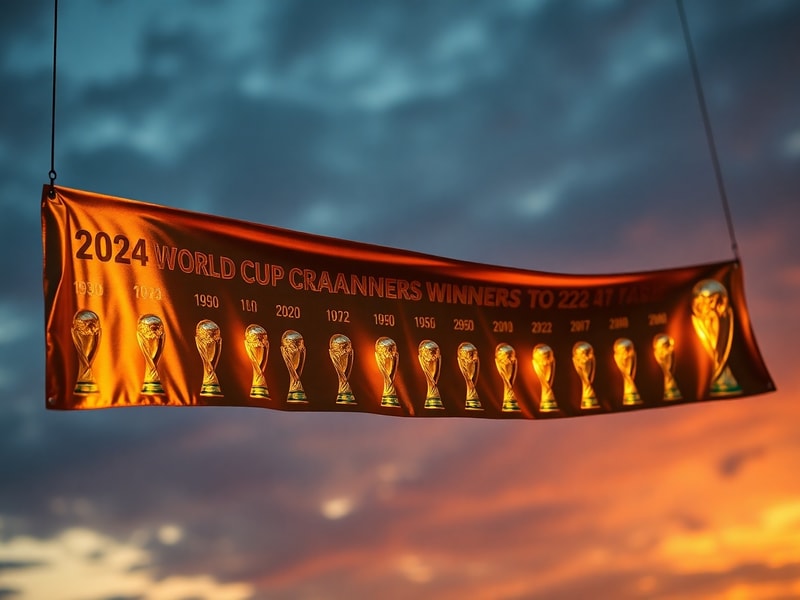
Below is a comprehensive breakdown of World Cup winners by year, offering context on dominant eras, underdog triumphs, and the evolving nature of the game. This timeline reveals patterns—such as the dominance of certain confederations—and highlights moments that transcended sport.
The Early Years: Foundations of a Global Tournament
The first World Cup in 1930 was hosted by Uruguay, a nation that would also become the inaugural champion. Held in Montevideo, the tournament featured just 13 teams, all traveling by sea due to the Great Depression. Uruguay defeated Argentina 4-2 in the final, a match so intense it required a replay due to crowd encroachment.
The 1930s saw two more tournaments before World War II interrupted the competition. Italy claimed back-to-back titles in 1934 and 1938 under Benito Mussolini’s fascist regime, raising questions about the intersection of politics and sport. These early editions set the stage for football’s role as both entertainment and diplomacy.
Key Takeaways from the Pre-War Era:
- Uruguay’s inaugural victory established South America as a football powerhouse.
- Italy’s back-to-back wins introduced tactical sophistication under Vittorio Pozzo.
- Limited global participation due to travel costs and geopolitical tensions.
Post-War Resurgence and the Rise of New Powers
The World Cup resumed in 1950, with Brazil hosting in a tournament marked by tragedy—the Maracanã disaster, where Uruguay defeated the host nation in front of nearly 200,000 fans. This loss became a defining moment in Brazilian football, fueling the nation’s future dominance.
The 1950s and 1960s saw the emergence of new footballing nations. West Germany claimed two titles (1954, 1974), while Brazil introduced the world to Pelé, who led them to victories in 1958, 1962, and 1970. England’s solitary triumph in 1966, secured with Geoff Hurst’s iconic hat-trick, remains the only World Cup win for a British nation.
This era also introduced the concept of total football from the Netherlands in 1974, a tactical revolution that influenced generations. The 1970s closed with Argentina’s first title in 1978, hosted on home soil under a controversial military junta.
Notable Trends of the Mid-Century:
- Pelé’s three titles cemented Brazil’s status as the sport’s most iconic nation.
- West Germany’s consistency showcased their ability to perform under pressure.
- Host nation advantages became evident, particularly in politically charged tournaments.
The Modern Era: Globalization and Commercialization
The late 20th century brought unprecedented change. The expansion of the tournament from 16 to 24 teams in 1982, and later to 32 in 1998, allowed smaller nations like Cameroon (1990) and Senegal (2002) to make deep runs. Cameroon’s opening match victory over Argentina in 1990 remains one of the greatest upsets in World Cup history.
Brazil’s fifth title in 2002, led by Ronaldo, Ronaldinho, and Rivaldo, showcased the power of South American flair in an increasingly tactical world. Meanwhile, France’s 1998 triumph under Zinedine Zidane symbolized the multicultural identity of modern Europe.
The 2006 to 2018 period saw a shift toward European and South American dominance, with Spain (2010), Germany (2014), and France (2018) claiming titles. The 2010 World Cup in South Africa marked the first time the tournament was held in Africa, a symbolic milestone for the continent’s footballing development.
Key Developments in the Modern Era:
- Expansion of teams allowed for greater diversity and unpredictability.
- Tactical evolution saw possession-based football (Spain, Germany) challenge traditional styles.
- Cultural impact grew, with World Cup anthems and fan zones becoming global phenomena.
- VAR introduction in 2018 sparked debates about technology’s role in fairness.
Qatar 2022 and Beyond: A New Chapter
The 2022 World Cup in Qatar broke new ground as the first tournament held in the Middle East. While the event faced criticism over human rights issues, it delivered on-field drama, including Morocco’s historic semi-final run as the first African and Arab nation to reach that stage.
Argentina’s victory, secured through Lionel Messi’s emotional redemption and a dramatic penalty shootout against France, capped off a generational rivalry. The win also marked South America’s return to the top after Europe’s dominance in the previous two editions.
Looking ahead, the 2026 World Cup will expand to 48 teams, hosted jointly by the United States, Canada, and Mexico. This change promises to further globalize the tournament, though it risks diluting the prestige of the knockout stages.
What to Watch in Future Tournaments:
- Emerging nations like the United States, Japan, and Morocco could break through.
- Youth development in Africa and Asia may yield new powerhouses.
- Technology’s role will continue to shape refereeing and fan experiences.
- Sustainability concerns will influence future host selections.
Conclusion: More Than Just a Trophy
The World Cup winners by year tell a story far beyond statistics. They reflect geopolitical shifts, cultural identities, and the unifying power of sport. From Uruguay’s humble beginnings to Argentina’s modern triumph, each victory carries the weight of history.
As football continues to grow, the World Cup remains a stage where nations define themselves. The next chapter, written in 2026 and beyond, will likely introduce new heroes and narratives, ensuring the tournament’s legacy endures.
For fans and analysts alike, studying the past provides insight into the future. Whether you’re drawn to the tactical brilliance of past winners or the drama of unexpected upsets, the World Cup offers something for everyone.
To explore more about football’s greatest moments, visit our Sports and Analysis categories for in-depth coverage.