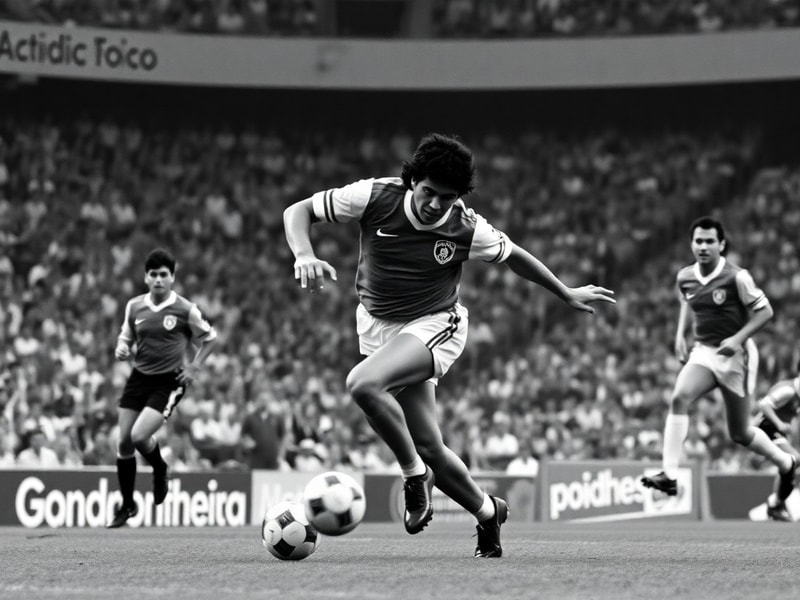
Diego Armando Maradona, born on October 30, 1960, in Villa Fiorito, Argentina, remains one of the most polarizing and celebrated figures in sports history. His life, both on and off the pitch, reads like a novel—full of triumph, controversy, and unparalleled skill. More than three decades after his prime, Maradona’s legacy continues to shape football culture worldwide, transcending generations and borders.
Maradona’s influence extended far beyond trophies and titles. He became a symbol of defiance, passion, and raw talent, embodying the spirit of underdogs everywhere. His story is not just about a footballer but about a man who carried the weight of a nation on his shoulders, for better or worse. To understand Maradona is to understand the intersection of sport, politics, and human complexity.
The Hand of God and the Goal of the Century
No discussion of Maradona is complete without mentioning the 1986 FIFA World Cup in Mexico. His two most infamous moments occurred within eight days of each other in the quarterfinal against England. First, the infamous Hand of God, where he punched the ball into the net with his hand, evading the referee’s notice. Then, just four minutes later, he scored what is widely regarded as the Goal of the Century—a 60-meter dribble past five English players before slotting the ball into the net.
These moments, etched into football folklore, encapsulate Maradona’s duality. He was a genius capable of sublime artistry, yet also a player who exploited the rules when necessary. The Hand of God remains controversial, but it also symbolized his cunning and willingness to do whatever it took to win. The Goal of the Century, on the other hand, showcased his unmatched skill and creativity. Together, they defined his World Cup triumph and cemented his place in history.
A Career Defined by Brilliance and Controversy
Maradona’s club career mirrored his national team tenure—full of brilliance and controversy. He began his professional journey at Argentinos Juniors in 1976 at the age of 15, quickly rising through the ranks. By 1981, he had moved to Boca Juniors, where he won his first league title and captured the hearts of fans with his flair and audacity.
His most iconic club spell came at Napoli in Italy, where he transformed a mediocre team into Serie A champions. Between 1984 and 1991, Maradona led Napoli to two league titles (1987, 1990), a Coppa Italia (1987), and a UEFA Cup (1989). At his peak, he was unstoppable, dragging Napoli to heights they had never known. However, his time in Italy was also marred by scandals, including a 15-month ban for drug abuse and ties to the Camorra, Italy’s notorious crime syndicate.
Maradona’s career statistics are impressive: over 300 goals in official matches, multiple league titles, and a Ballon d’Or in 1986 (though he never won it again after his controversial 1990 World Cup exit). Yet, his true legacy lies not in numbers but in his ability to captivate and inspire, often in ways that defied convention.
Beyond the Pitch: Maradona’s Complex Legacy
Maradona’s impact extended far beyond football. He was a cultural icon, a political symbol, and a flawed hero whose life often mirrored the turbulence of Argentina itself. His relationship with then-president Carlos Menem was fraught with tension, while his public battles with addiction and health issues made him a tabloid fixture in his later years.
Maradona’s political views were equally complex. He was a vocal supporter of left-wing causes, including Fidel Castro and Hugo Chávez, and his 2005 documentary, Maradona by Kusturica, offered a glimpse into his philosophical musings. Yet, his personal life was chaotic, marked by failed relationships, financial troubles, and legal issues. Despite this, he remained a beloved figure in Argentina, where he was often seen as a son of the people, flawed but authentic.
His death on November 25, 2020, at the age of 60, sent shockwaves through the world. Thousands of fans gathered in Buenos Aires to pay their respects, with scenes of grief and mourning broadcast globally. His funeral was a state affair, attended by dignitaries and thousands of mourners, underscoring his status as a national treasure.
Maradona’s Enduring Influence on Football
Maradona’s influence on football is immeasurable. He redefined the role of a playmaker, blending creativity, aggression, and unpredictability in ways that had never been seen before. His legacy lives on in players like Lionel Messi, who idolized him, and in the countless young footballers who see him as a symbol of what is possible with raw talent and sheer willpower.
Yet, Maradona’s impact is not just about his skills. He challenged the status quo, both on and off the pitch. He was a rebel who refused to conform, a genius who thrived under pressure, and a man who lived life on his own terms. His story is a reminder that football is more than just a game—it is a reflection of society, with all its beauty and brutality.
To this day, Maradona remains a polarizing figure. Some see him as a flawed hero, while others view him as a villain. But there is no denying his place in football history. He was, and always will be, El Diego—a man who transcended the sport and left an indelible mark on the world.
Key Takeaways from Maradona’s Legacy
- Genius and Controversy: Maradona’s career was defined by moments of sublime brilliance and scandal, making him one of the most complex figures in sports history.
- Cultural Icon: Beyond football, Maradona became a symbol of defiance, passion, and authenticity, influencing global culture and politics.
- Unmatched Skill: His dribbling, vision, and creativity set him apart from his peers, earning him comparisons to legends like Pelé and Messi.
- Global Impact: Maradona’s influence extended far beyond Argentina, shaping football culture in Italy, Europe, and beyond.
- Flawed Hero: His personal struggles and controversies added layers to his legacy, making him a relatable yet controversial figure.
For those looking to explore more about football legends and their cultural impact, check out our Sports and Entertainment sections for deeper insights.