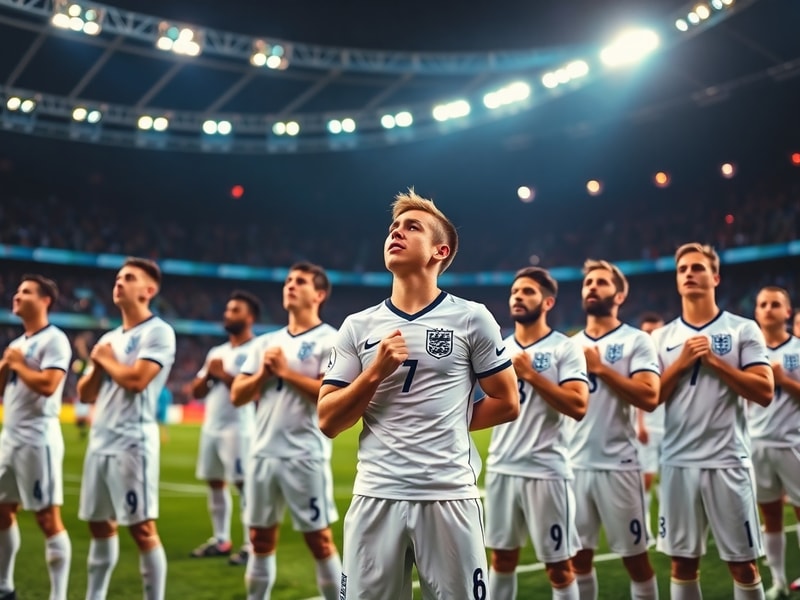
The English national anthem, “God Save the King,” takes center stage every time the Three Lions step onto the global stage at major football tournaments. With the World Cup often acting as a microcosm of national pride and identity, England’s anthem becomes more than just a pre-match ritual—it’s a cultural moment broadcast to millions. The song’s lyrics, written in a time when monarchy and country were intertwined, now serve a different purpose: uniting a diverse, modern fanbase under a shared symbol. From the terraces of Wembley to the streets of Doha or Qatar, the anthem carries emotional weight, nostalgia, and sometimes even controversy.
England’s World Cup campaigns have varied dramatically over the decades, but the anthem has remained a constant. It is sung with varying degrees of enthusiasm—sometimes with full-throated pride, other times with ironic detachment. The contrast between the formal, almost archaic language of the anthem and the contemporary, multicultural reality of England’s supporters reflects a broader tension in how national identity is expressed today. Whether it’s the spine-tingling harmonies of a pub singalong in Manchester or the disciplined choir of a stadium in Russia, the anthem’s role transcends sport. It becomes a soundtrack to national self-reflection.
The anthem’s origins and its place in football culture
“God Save the King”—now “God Save the King” since King Charles III ascended the throne in 2022—was not originally written for football. Its earliest known version dates back to the 18th century and is shared by several Commonwealth nations. Yet over time, it found its way into the fabric of English sporting life. The first recorded use of the anthem at a football match came in the 19th century, during a match between England and Scotland, marking the beginning of a tradition that would grow with the sport itself.
Football, more than any other sport, thrives on ritual. The anthem is part of a pre-match sequence that includes team announcements, player walks, and the unfurling of flags. It sets the tone before a game of immense pressure. For England, this pressure is amplified by decades of underachievement and the weight of public expectation. The anthem becomes a moment of collective breathing—a chance to pause and remember why the game matters.
Interestingly, the anthem is not universally used across all international teams. Many nations opt for different songs or anthems, reflecting their unique histories. For example, Scotland, Wales, and Northern Ireland each have their own anthems when competing separately. England’s use of “God Save the King” reinforces its identity as the dominant footballing nation of the United Kingdom, even as debates about national representation continue.
Moments that defined England’s World Cup anthems
Over the years, certain World Cup performances have been indelibly linked to the anthem. These moments are etched not just in match records, but in the emotional memory of fans. One such instance was the 1966 World Cup final at Wembley, when England defeated West Germany 4–2 in extra time. The anthem played before the match, broadcast to a global audience, carried a sense of destiny. The victory remains England’s only World Cup triumph to date, making the anthem’s role in that game almost mythic.
Decades later, in 2018, England reached the World Cup semi-finals for the first time since 1990. The anthem before the quarter-final against Sweden was sung with particular passion in the stadium and by fans across the country. It was a sign of progress, a step beyond the penalty shootout heartbreak of previous tournaments. The sense of pride was palpable, even if the journey ended in disappointment against Croatia.
More recently, during the 2022 World Cup in Qatar, the anthem took on new significance. With a team featuring young, diverse talent—many of whom grew up in multicultural England—the anthem became a symbol of unity for a new generation. The sight of Bukayo Saka, a London-born player of Nigerian heritage, singing the anthem with his teammates highlighted how national identity is evolving. For many fans, this was not a rejection of tradition, but an embrace of a broader, more inclusive idea of what it means to be English.
- The 1966 final: anthem as prelude to history
- The 2018 revival: anthem as collective catharsis
- The 2022 Qatar tournament: anthem as mirror of modern England
The anthem in a global context: pride, politics, and performance
While the anthem is a source of pride for many English fans, it is not without controversy. Some critics argue that using a royal anthem for a national football team reinforces outdated hierarchies. Others point out that the anthem’s lyrics—“Send him victorious, happy and glorious”—are inherently monarchist, which may not resonate with republican or secular supporters. These debates have grown louder in recent years, especially as England’s squad and fanbase become more diverse and politically conscious.
Abroad, the anthem’s reception varies widely. In some countries, it is viewed with respect as a symbol of national pride. In others, particularly those with historical ties to the British Empire, the anthem can evoke mixed feelings. During World Cup matches, commentators often note when the anthem is played, sometimes drawing comparisons to other national anthems like France’s “La Marseillaise” or Germany’s “Deutschlandlied.” These contrasts highlight not just differences in music, but in national identity and historical memory.
Football tournaments are also global media events. The anthem’s performance—whether by a choir, a solo artist, or the crowd itself—is broadcast to billions. The way it is sung, the tone, the emotion—all become part of the narrative. For England, a strong anthem performance can set a tone of determination; a weak one might be seen as a sign of disunity. This adds pressure not just on the players, but on the organisers and even the fans.
What the future holds for the anthem and English football
As England prepares for future World Cups, the role of the anthem will likely continue to evolve. With a young, talented squad and increasing openness about issues of race, identity, and representation, the anthem will be scrutinised more than ever. Some may call for a new national song specifically for the football team—something modern, inclusive, and representative of all communities. Others will insist on keeping the tradition, arguing that change risks diluting the anthem’s emotional power.
What is clear is that the anthem is more than just background noise. It is a cultural artifact, a unifier, and sometimes a lightning rod. It reflects the hopes and dreams of a nation that loves football but is still searching for its place in the world. As the World Cup expands and the global game becomes more competitive, the anthem will remain a small but vital part of England’s journey. Whether it brings tears of joy or sighs of resignation, it ensures that every World Cup campaign begins with a reminder: this is England. And for 90 minutes, we are one voice.
For fans eager to relive these moments, highlights from past tournaments are available on Sports and offer a chance to hear the anthem in its full context—from the quiet anticipation of the tunnel to the crescendo of the terraces.